Oh wow, wow, wow. An orchard full of Oranges and Ox Wagons, imagine that!

This property is called ‘Joubert & Soens’, which is situated on the northern branch of the N4 highway at Schoemannskloef. Mariette Joubert took the time for a comprehensive tour of this extensive institution. It was jaw-dropping to see and understand the size of this family business, which developed in the early 2000s.
‘We started with a few ‘Padstalls’ along this road in 1996’. It extended to mega size these days. ‘But we need to extend more, there isn’t enough space for customer service and export market’ Mariette said as we were sipping on a coffee in an oversized market hall.
‘It’s bumper to bumper in here during the busy season like school holidays. The parking area hasn’t enough space as tour buses arrive hourly to refresh and being refreshed.’ It’s hard to imagine but it seems that the parking area is the smallest area here at the ‘padstall’.

‘Let me show you how this goes!’ as we jumped in her SUV. It was mind-bobbling to get a private tour around the production area and private property afterward. Joubert$Soens isn’t all about producing and manufacturing biologically fresh produce.

I had an insight into the ecologically, unpretentiously, naturally, and historically side of this establishment for a few hours. ‘Joubert&Soens’ are well known all across South Africa and export markets globally. You might even see their label at your local grocery store.
Her husband Kobus runs an Earth-Moving business and unfortunately wasn’t here today.
During this tour, I gathered so much Information, that I will try to remember some of it. Here it goes.
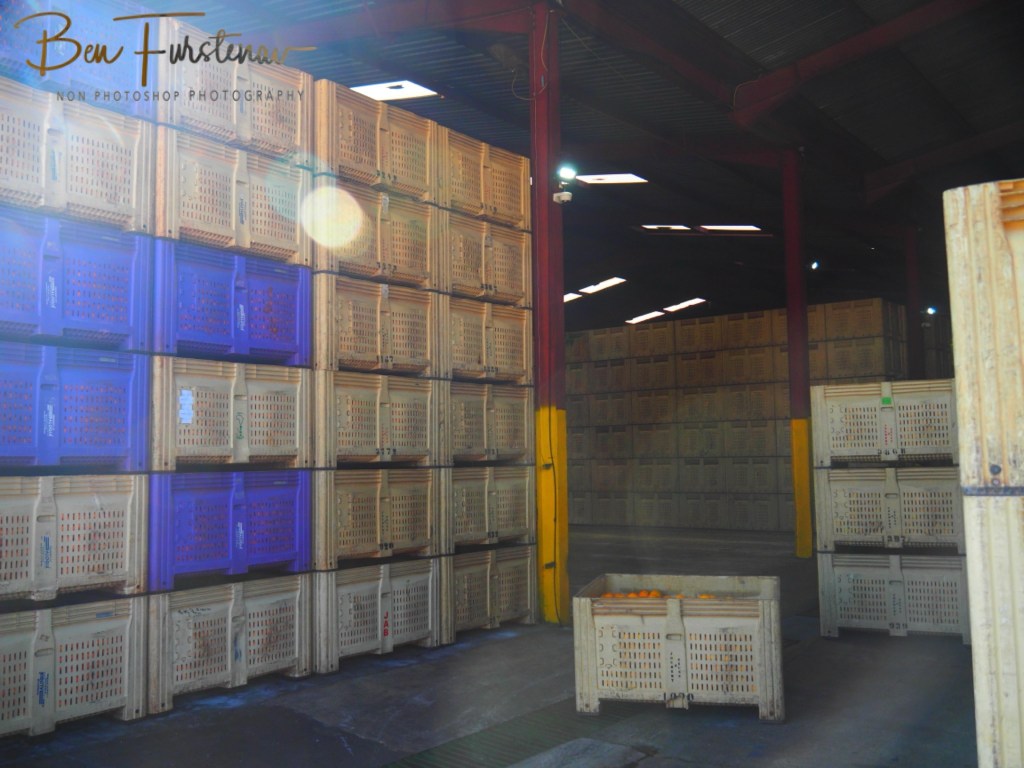
We started at the mega-sized fruit packing hall. A Boing 737 would easily fit in here.

Specially designed plastic fruit baskets towered at the entrance, each holding 400 kilograms of fruit.
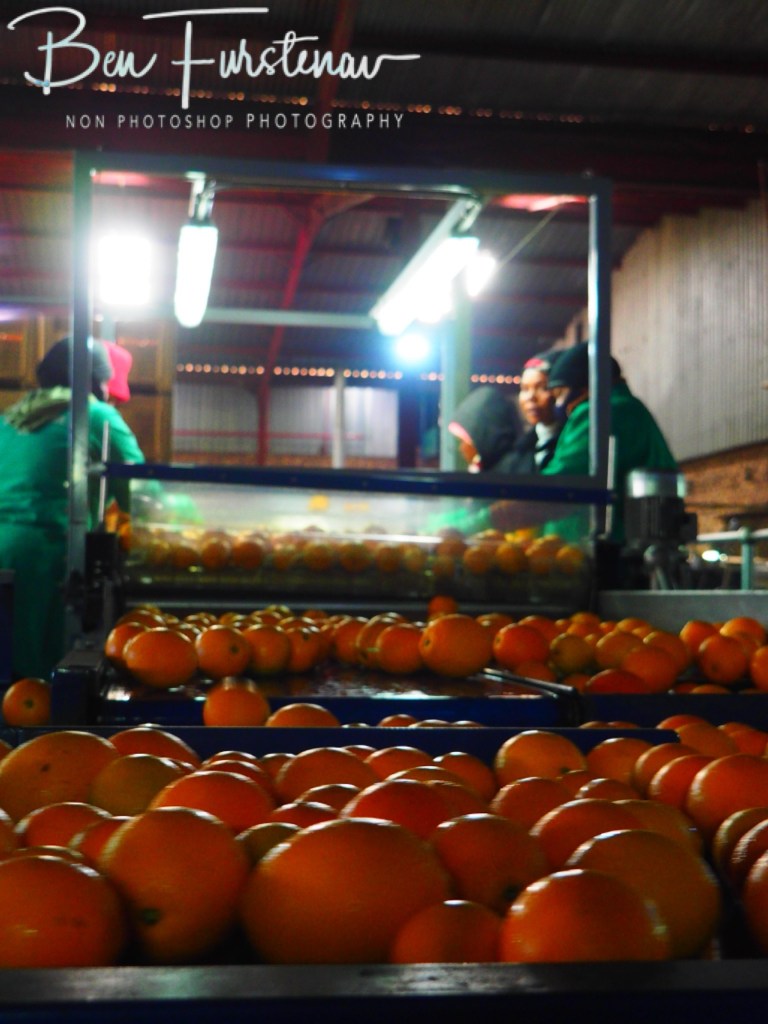
The crates were then emptied onto a conveyer belt, that dropped the oranges into a washing pool. Already, the first manual selection determined overripe fruit was not suitable for use. These will go to the wild game animals on this property.
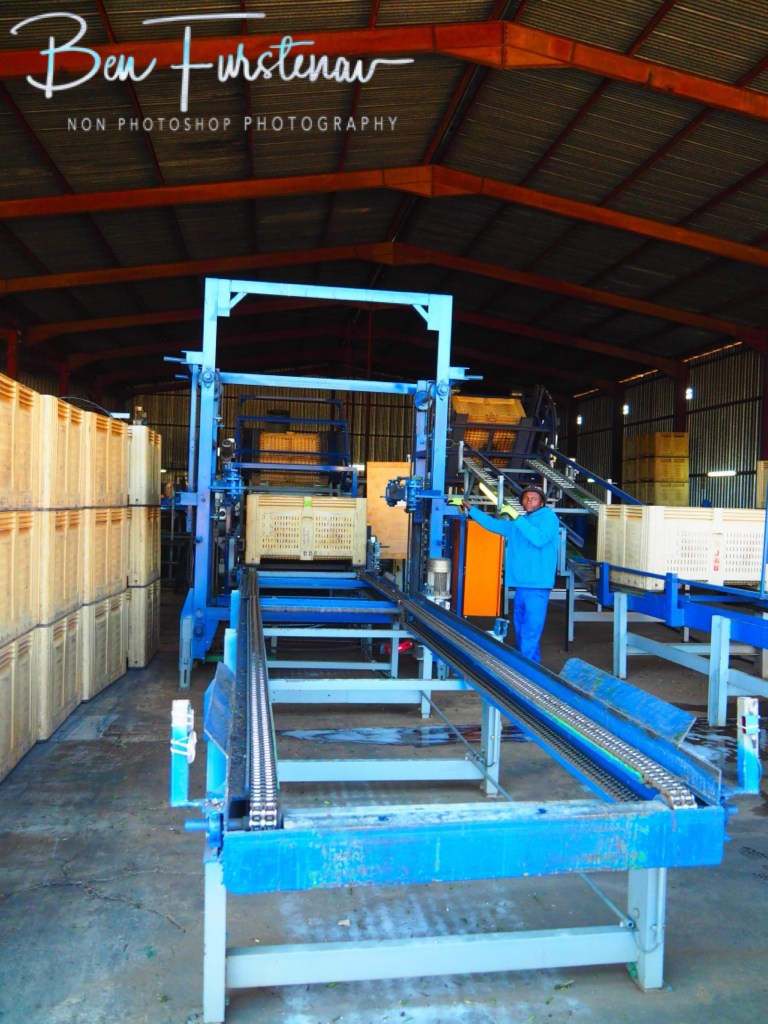
The empty fruit crates get washed and disinfectant just well, before the tractor train chuffs them onto the fields again.
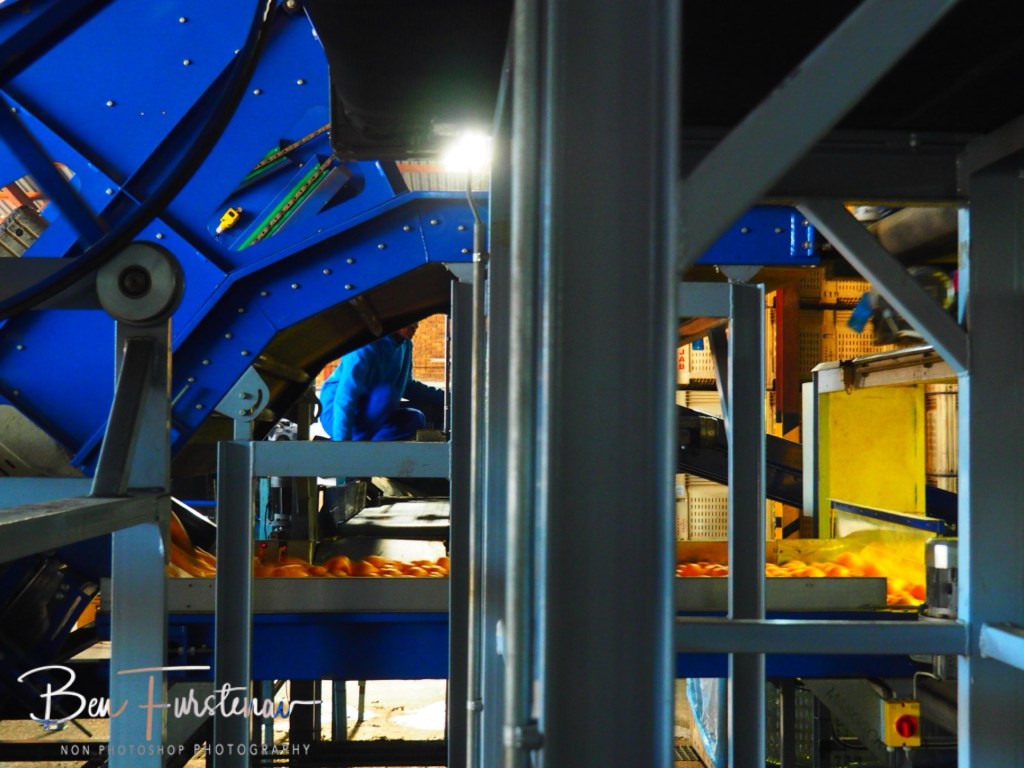
The conveyor belt moves the fruit along to a wax bath. This coat will keep the oranges last longer as table fair.
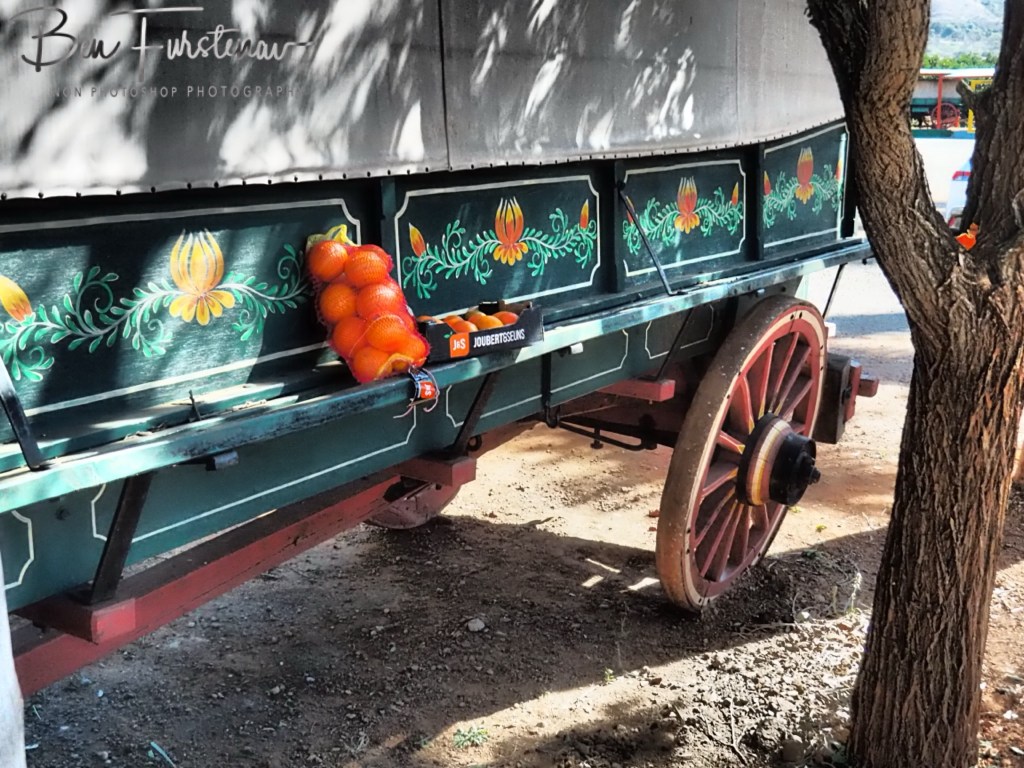
Some have a long way to go. Domo arrigato.

From there, we moved on to the packing hall. Oranges low in the packing order didn’t make it as far as the hall. They are detoured and used for freshly squeezed orange juice in the padstall.
The conveyor belt is split into a five-lane highway.

The toll booth was a computerized machine, that took 30 photos of each orange in a split second to determine its turnoff destination, depending on size and grade. This machine was designed in New Zealand. Ha, we organized apple and stone fruit by hand back in the days in Hastings, New Zealand.

Flick, and the orange rolled off to the sideline, where the Packers were already busy with hundreds more. There were a few turn-offs for the oranges, all going to different markets.

Pre-packed boxes with the J&S logo are flying in from above on a chain with barcodes already branded.
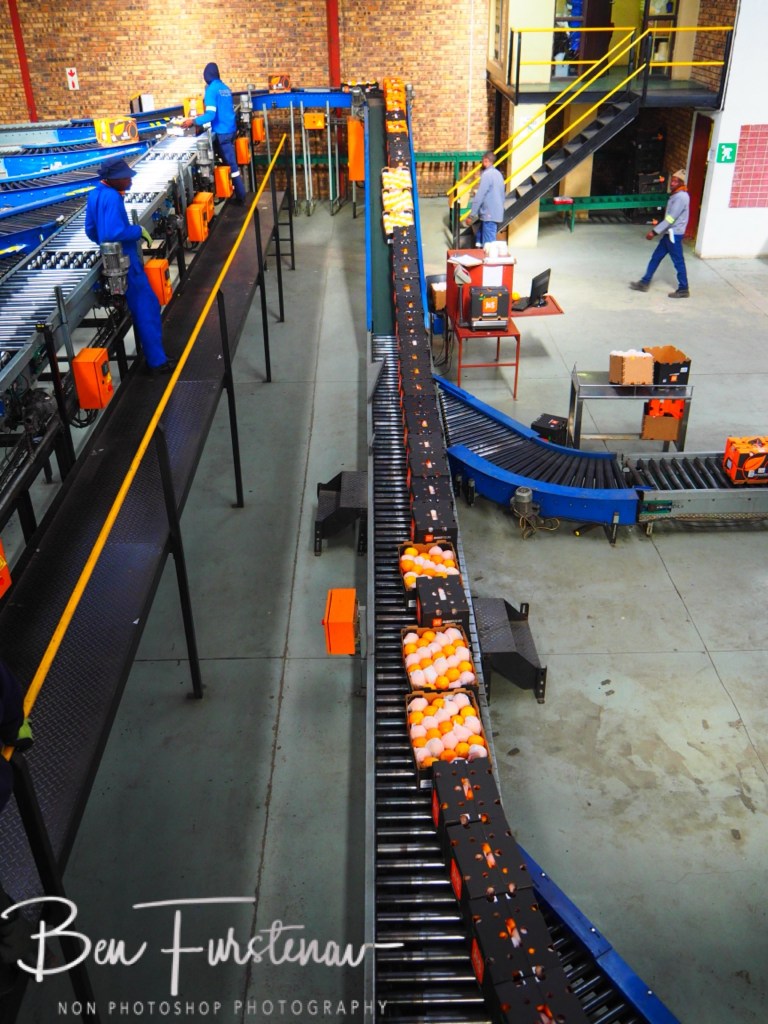
The Brand, the flavour, which field the fruit was picked in, which packer packed the carton, (which is a skill in itself), how many fruits are in the box, its destination, and most likely how many cups of coffee the driver had.
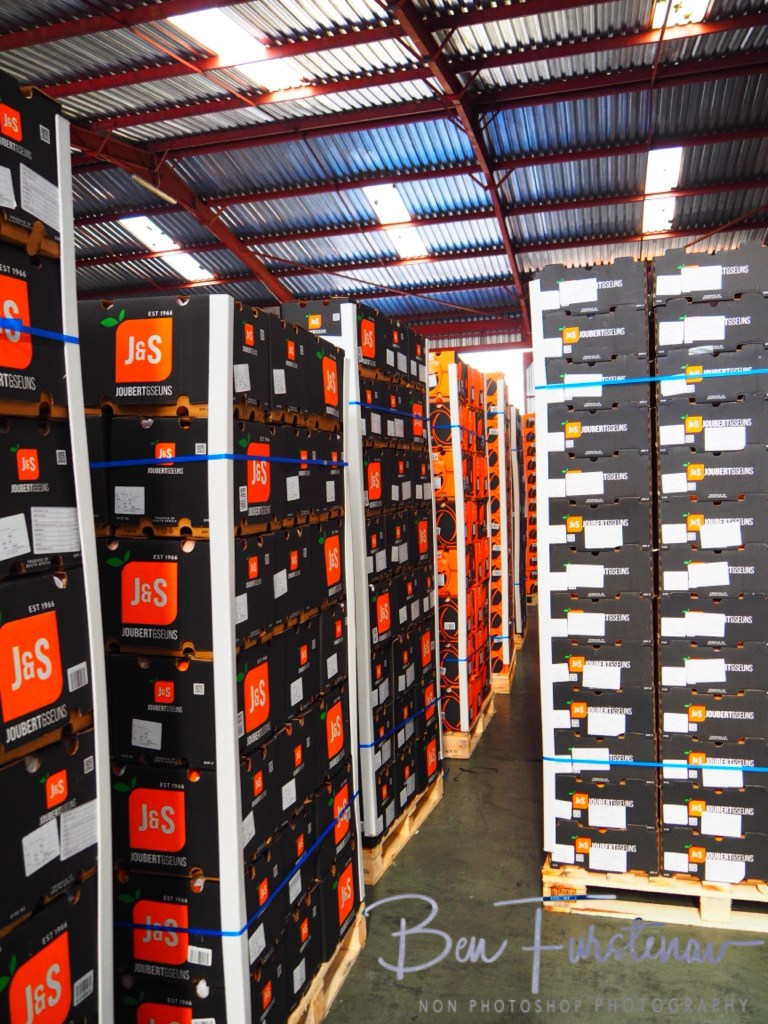
These filled up boxes then got stacked on pallets and waited for their departure. Bon voyage.
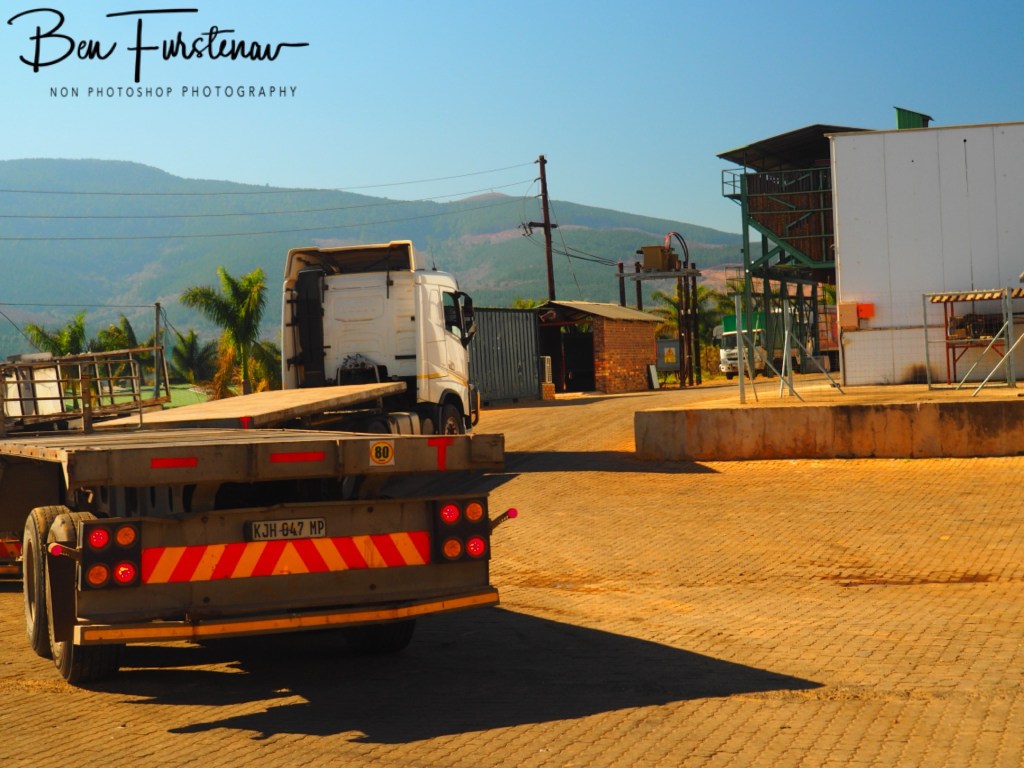
I had a wee giggle as I was walking above the orange highway. It felt like walking over an ants-nest on a rollercoaster ride. All little workers knew their job, here and there, back and forth. It’s a fast-paced environment. ‘Joubert&Soens’ is one of the biggest employers in the region, which employs up 1000 harvest helpers in the busy season. Which is now.
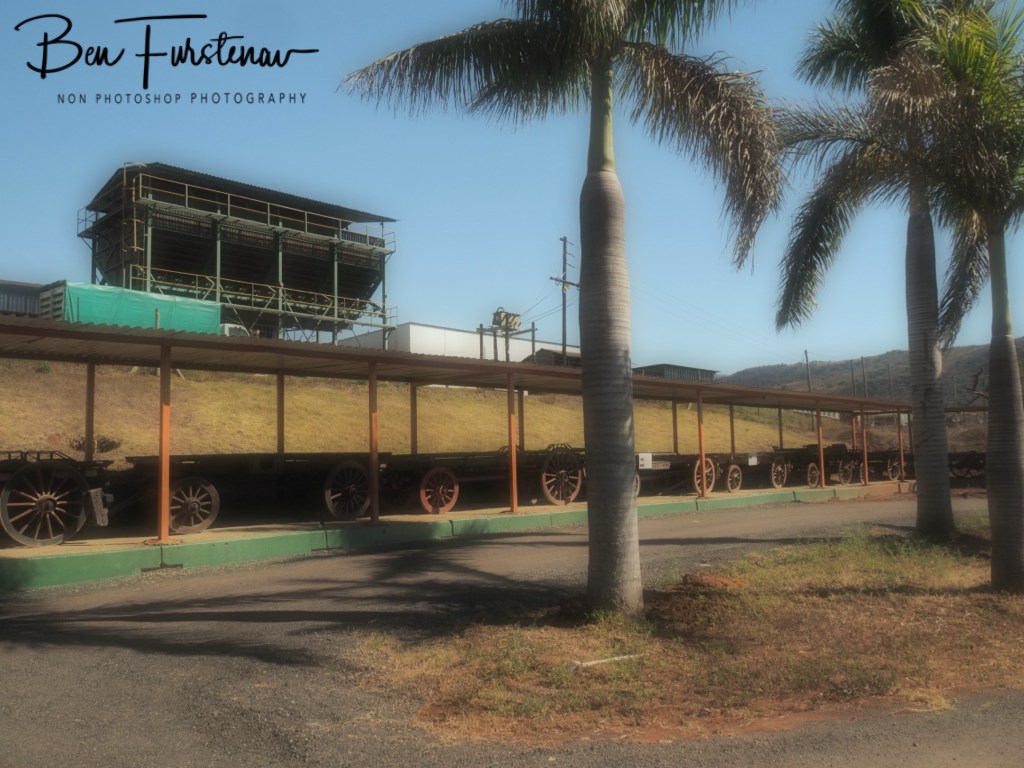
It wasn’t all about oranges as the title suggests. Mariette and her husband Kobus are passionate about ox-wagons.
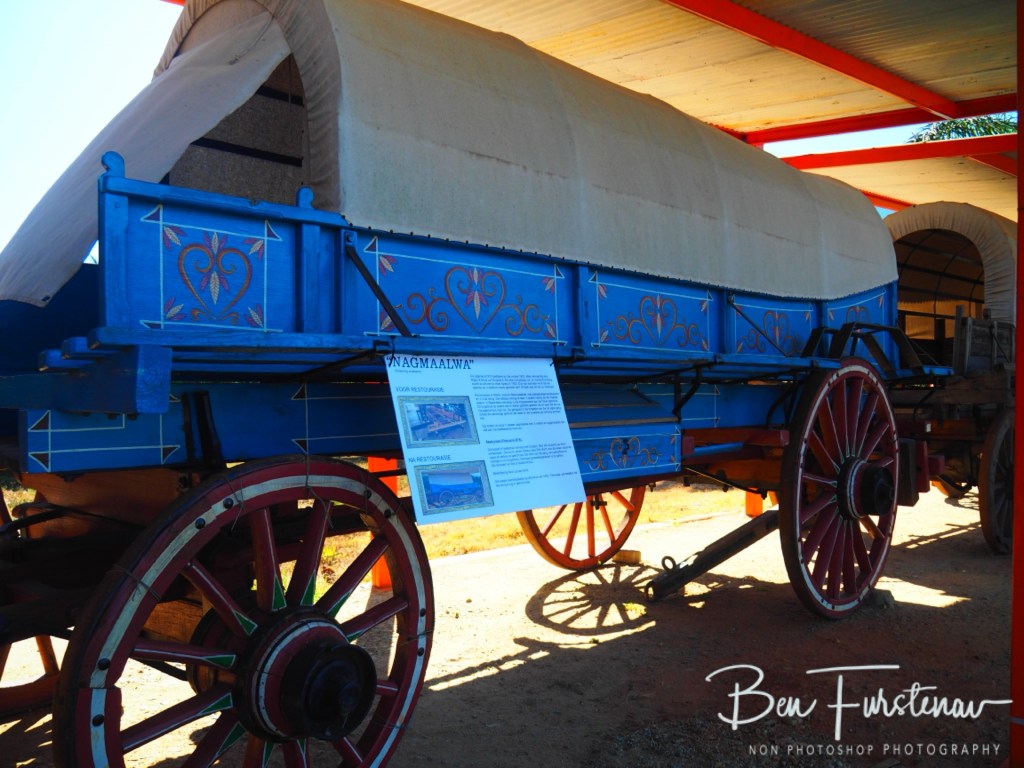
Historic ox-wagons were used by the Voortrekkers around the turn of the century to move ever so much further inland.

54 ox-wagons of different brands, sizes, makes models, and ages are in their hopefully growing collection already. All wagons are carefully restored to spin the wheels of South Africa’s chronology.
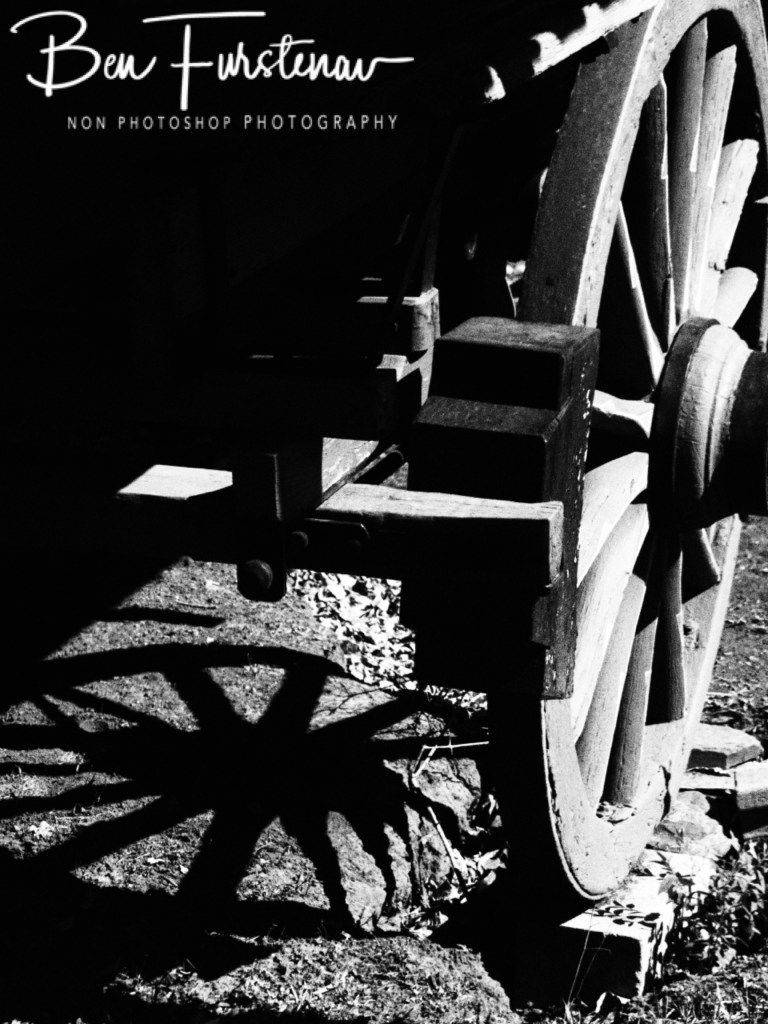
‘It’s important to remember our history from where you come from. How can you look to the future if you don’t know your past. ‘These Voortrekkers battled on every front to establish what we have today. We mustn’t forget that!’

Imagine what the first colonial scouts went through. This is unforgiven terrain with unforgiving seasonal changes. Dealing with dangerous animals that could kill humans in an instant.
But most importantly, dealing with ourselves, the humankind. Different ethnicities are speckled throughout the land. And not to forget the English, the Germans, the Dutch, the Portuguese, and the French, Africa is marked by wars. Even nowadays.
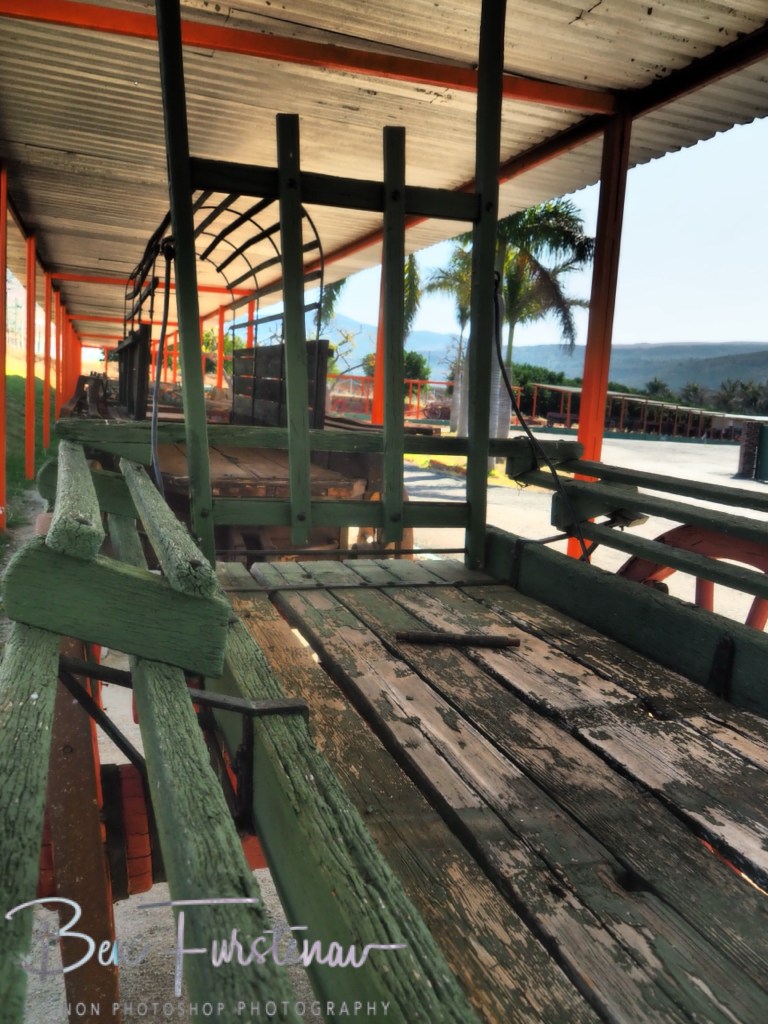
Unfortunately, today’s government doesn’t share the same passion for our history. Museums close and sell out, and parts of our history get burnt as firewood and dissembled for scrap metal. That’s our future.

It is Joubert’s passion for ox-wagons that we got to meet in the first place. Pieter had bought an ox-wagon nearby to prevent its destruction.
He heard about the Joubert’s passionate wagon collection and donated this piece of ‘Boere’-history. One Saturday morning, Mariette and Kobus arrived with a bakkie and a trailer, full of oranges off course. I was invited for a visit.

Pieter’s ox-wagon has now joined the queue outside the car park, where most of the others line up.

The rest of them found a permanent home further up their property, lined up and surrounded by a dam.
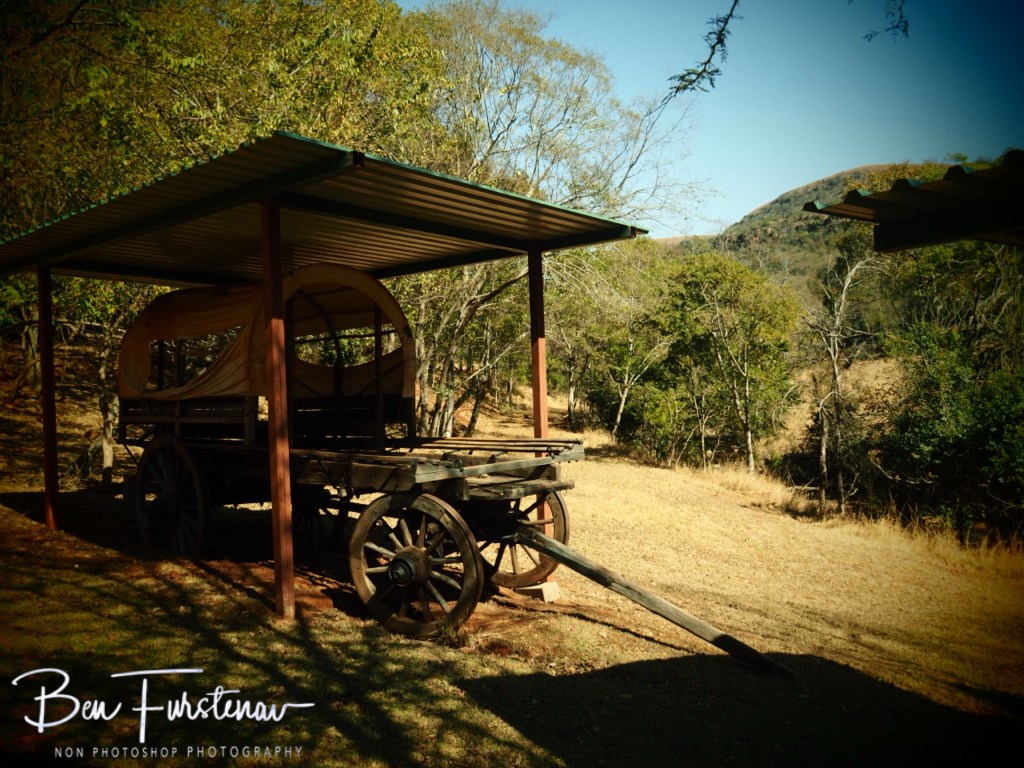
Dam thing that there aren’t any Indians here on horses.

I come in peace. A piece of orange.
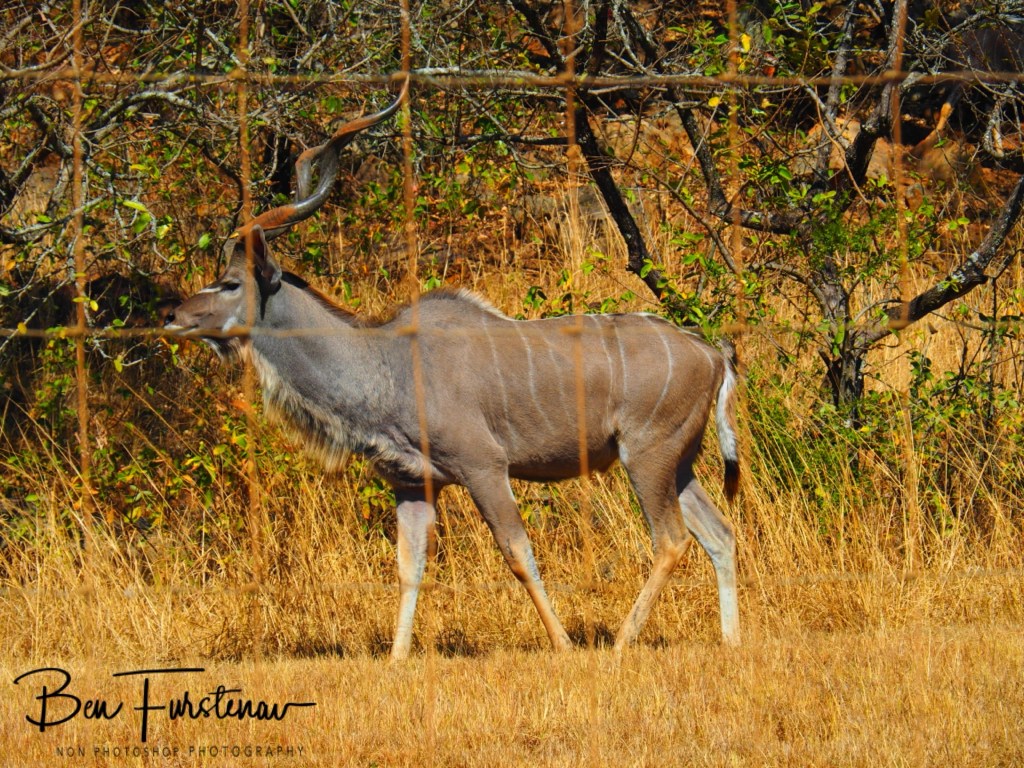
Instead, this is part of a private wildlife sanctuary. Kudus, Inalas, and all sorts of Bokke roam free around their property by a stunning waterfall.

84 meters in length, it sure is an impressive sight.
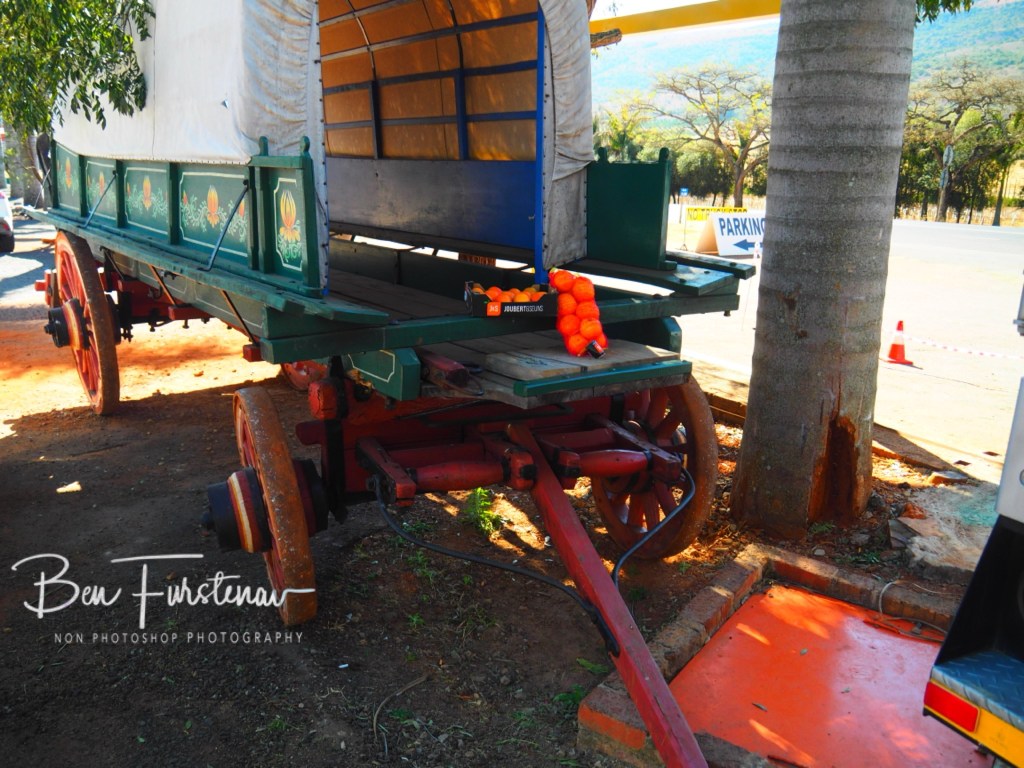
I was impressed all around by this tour, I didn’t know where to look in case I missed something.

What it comes down to is that you can buy fresh local produce here, enjoy a good coffee or fresh pressed juice, or have a wee snack and marvel at South Africa’s past. At last.
 Travels with Ben