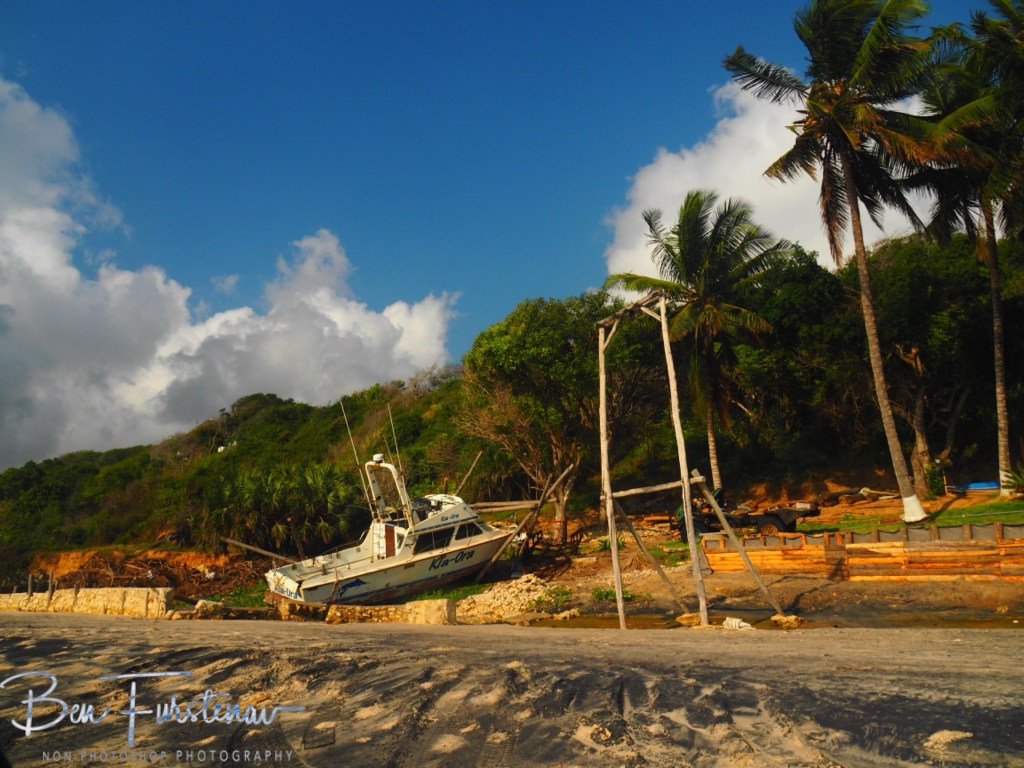
I doubt that this fishing boat was swept in all the way from New Zealand. But from what I have been told, it might as well have been.
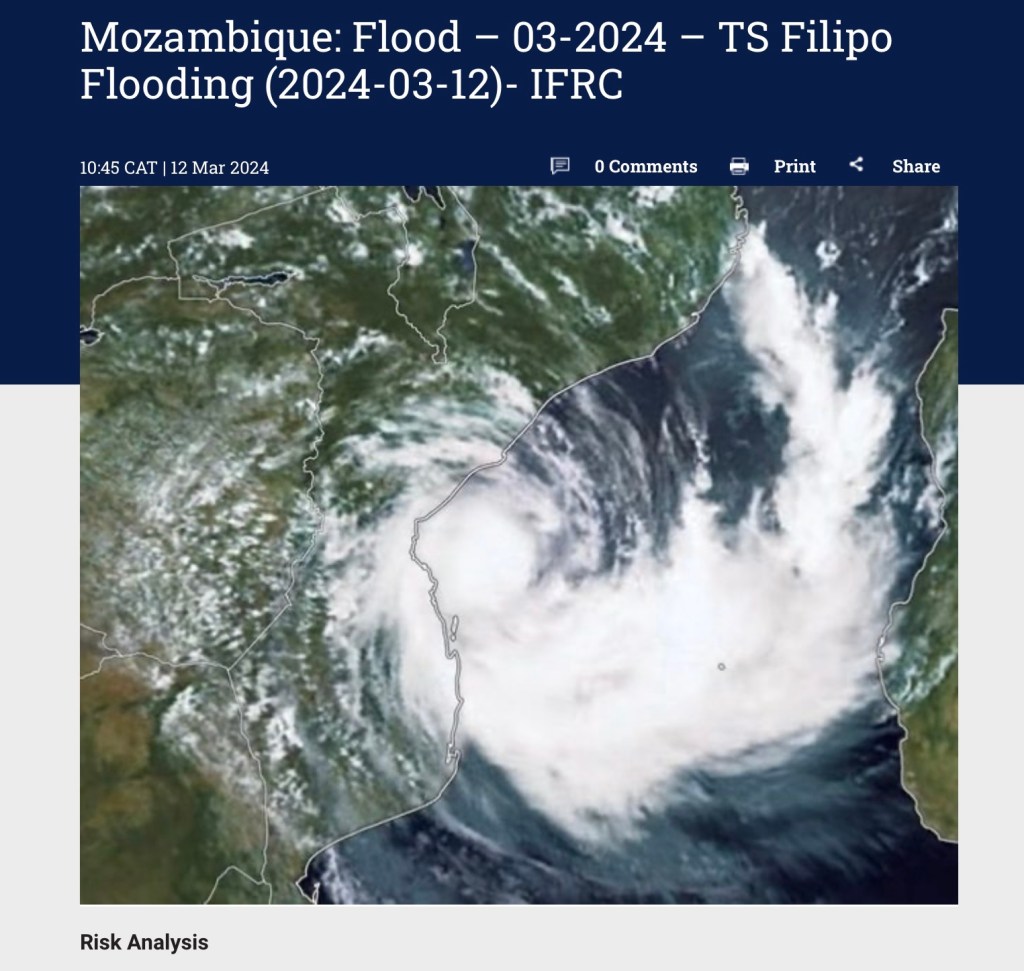
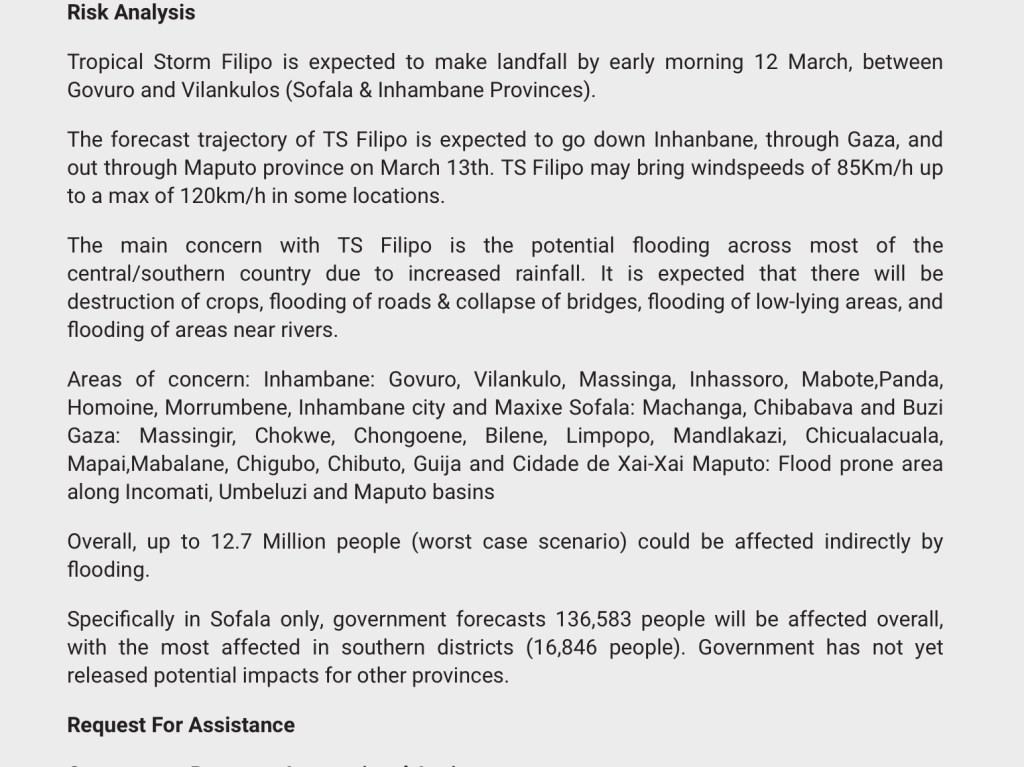
In March 2024, cyclone Filipo made landfall along the Vilankulus shoreline, leaving total destruction in its path. The eye of the storm crossed Vilankulus, creating hurricane-like wind forces and creating huge stormy seas, never to have been seen here before.

Well, not since Cyclone Freddy the year before. Waves pounded the land over and over again for at least 24 hours. Rain washed out crevices, destroying roads and buildings and everything else in its path. The force of water is a force to beckon with.
The full supermoon created king tides and added to the misery. From a logical point of view, the more movement is in the water, eg tidal motion, the more movements are above water.
I am no expert in weatheroligy, but adding one and one together makes sense to me. Cyclones are very common along tropical waters, as warmer ocean temperatures evaporate quicker. With more moisture in the air rising into the atmosphere it condensates, cools high above, and creates cumulus clouds.
Storm clouds. Which then releases the water in the form of rain. Basically, the warmer the seawater already is, the quicker it evaporates. It’s the basics of our nature.

So, Global Warming, here we come. More storms, more excessive, more violent, more frequent.
It’s usually the poor that are helpless to these forces.

The little they have is swept away.
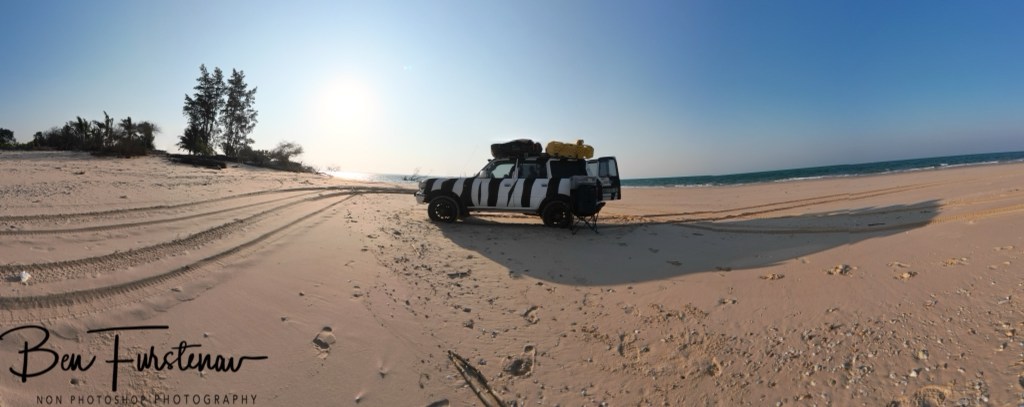
I headed north from Vilankulus to a small town by the beach called Inhasorro. I heard of the peninsula at the bay of Baía do Govuro, where at the northern tip, accommodation and serenity is available.
A few days camping away from Los Touristos will be a welcome change of pace.
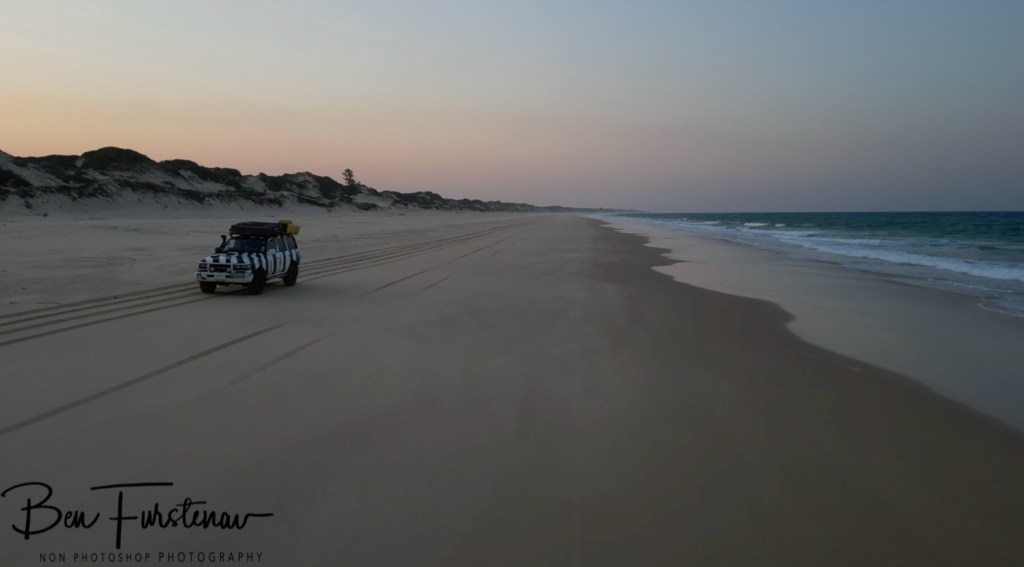
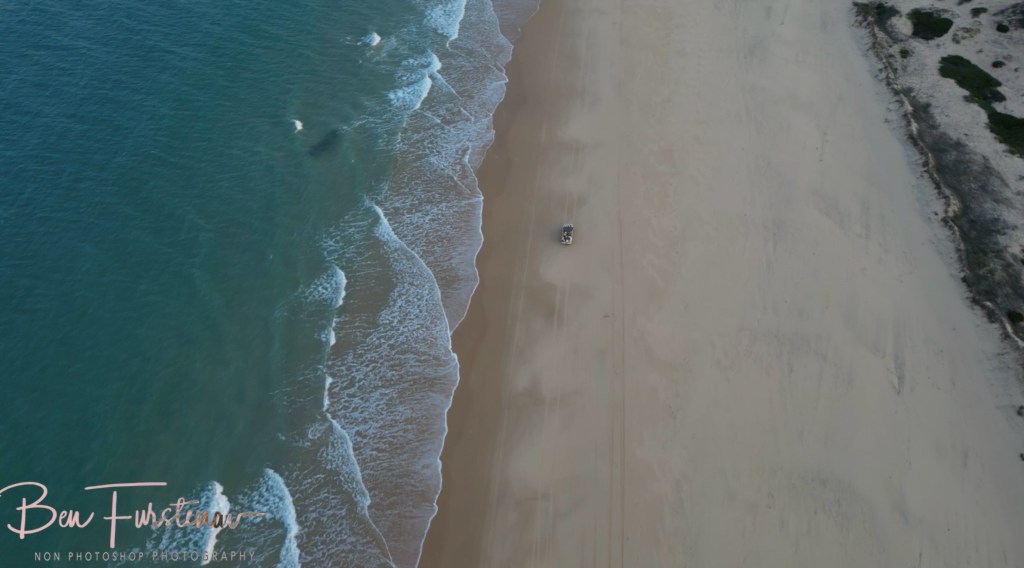
The only way to get there is by driving along the beach.
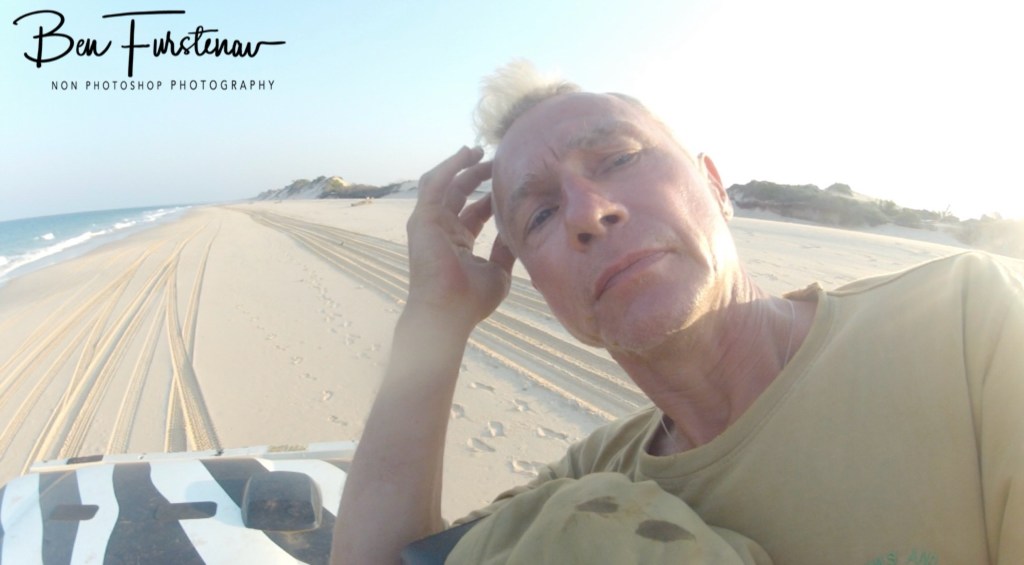
And off we went.

I hadn’t taken Zimba for a beach excursion for some time, run zebra, run. It was very easy driving on this hard sand beach and barely a challenge.
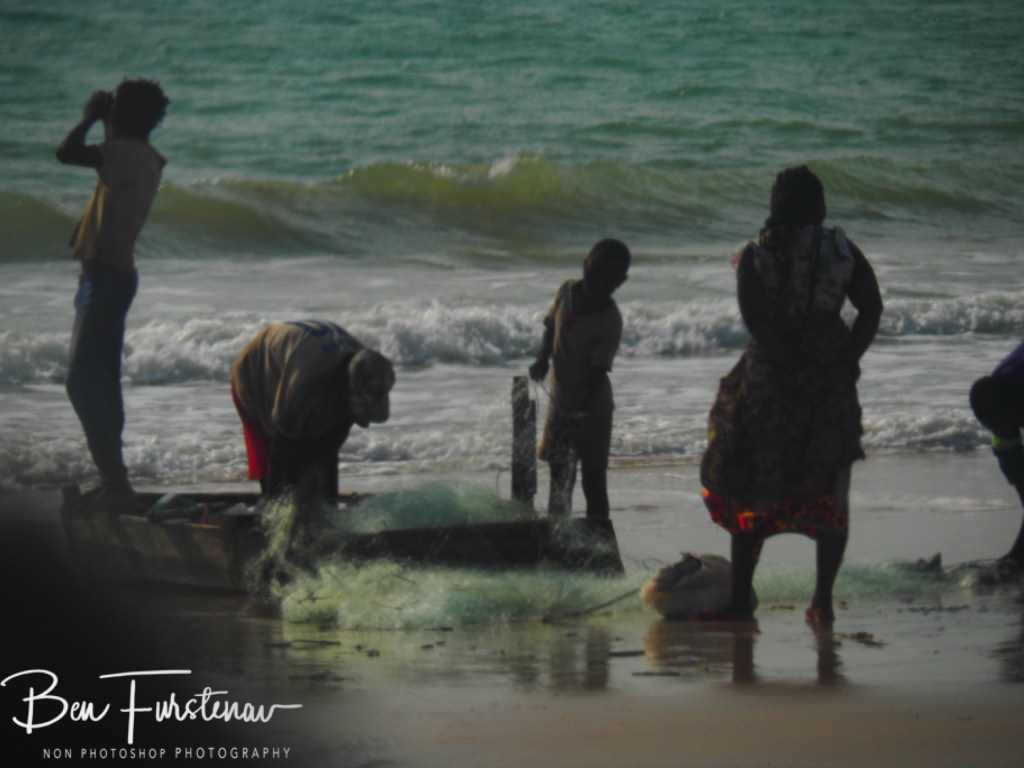
The challenge was to not hit any debris or evade local fishermen in their tiny rowing boats, dragging nets out from the shoreline. It’s a lost cause. The little and tiny catches don’t help fish and crab stocks to rejuvenate. But fishing is all these people have. It’s sad either way you look at it.
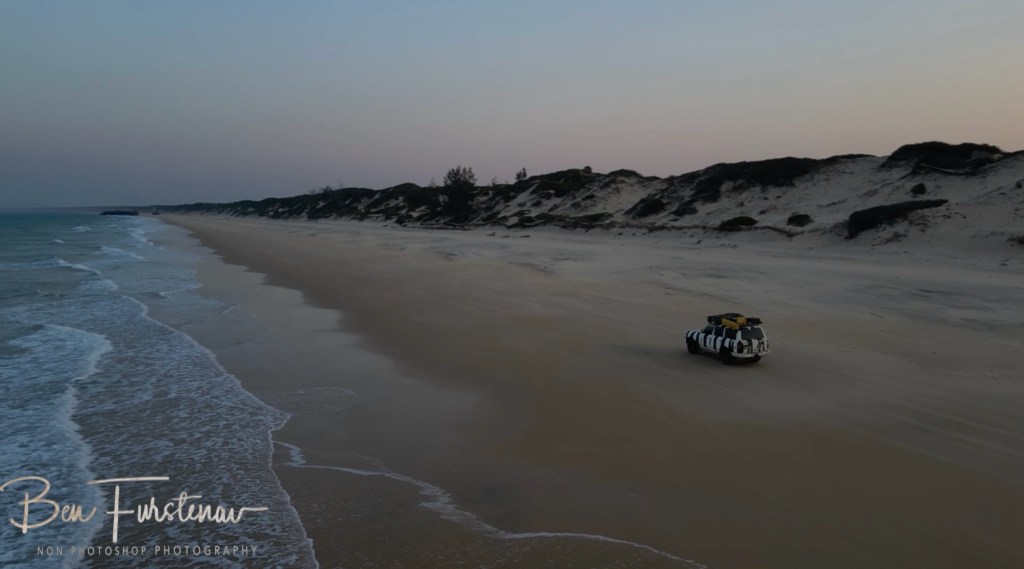
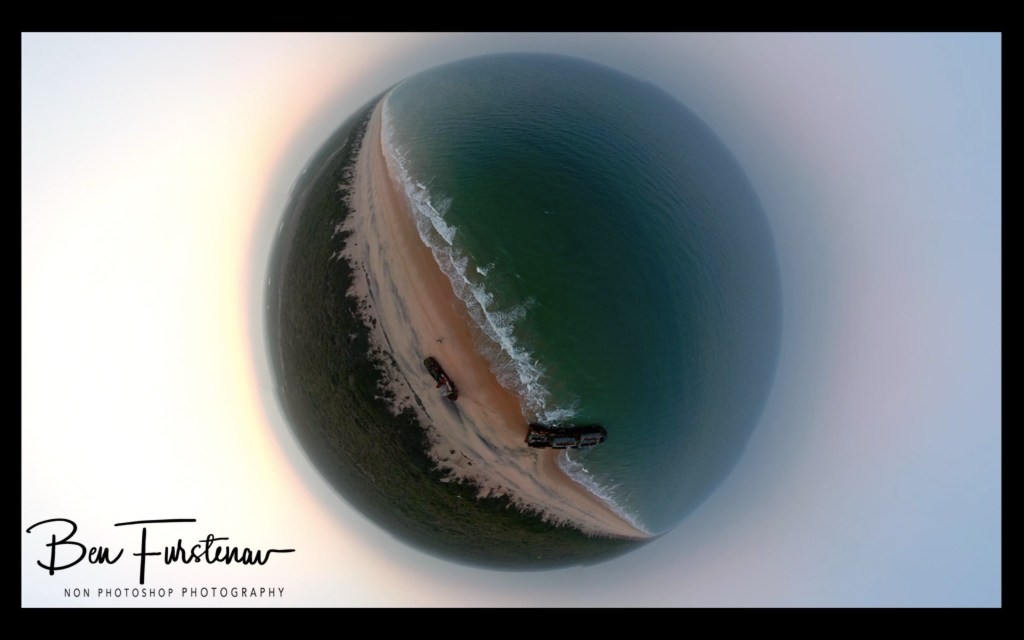
Driving along this Indian Ocean Highway, I saw two large objects in the far distance.

I couldn’t work out what they could possibly be, or why they would be set right on the beach.
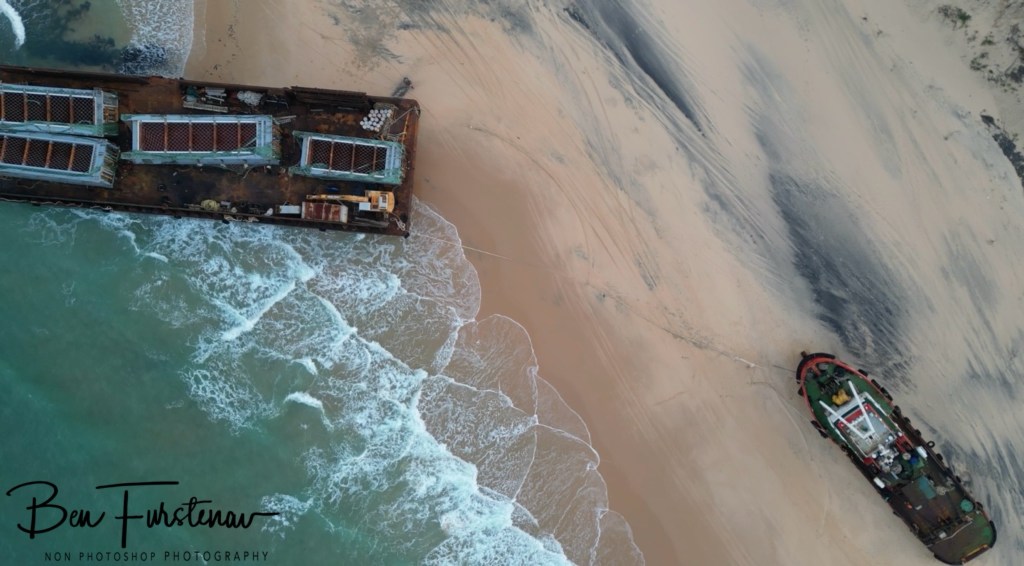
These objects weren’t supposed to be on the beach.
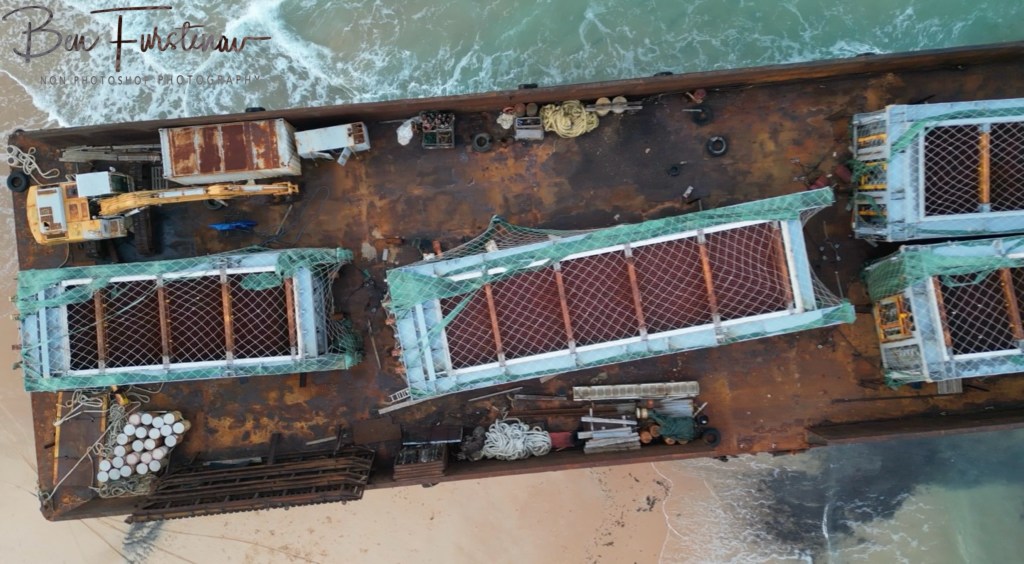
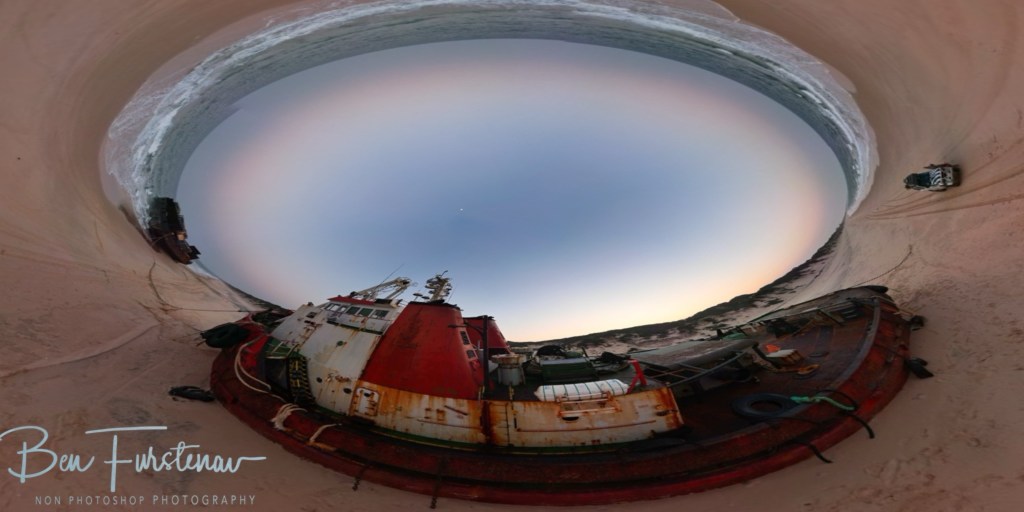
From what I understand of the security fellow, who protects this government property, is that the forces of this cyclone pushed this carrier ship toward the shore.
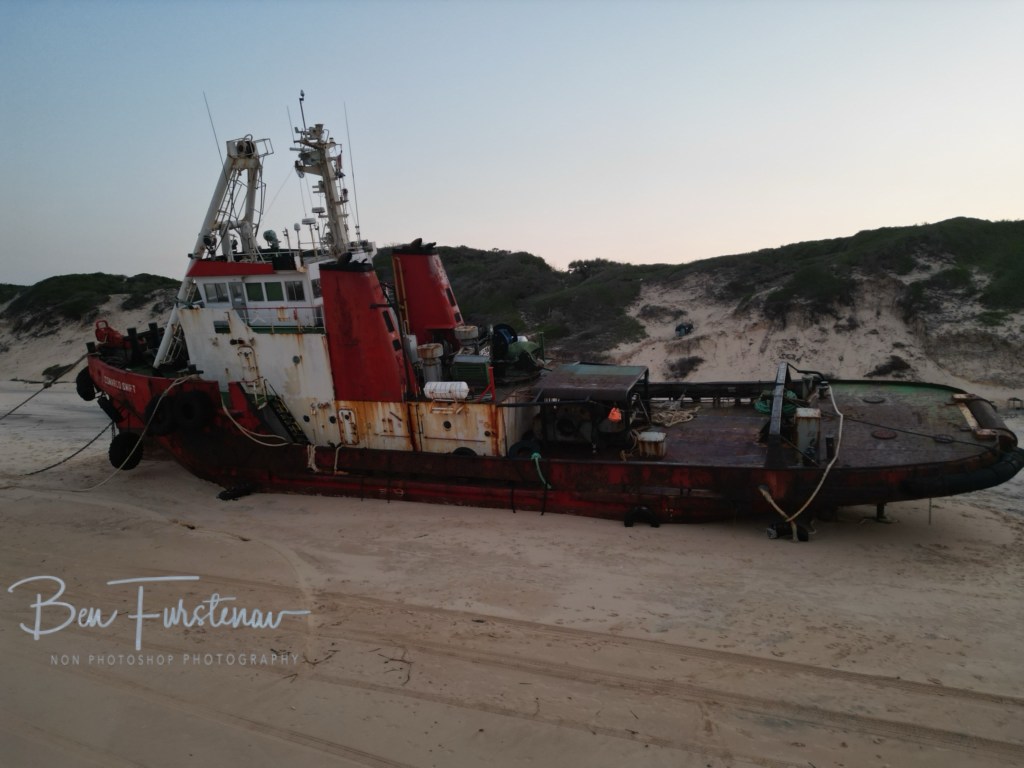
A tow boat was called in to help and evade disaster.
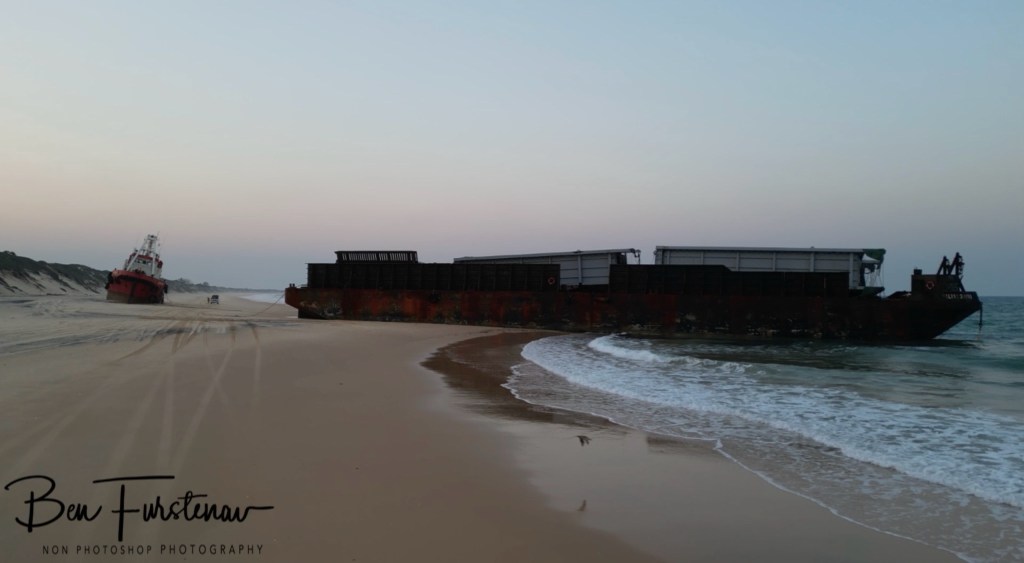
Now, both ships are stranded, rusting away to nature’s cause.

It’s hard to believe the forces created to push and shove these ships off their waterways.

But, one security guard is sitting here 3 days on, 3 days off to protect this property.
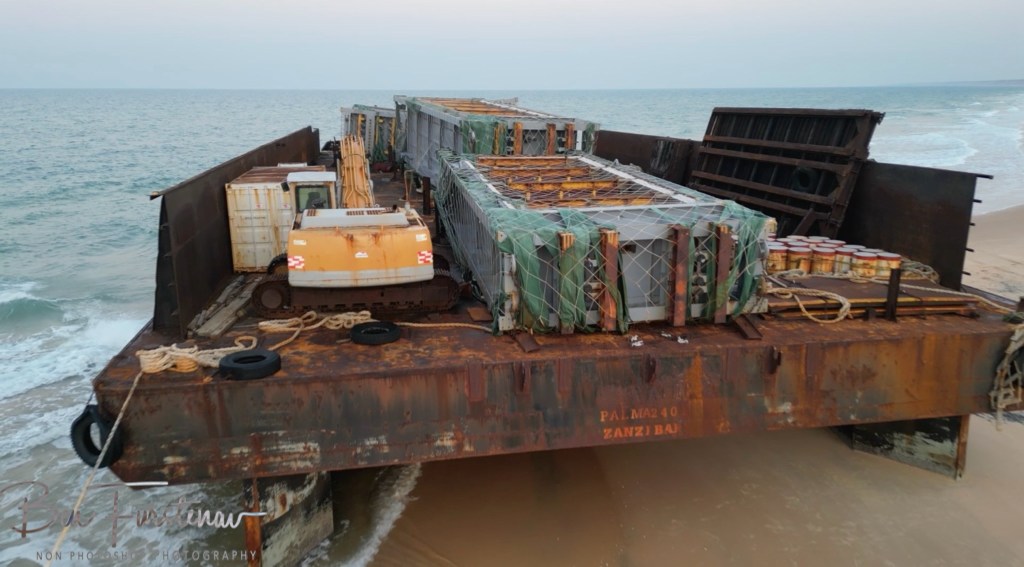
Who is going to steal an excavator and how.

He asked for some water and food after I landed Rick, taking some unbelievable aerial footage. Well, at least he’s got a job.
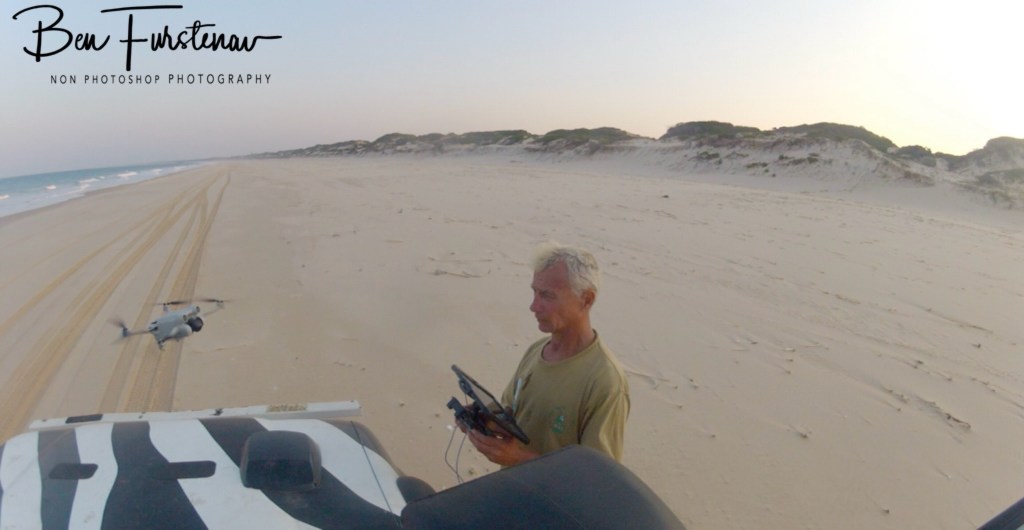
I flew Rick whilst driving on the beach, which still isn’t easy. But at least I didn’t have to worry about large obstacles on the beach. Apart from those two steel monsters.

I arrived at the northern tip shortly after and asked for a camping spot somewhere. Zimba and I don’t need much space. However, camping is not allowed here (anymore?)

I had a late lunch next to a pile of plastic rubbish as far as I could see.

It was insane. Was my effort at Machangulo in vain?
 Travels with Ben