I was sipping on my coffee when I heard some footsteps approaching.
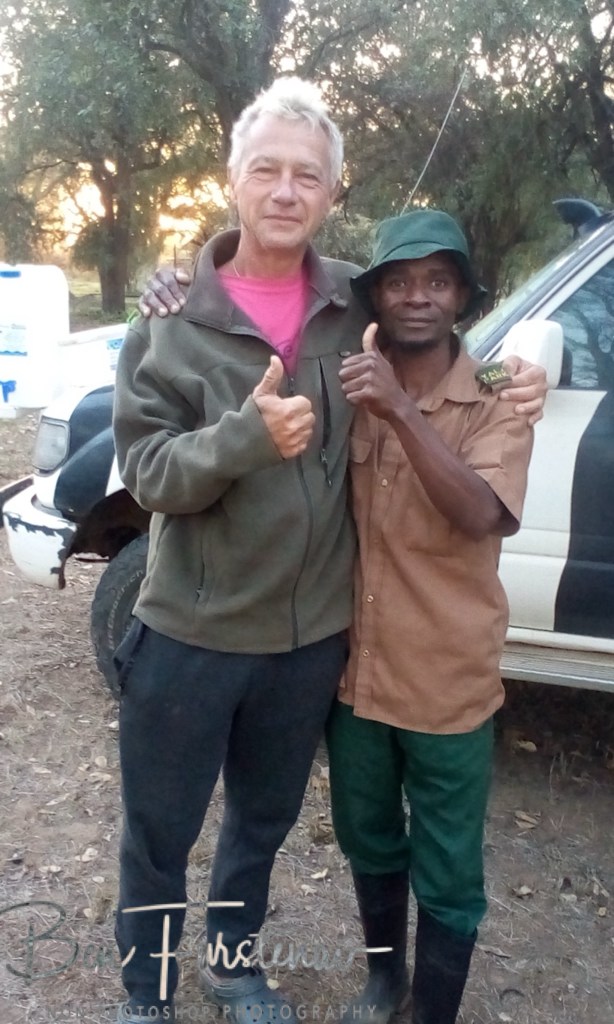
‘Mr Ben, I finish my shift now. Can I take a photo?’ Eric asked. He just loved Zimba. He liked me too he said, but the zebra…? All staff here at Nyala Park have been extremely welcoming and friendly. ‘Nasuka Bangi’ I replied, ‘Of course, you can.’ I wasn’t quite awake yet but had to get going.
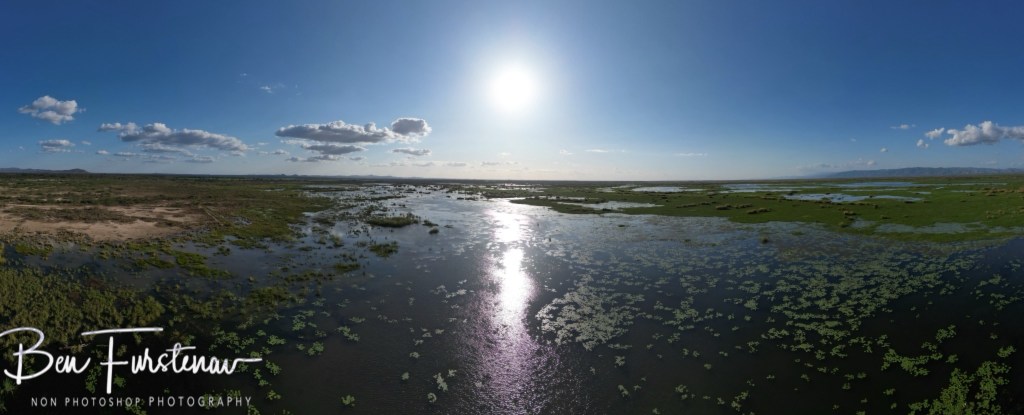
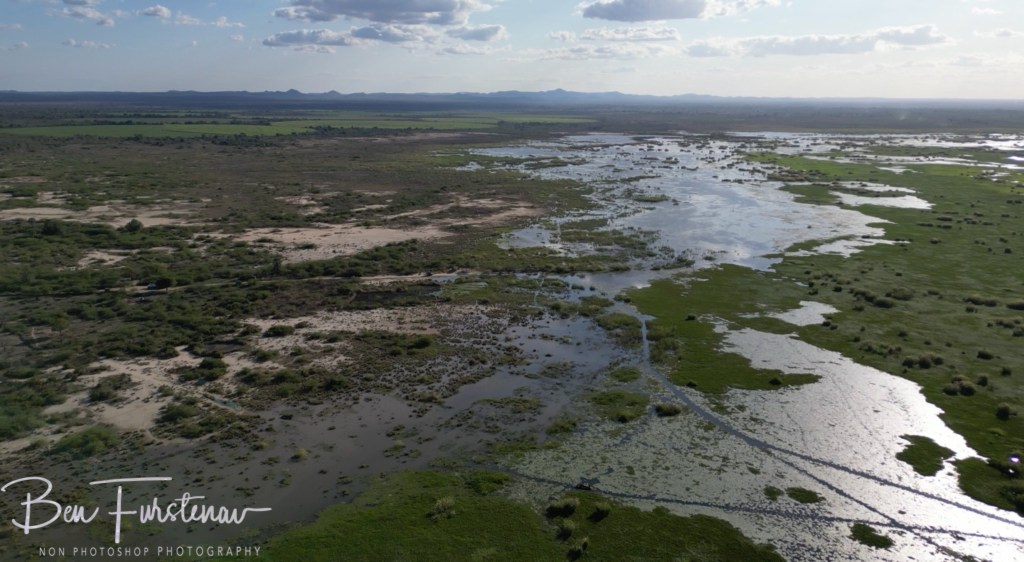
My aim for the day was the ‘Elephant Marsh Reserve’, a vast expanse of swampy waters fed by Malawi’s only ever-flowing river, the Shire River. Even though being a ‘Reserve’, there is little information on where to go and how to explore. On the water is obviously the best option and I prefer a man-powered boat to a noisy hovercraft. So, what did I do?
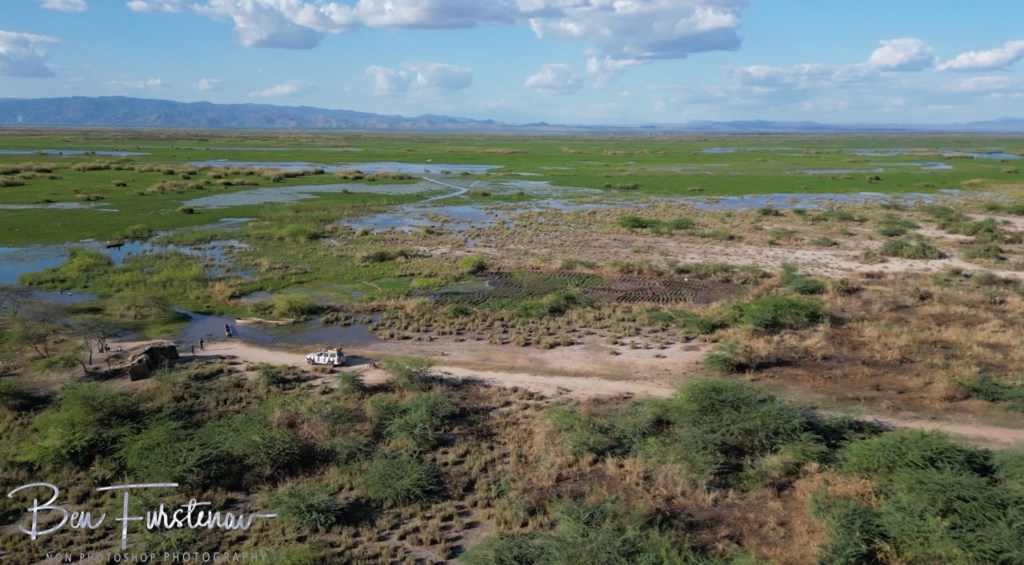
I looked on the map, what road led to or was close enough to the water’s edge. Bangula, eh? Bangula it is. I found the turn-off to the lagoon on a very busy, highway market day at Bangula.
Ja, of course, did Zimba turn many heads as we squeezed through tight paths and surprised communities. ‘Msungu, Msungu’ the kids yelled as I waved back. I don’t think I ever get used to those big eyes on our approach.
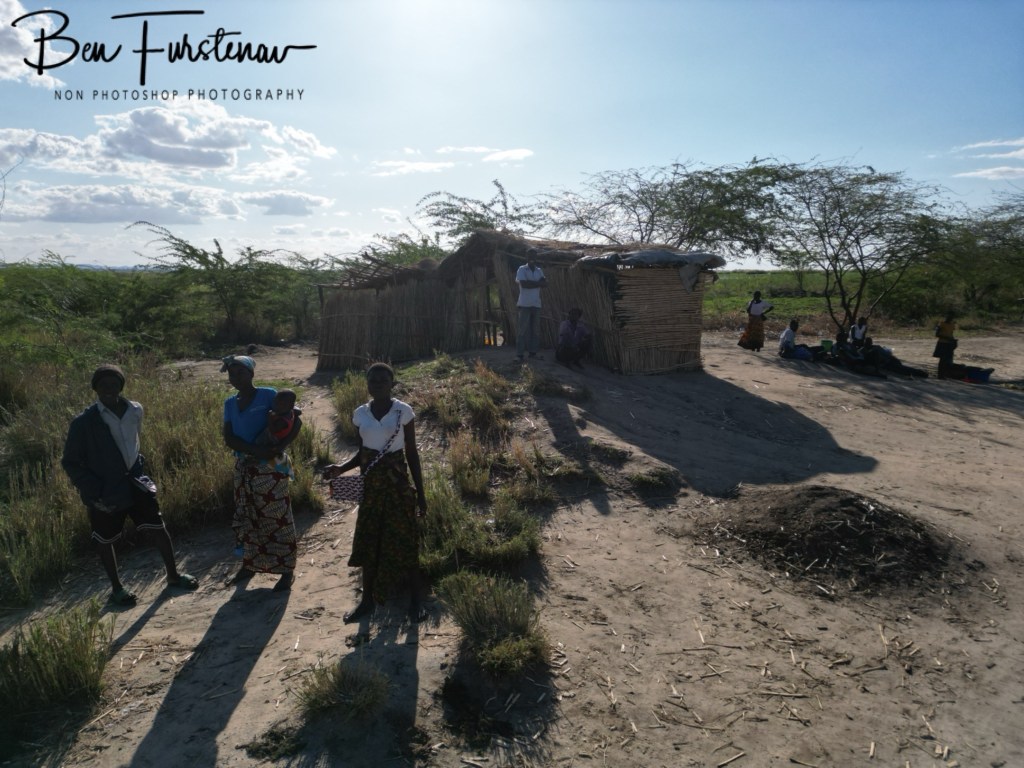
The same big eyes greeted us as we parked at the waterfront. A small community was nestled by the lagoon, sitting under cover from harsh sun rays. I took my OM-D camera and played ‘Msungu Tourist’. I don’t think they ever had a white man (or woman) visiting here and asking to explore these marshlands on a dugout.

I was allowed to take a few photos, it was a perfect location for reflections.

Some craftsmen were occupied refurbishing those traditional pirogues. Malawians are very handy with their tools because they have to be. Only one young adult spoke some English and we agreed on a price for a two-hour paddle.
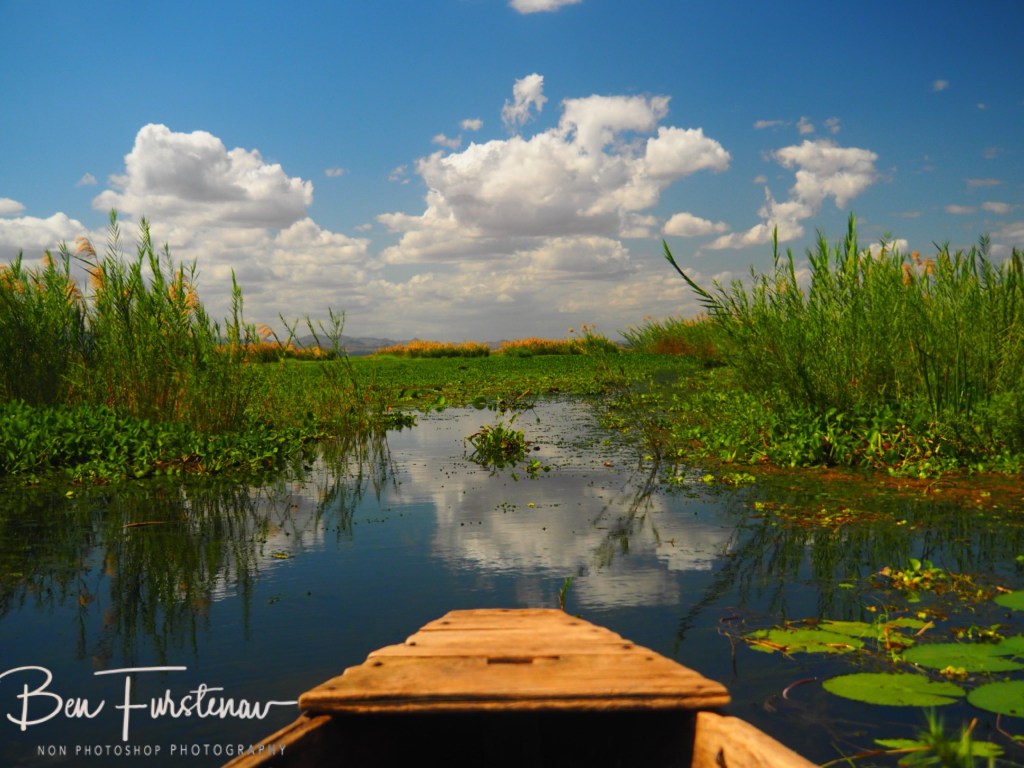
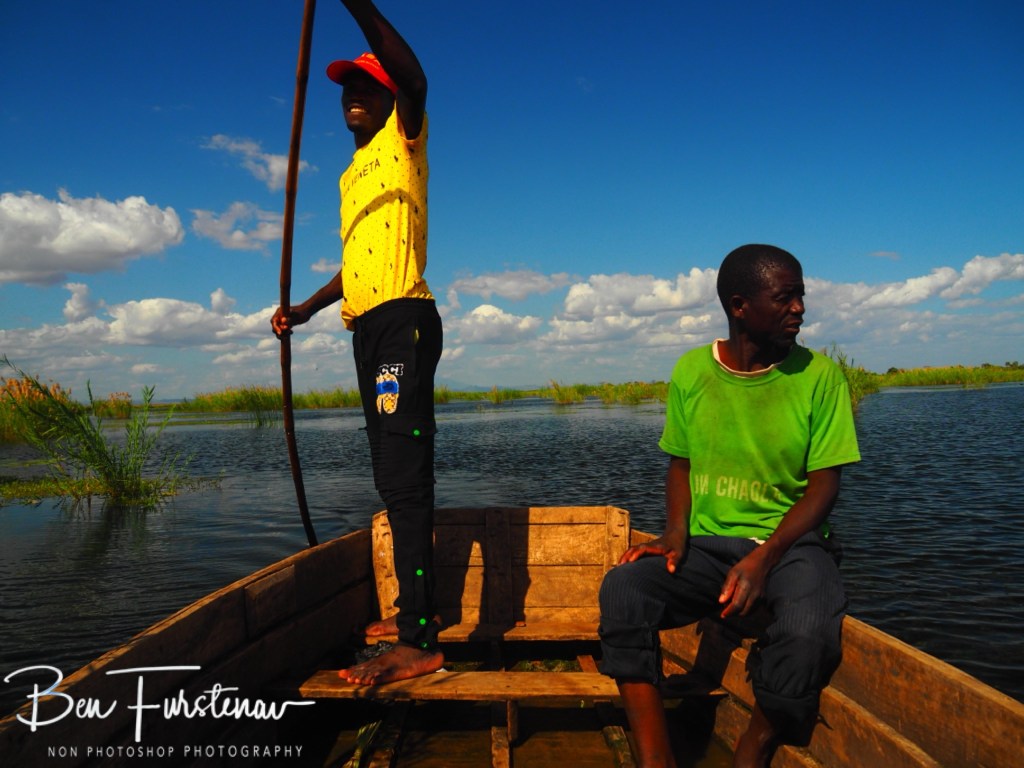
A more Msungu kinda boat was the only transport available for this tour and two stickmen handled the kinetic energy on shallow waters. It was around lunchtime and steaming hot.
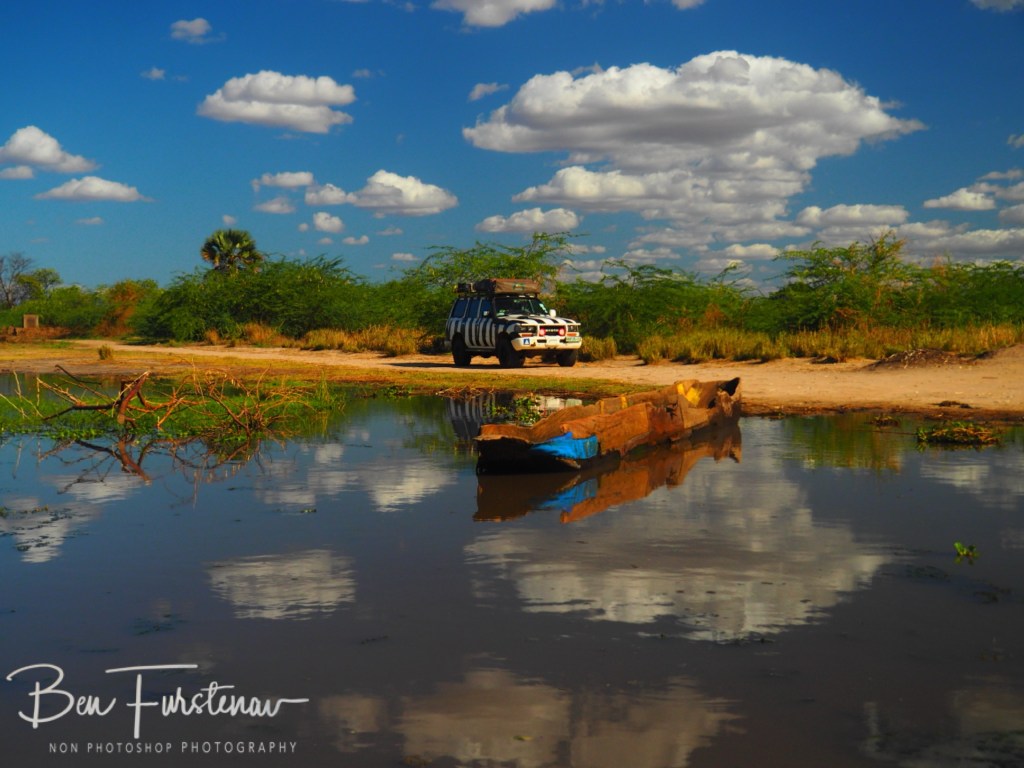
Zimba’s inside thermometer showed 43.6 degrees Celsius. There was no shade anywhere to be found, he sweltered in the heat. Despite the name, there are no elephants found in this marsh. Anymore.
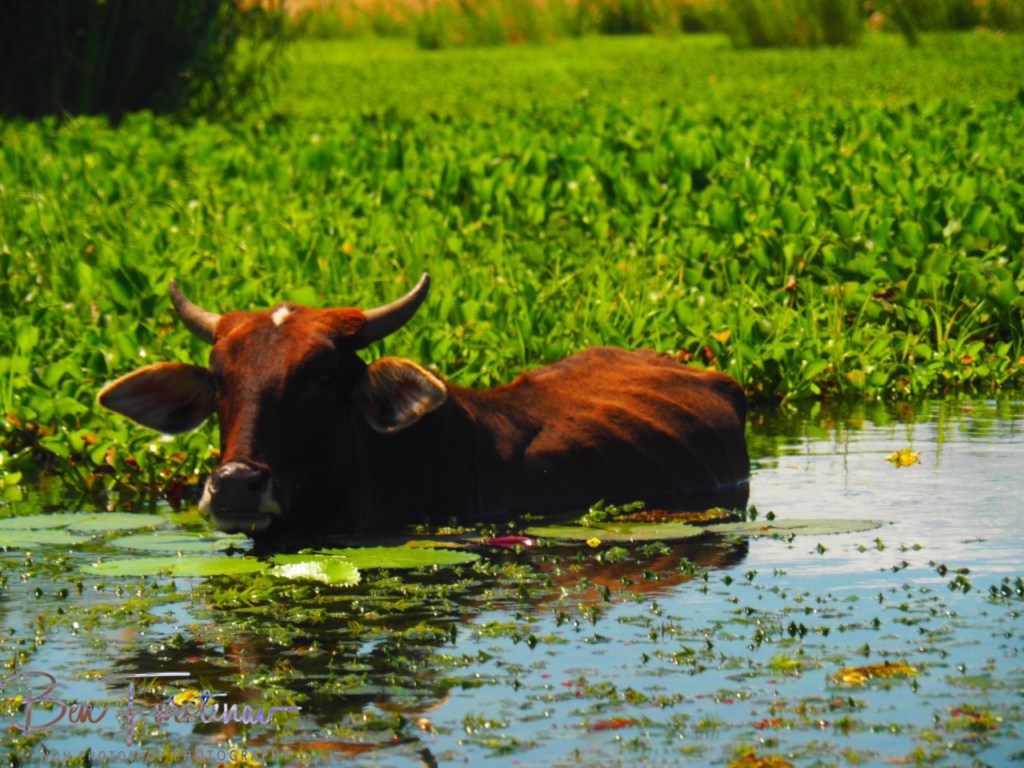
Instead, as always, humans gained reign and instead of elephants, cows now enjoy cooling waters in the midday heat.
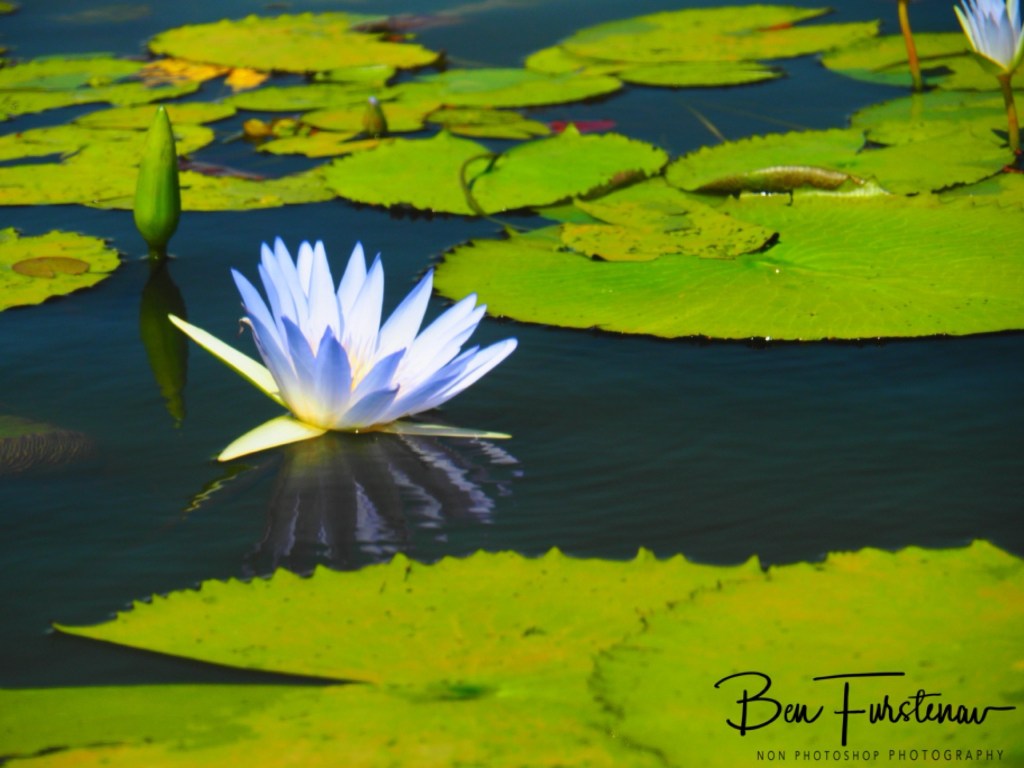
Imagine seeing a herd of elephants in here, feeding on lush green or water lilies. Nope, not anymore.
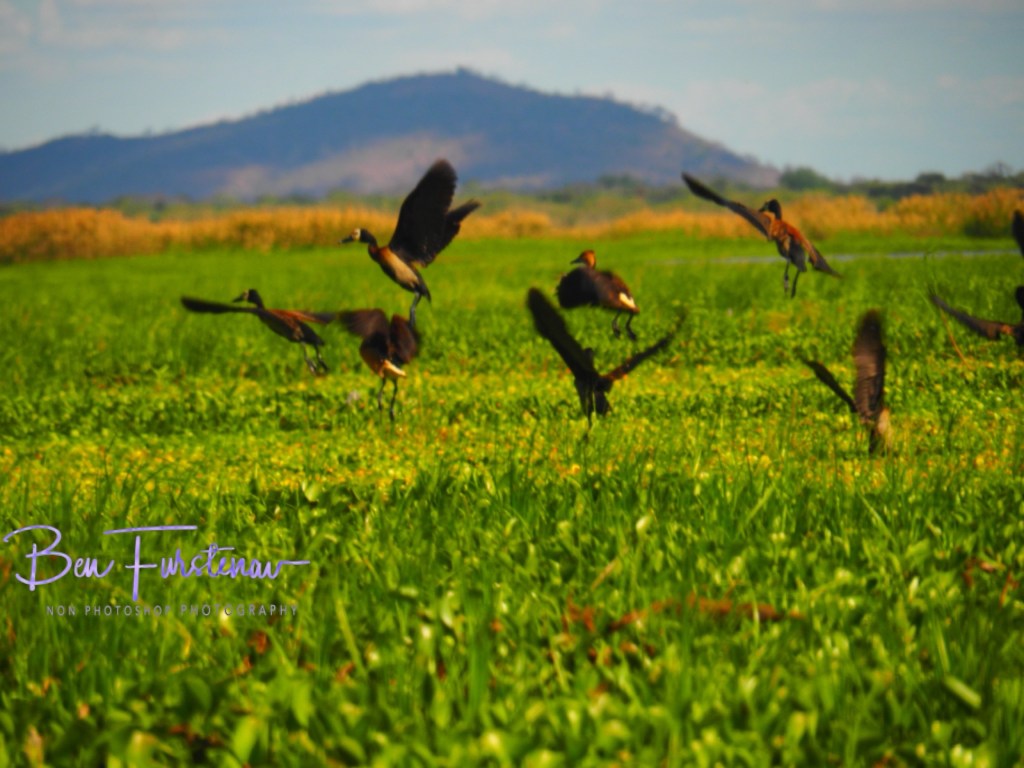
However, this marsh is a vital habitat for birds of all kinds and sizes. Eagles and egrets feed on various fish on the menu. While seasonal migratory birds use this marsh as a stopover or final destination en route.
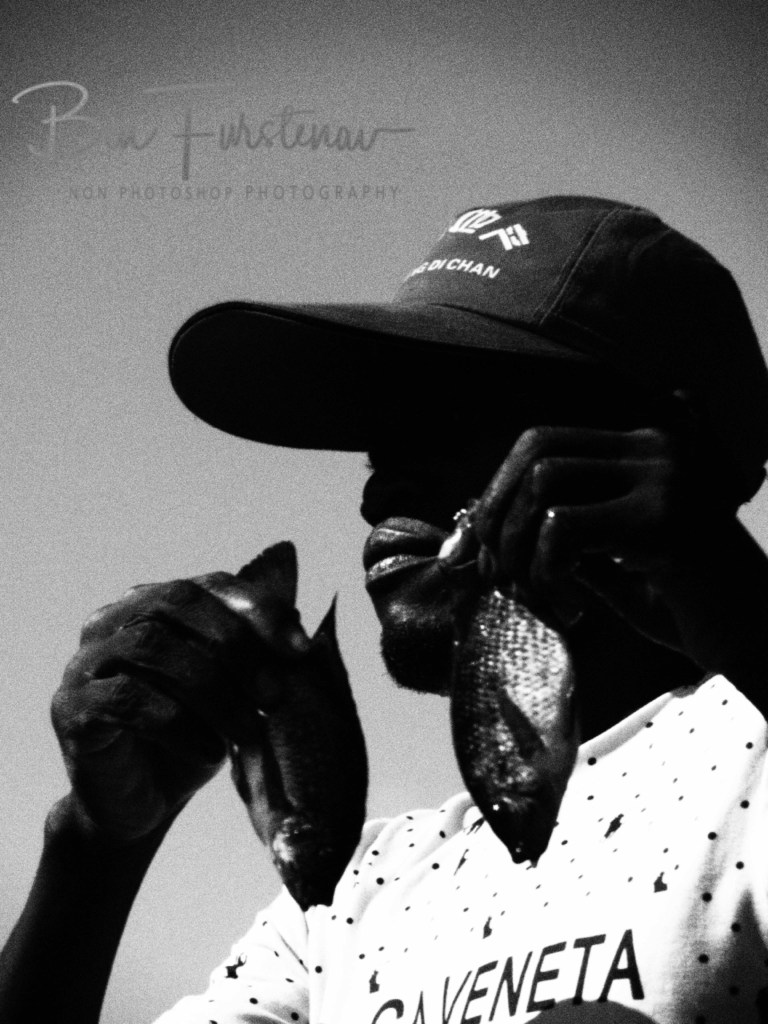
Fishing is the main activity of food source, either with nets or hook, line, and sinker.
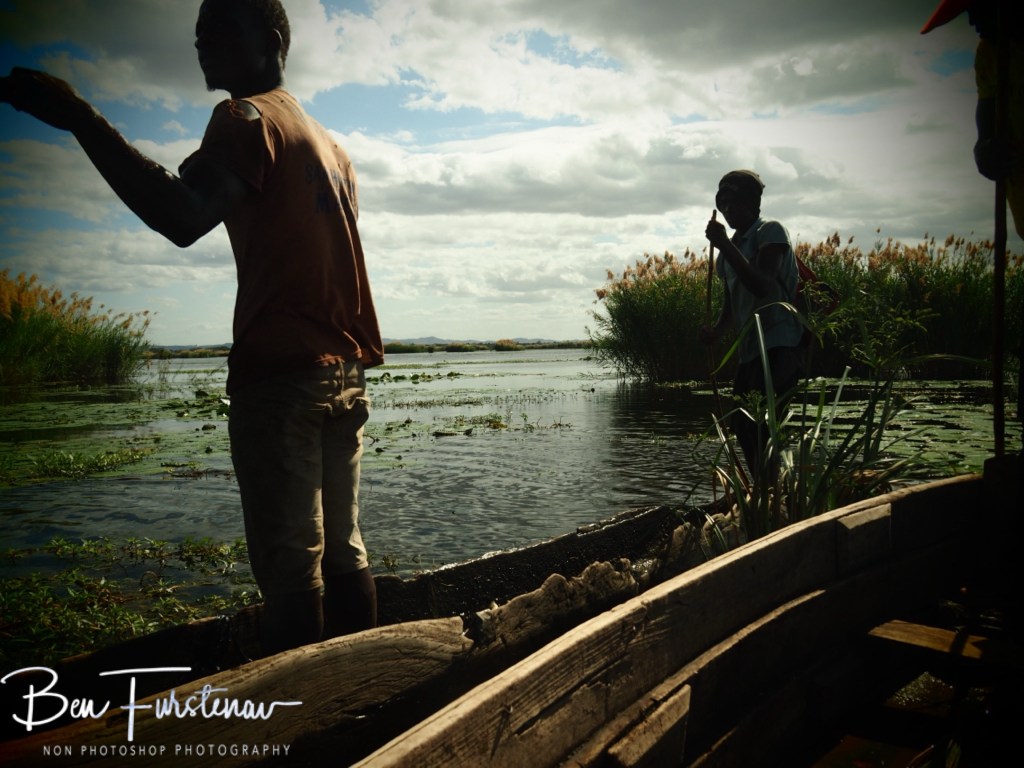
Haggling for prices is a daily routine it appears.
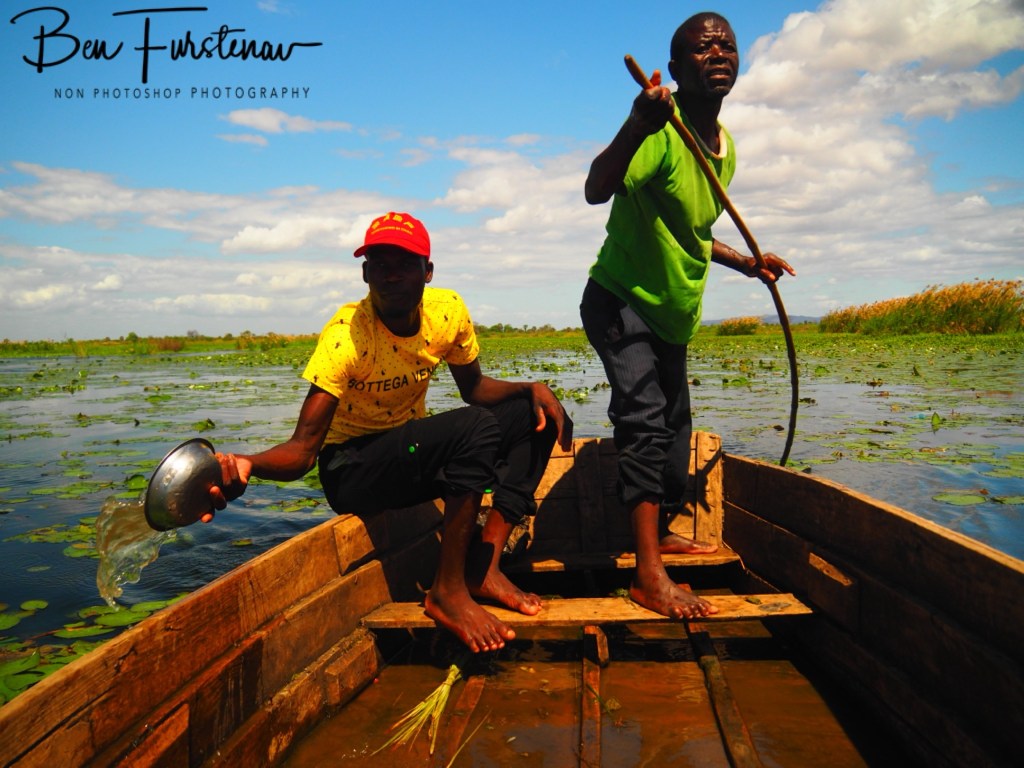
Due to incommunicado, the three of us didn’t talk much.

That was okay as I enjoyed the silence. Dina and Said were extremely welcoming and tried to explain a few interesting facts about this marsh without elephants.
Other fishermen we passed yelled out towards us, saying something like ‘Where did you pick this Msungu up?’
It was entertaining in all aspects I hoped for, just no elephants.
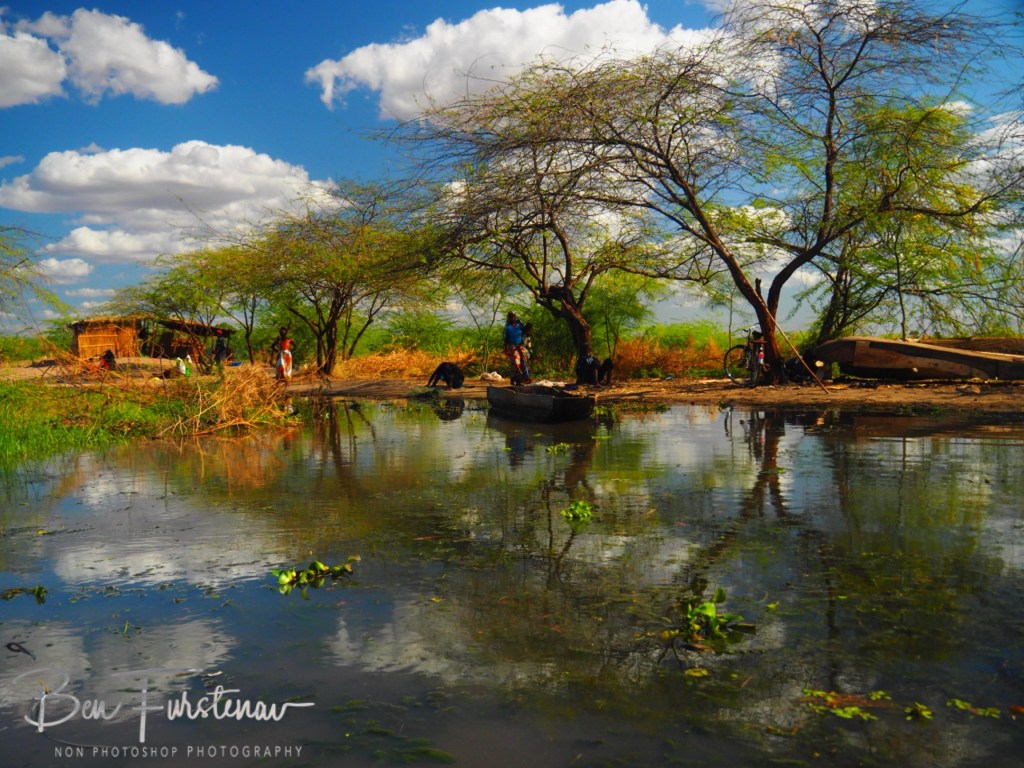
We pushed through ‘hippo’ trails made without hippos and ended up back at the starting point. I could see Zimba sweating in the heat.

Shortly after my arrival, a moped arrived and parked behind us. ‘You have to pay an entrance fee to this Reserve’ one young male said. ‘And you need to pay to hire a boat!’ Surely this was a joke.
‘Where were you when I asked for the Reserve Office?’ I asked Joseph Emmanuel. ‘There is no information, no indication, and for sure no signs.’
‘We are working on that!’ Maybe some time.’ Robert Bobo Gota replied with the little English he knew.’
‘No signs, no tourists, apart from myself’ I pointed out. It was quite amusing really as he showed his reflective vest saying’ Elephant Marsh Reserve’.
‘We heard from the locals that a Msungu had driven here. On a zebra’.
‘Are you sure that it was me?’ I joked. Well, I paid the entrance fee but had paid the stickmen and boat hire earlier.

I asked him if I could fly the drone over the marsh. If he could ask the locals or tell them about this flying object. It’s not an oversized mosquito, although he sounds like one. My Chichewa reigns from ‘Hello’ to ‘Thank you’. Most locals here speak only Chena in this southern region of Malawi.
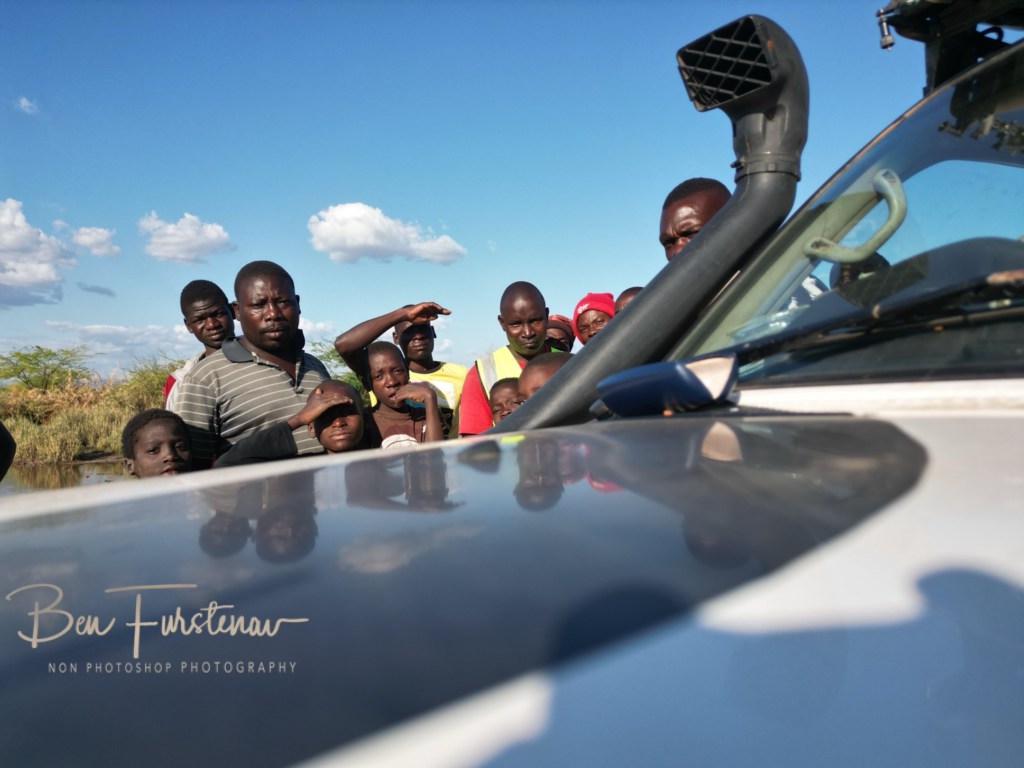
I used Zimba’s hood as my launchpad to get Rick airborne. Against all Australian Aviation Rules, I was surrounded by a dozen people staring at my iPad and/or the drone. I doubt that anyone here had seen a drone before.
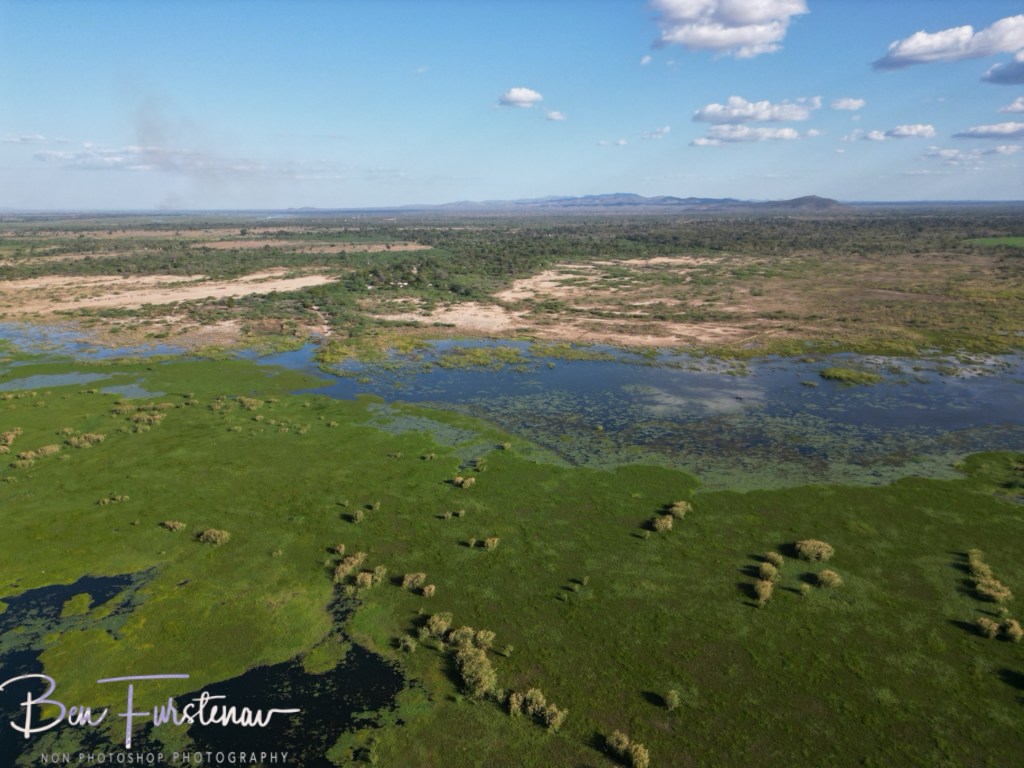
The marsh doesn’t yield any high objects I needed to avoid for a crash landing.
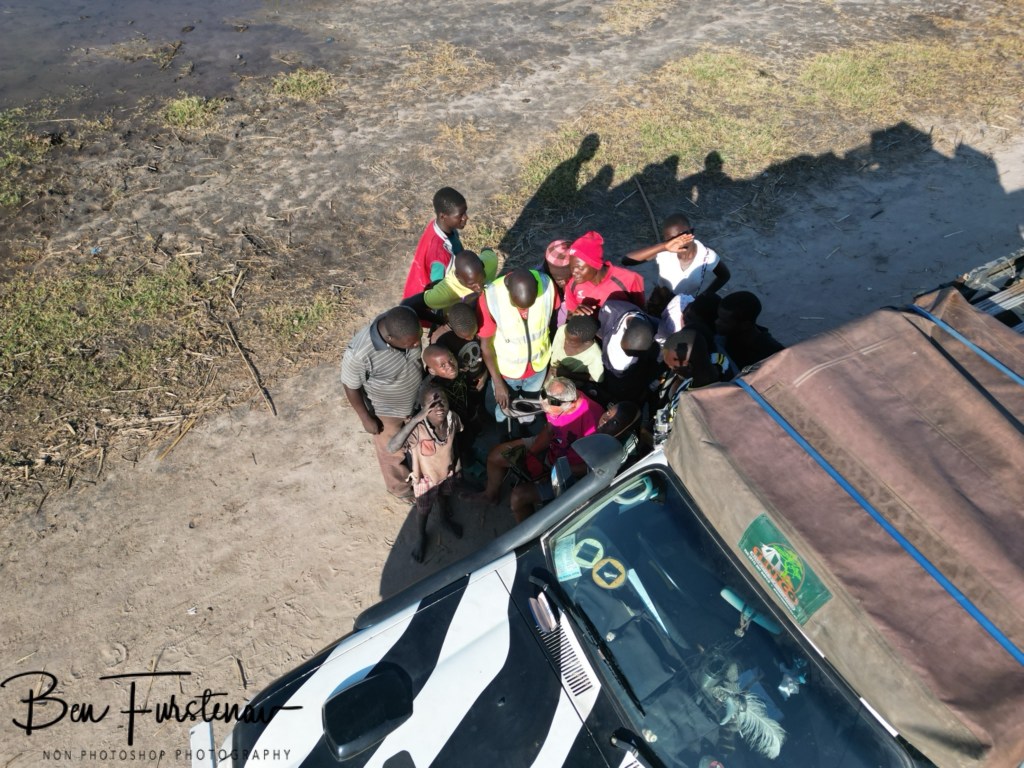
I sat in my camp chair and flew Rick high and low, near and far.
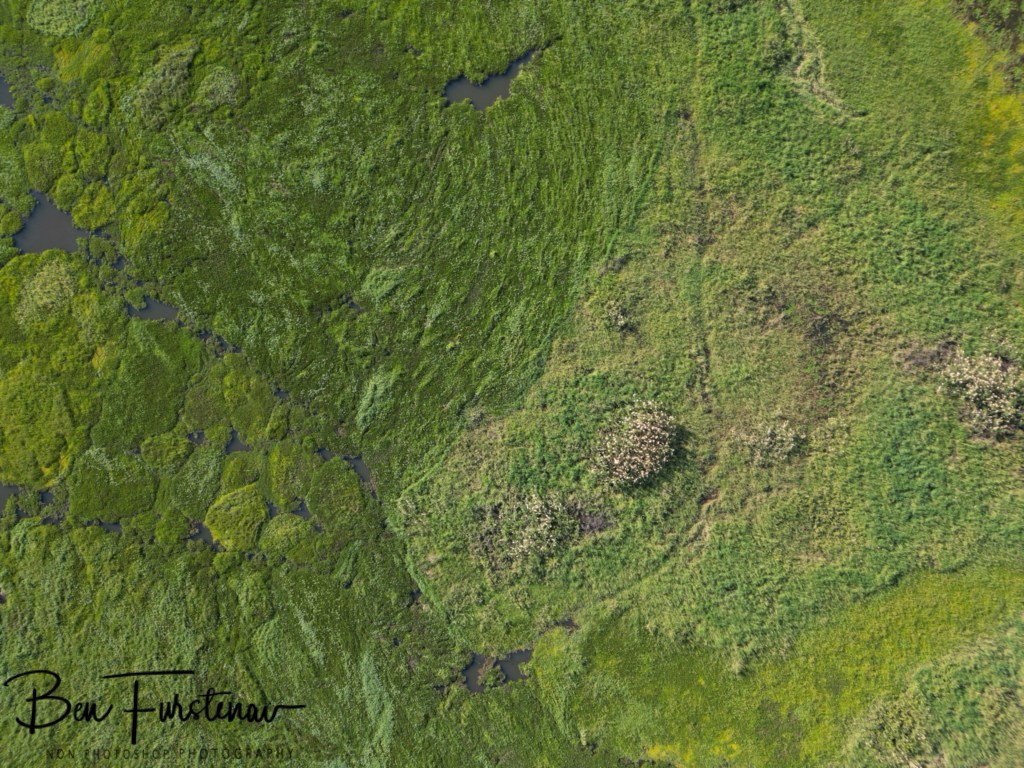
The locals stood behind me and watched Ricks’s flight path.

Whenever we saw a fisherman, the locals shouted out their name. They couldn’t believe that they could be seen from here as laughter surrounded us.
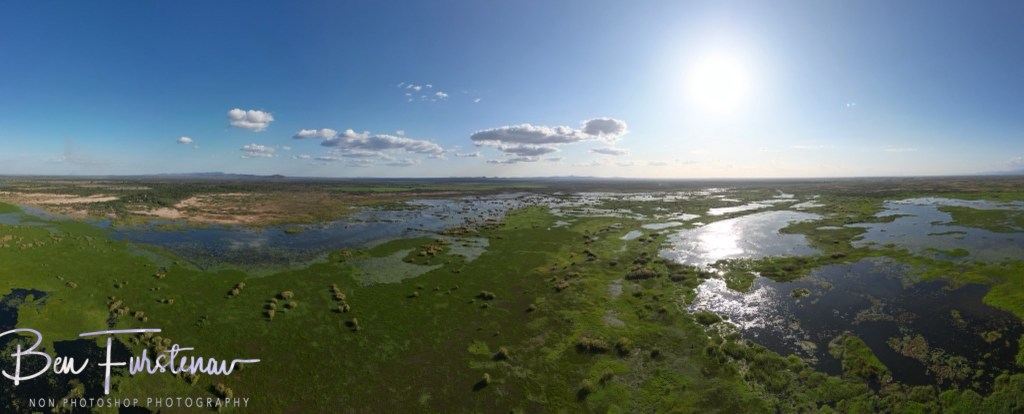
The shallow waters reflected the sun and clouds perfectly as Rick took some amazing videos and photos.
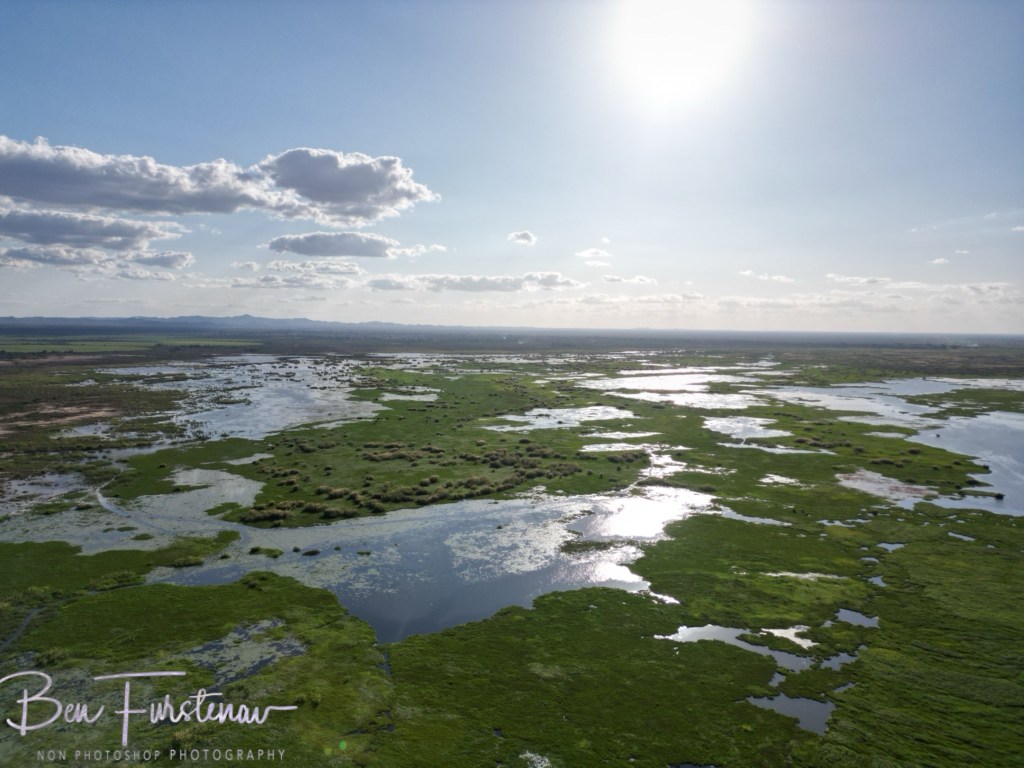
It would be a perfect location for golden hour photography at dawn and dusk and I would have liked to camp there.

However, the mosquitoes moved in the early afternoon. These shallow pools are a breeding ground for those most annoying of insects.

The risk of getting bitten by a malaria-infected Mozzis was extremely high.
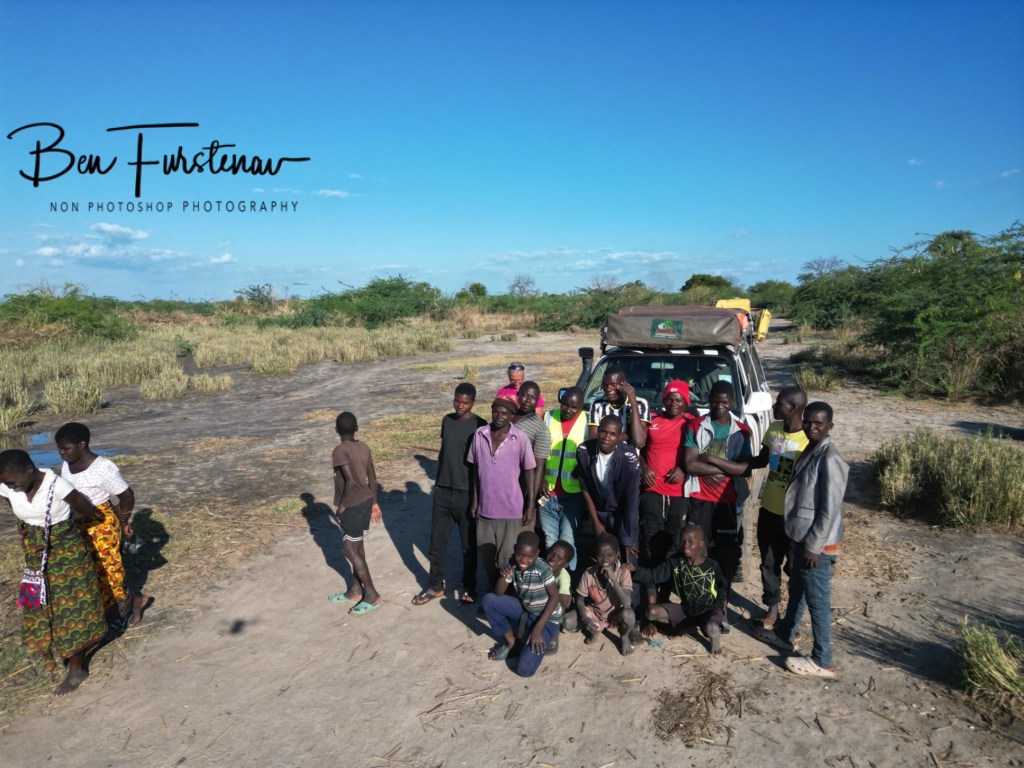
We took a few group photos of the flight crew, which still stared with eyes wide open. It was all too much for the women as they walked off. It was time for me to trot off as well. We needed to find a camp for the night and the only option was at the nearby Mvabvi Wildlife Reserve.
Joseph jumped on the passenger seat as I followed Bobo through those tight tracks. I needed to fill in the visitor’s book, which was a notepad. Joseph then accompanied us to the turn-off road to the Wildlife Reserve as we exchanged our details.
 Travels with Ben