The track followed through some rough terrain and along some small communities, dotted with my favorite African Tree.

This is Baobab country, hot and dry.

Baobab trees of immense sizes stood tall against the sinking sun.

Guess what I will be doing here the next few days?

I reached the gates to Mvabvi National Park after sunset, there was no one there. The gate was open as the track seemed to be a common route to combine communities on either side of the fence. I followed Maps.Me to the designated campsite, which was a tiny grassy spot just by the side of the road. Oh well, there are no signs here, this must be it. More and more commuters passed by as I set up the loftus tent and relaxed with a nice cuppa tea.
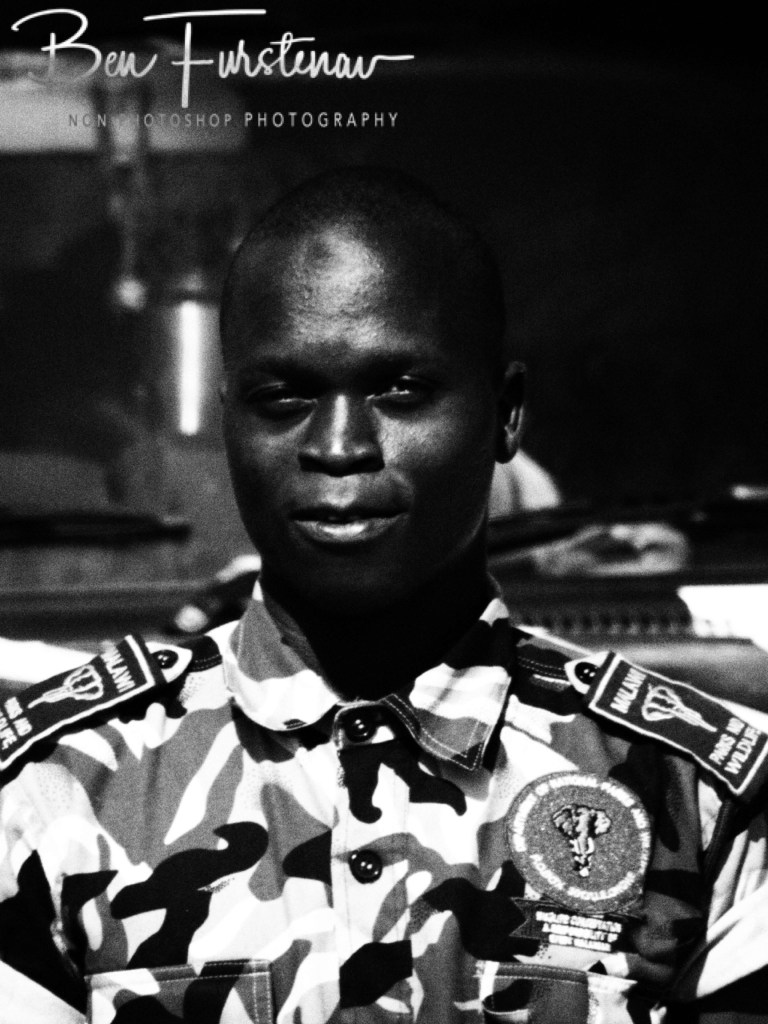
I woke up early to the sounds of bypassing trucks and mopeds. ‘There are buffalo here, but they are very shy’ Mohammed the Park Warden said when I asked him about this wildlife park. “You need a zebra crossing for the buffallos with this traffic’ I joked. I had driven back to the park entrance to pay my stamp duties. Mohammed greeted me friendly and we were instantly on the same wavelength.

He is a short and skinny fellow and is dressed as if he is ready to track down poachers. When I asked about Baobab in this park, he referred me to his colleague Edward, who has been living here a few more years longer.

So I followed the track as directed and ended up at an abounded lodge. All buildings were solid, just without doors and windows, etc. I sat in the shade for a while, it was steaming hot.

There were a few baobab trees here and there but nothing like the ones I saw yesterday outside the reserve near the community of Chipembere.

The community had the brand new ‘China City Shopping Centre’ which I found amusing. No Chinese or products of any kind were to be seen.

This village seemed never-ending as house upon house lined this track.
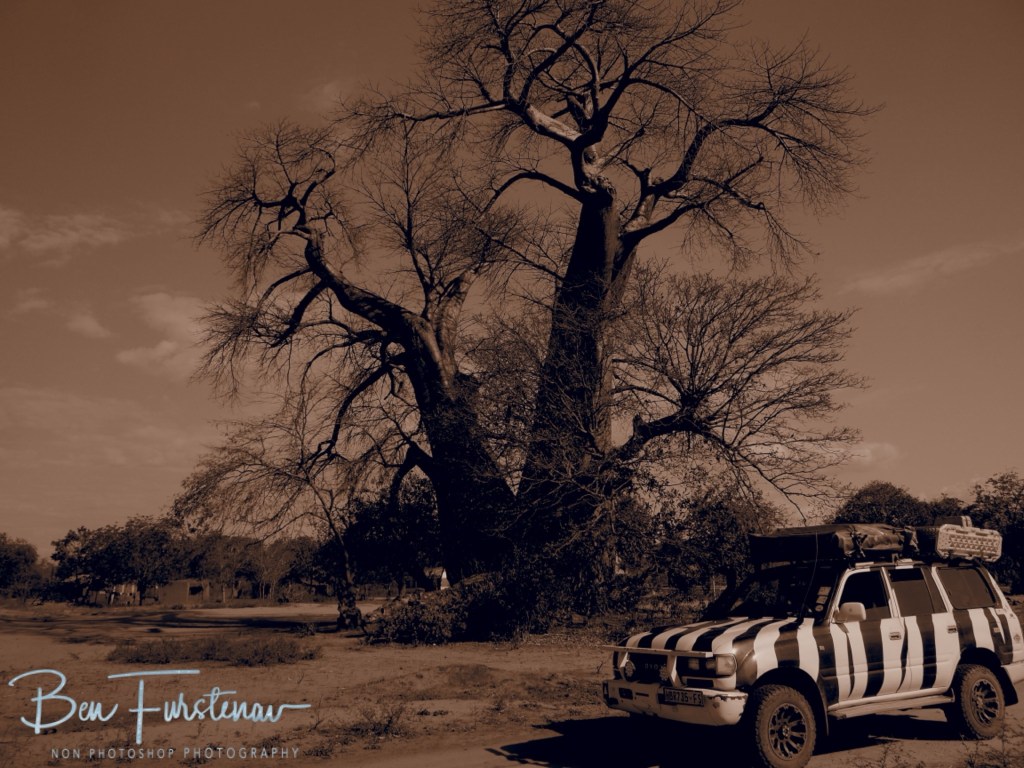
The issue I had was that Zimba was causing his usual attention. ‘Give me money’ people screamed from all sides.
Azungu (plural) don’t come here often.
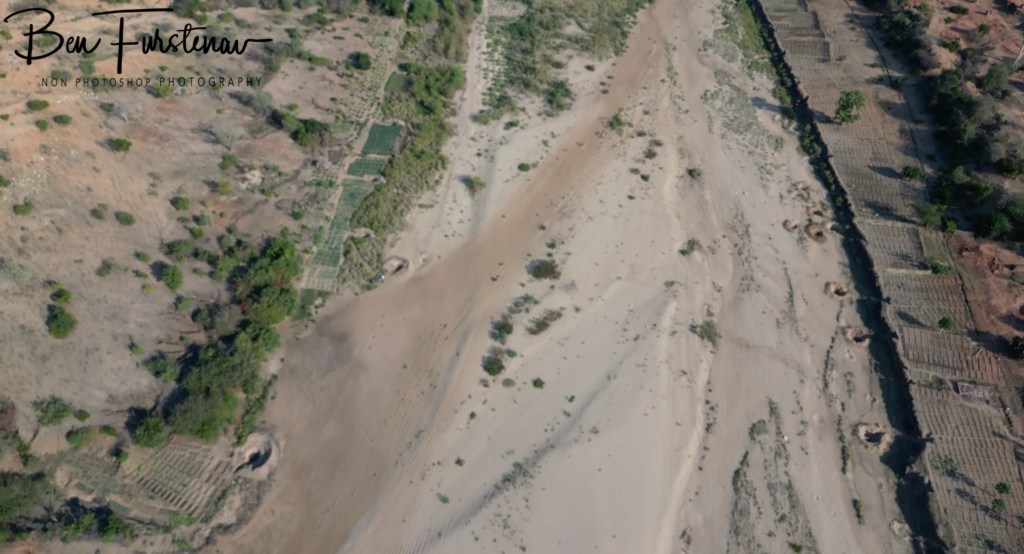
As I inspected the dry riverbed of the Thangazi River, a group of kids approached me and asked for money for a football. Kids need to be entertained and football is a great way to let off steam steam and have fun. Big Mistake!
As they were happily running off, all the other locals nearby kept approaching me, demanding money.

All I wanted was to fly Rick and capture these magnificent trees. Run Zimba, run.
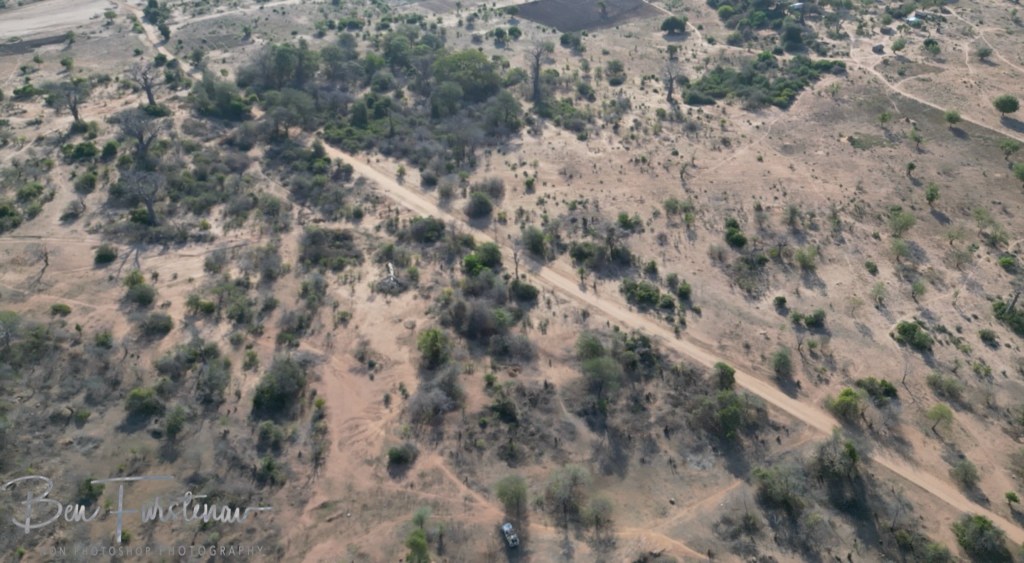
I found a spot eventually, hidden away from the main track. No houses, no farmland, no people.
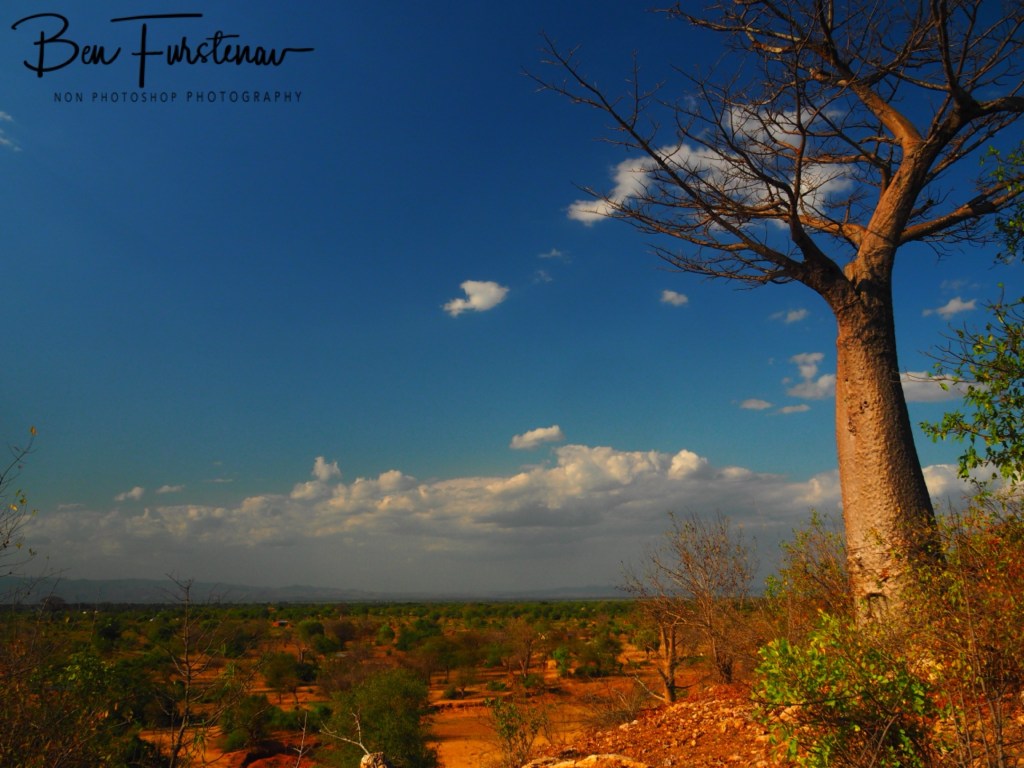
I climbed the little hill and launched Rick from there.
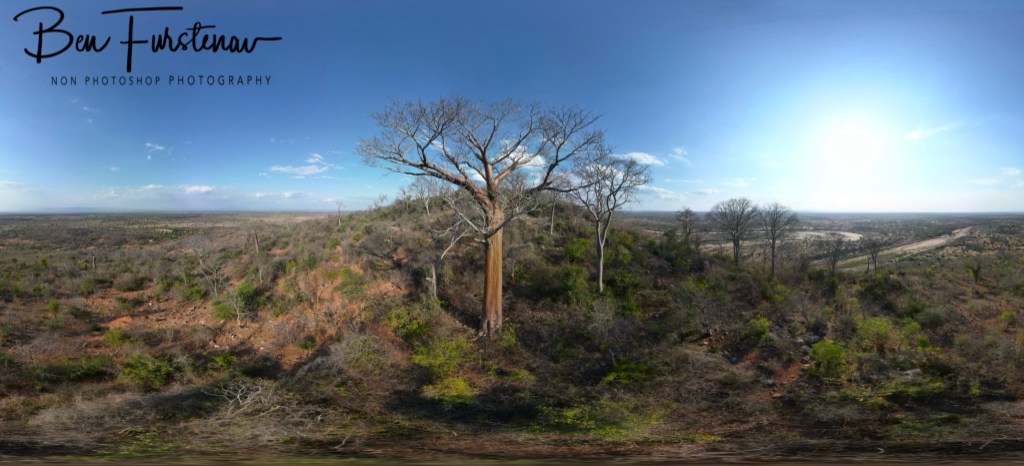
This gave me some sense of direction on where to find a larger concentration of baobab trees.
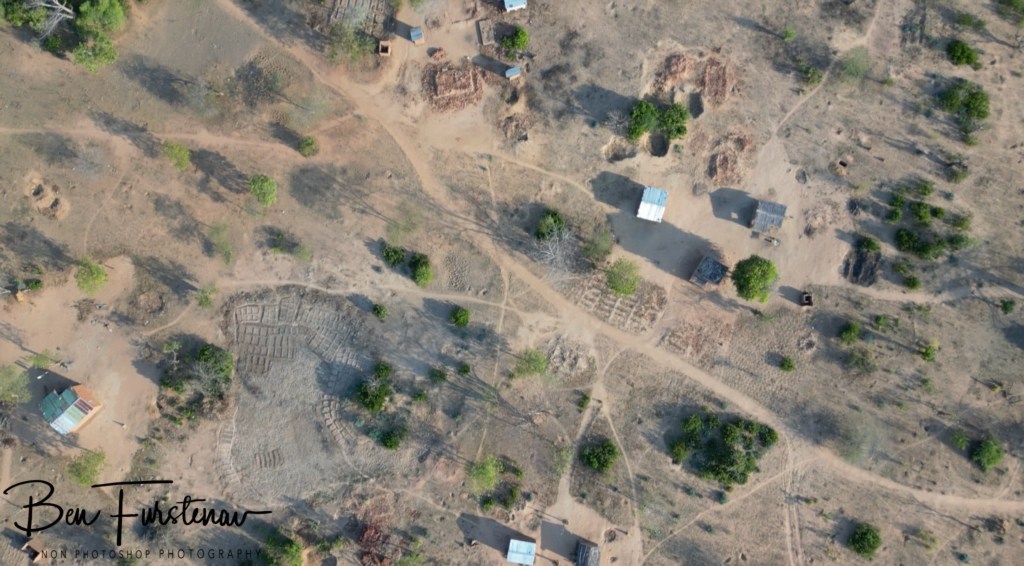
The drone flew over the communities from high above, undiscovered as villagers went on with daily chores.
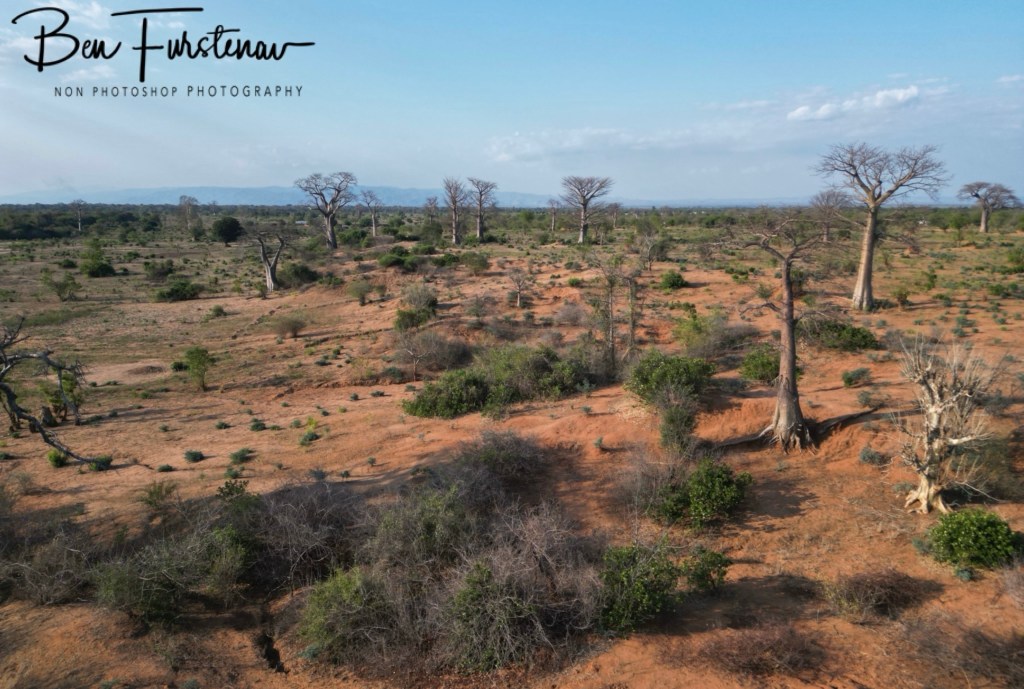
It was late afternoon already and if I wanted to photograph this scenic landscape for sunset, I must find an undisturbed area with baobab trees soon.
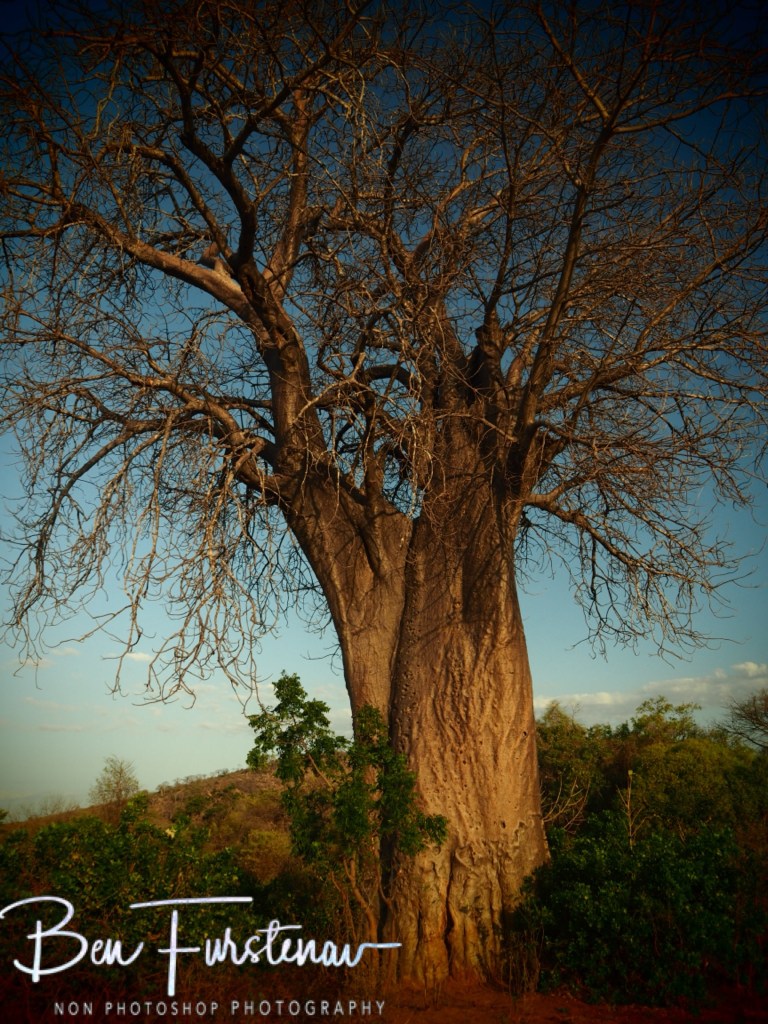
I parked Zimba next to the local cemetery where a group of big and thick baobab trees stood, surrounded by agricultural land.
Like sculptures, the trees stood artistically designed by Mother Nature.

The oldest baobab tree recorded is around 1000 years old. I would love to hear their point of view on today’s living.
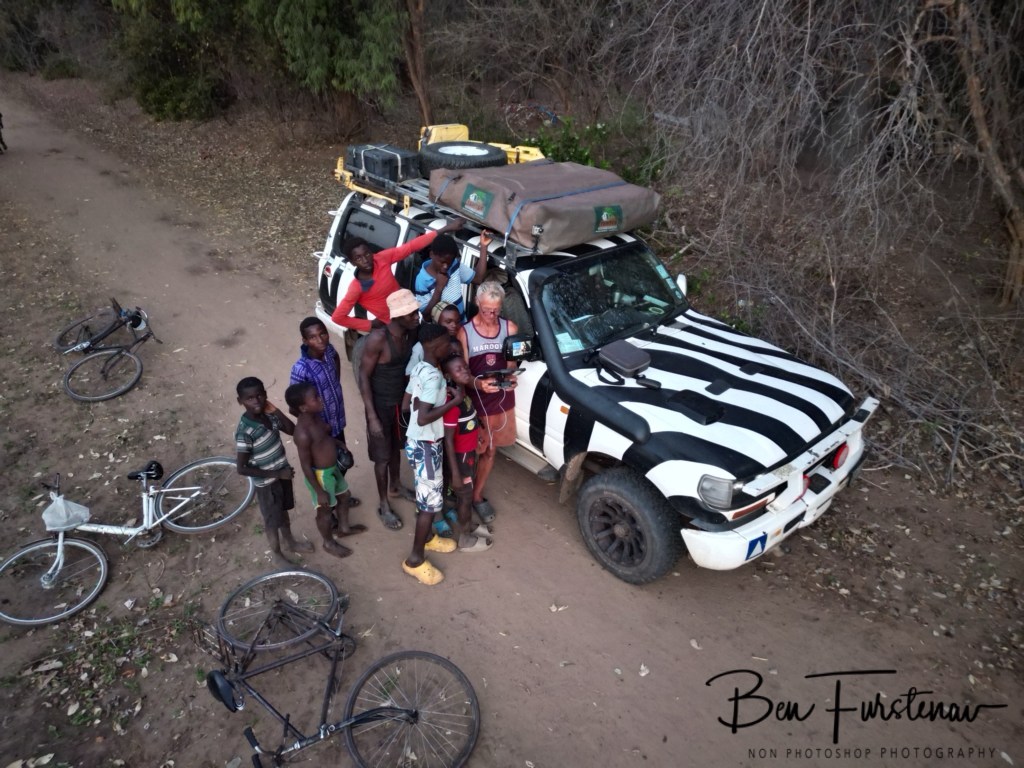
It came as no surprise that Zimba was spotted rather quickly and a group of kids stopped by on their bicycles.

They were just amazed by this flying saucepan with props. Smile and wave.

I am still trying to capture the golden hours with golden colors with the drone, but the landscape view and f2.8 focus point add too much light to the lens.

Practice, practice, practice. I will keep trying.
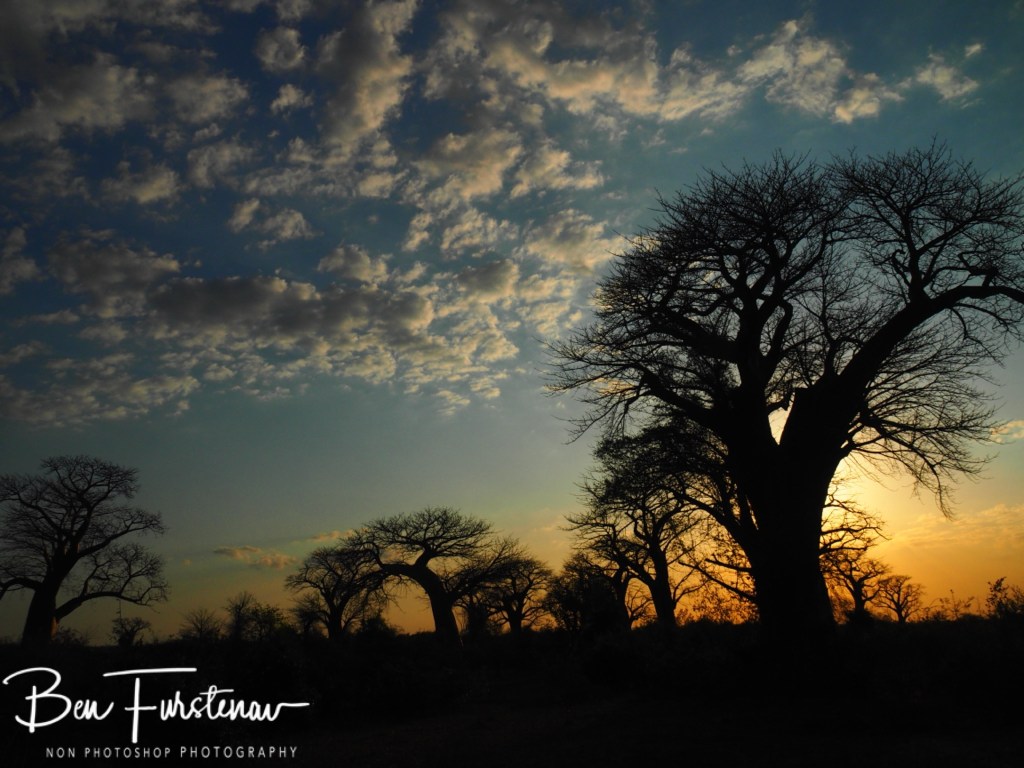
OM-D however, captures sunset and sunrise in rainbow colors. Love it.

I just need to get up higher so that I can capture the whole tree.

Ach, the life of photography. There is a lot involved.

I had an early start the next morning and was up and running at first light.
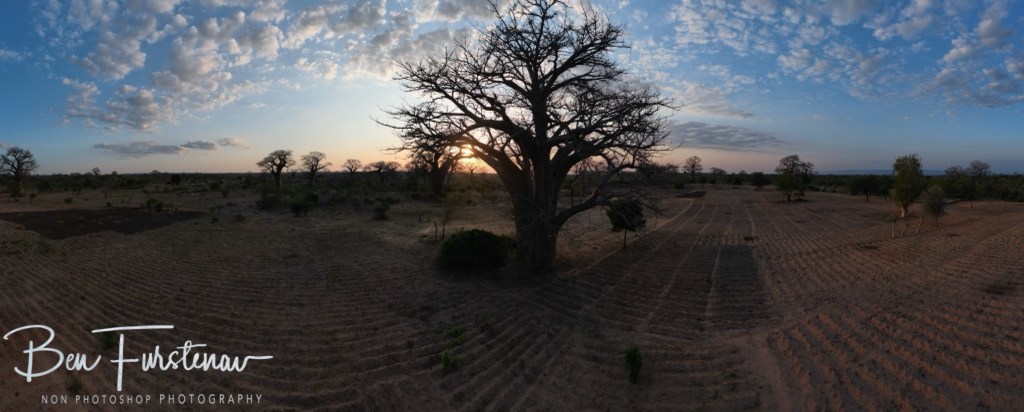
I drove to the cemetery spot again, this time to capture the sunrise, 12 hours later. I sat Osmo Pocket out for a Timelapse video before taking Rick into the air.

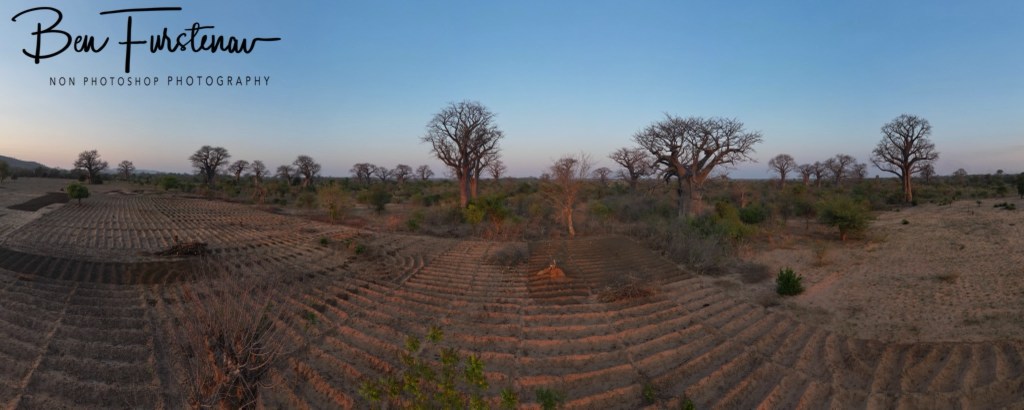
The carefully prepared farmland awaits the rainy season. This dry land can use a drop of water.
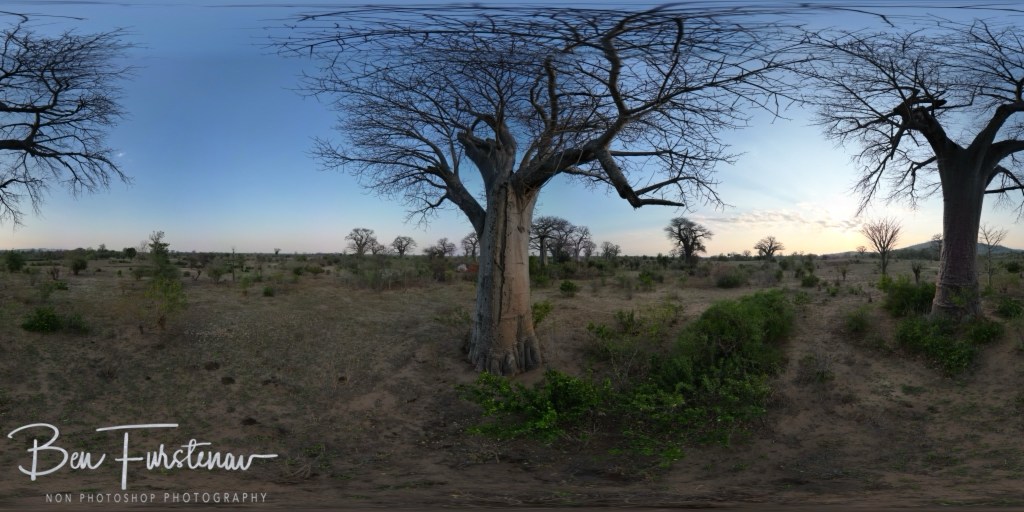
One thing that keeps impressing me about drone photography is the way it captures images.

Panorama shots are stitched together at a 180-degree angle. Even more fascinating is the sphere setting.

The drone takes shots from top to bottom in a 360-degree angle which is filed similar to a panorama photo.

On my iPad, I have several options to screenshot these images put on the globe.

These can be turned inside and out.

Or even have an eye factor. The centre point can be changed and rotated in any direction you wish. Pretty Cool, eh?
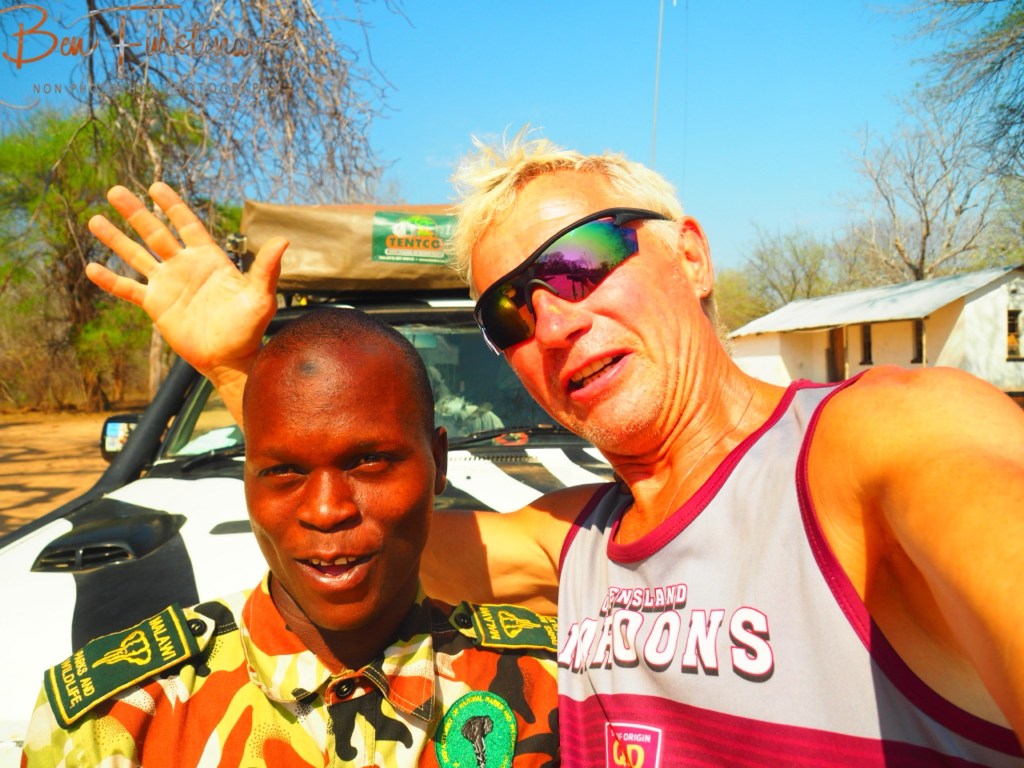
I returned to the gates of the national park without wildlife and exchanged communication details with Mohammed. He is a proud young lad and happy to give it his best shot here.
I like that dedication and pride. I still had a long way to go to my next destination.
 Travels with Ben