Visiting Zambia and not going to Victoria Falls would make as much sense as not seeing the pyramids in Egypt.
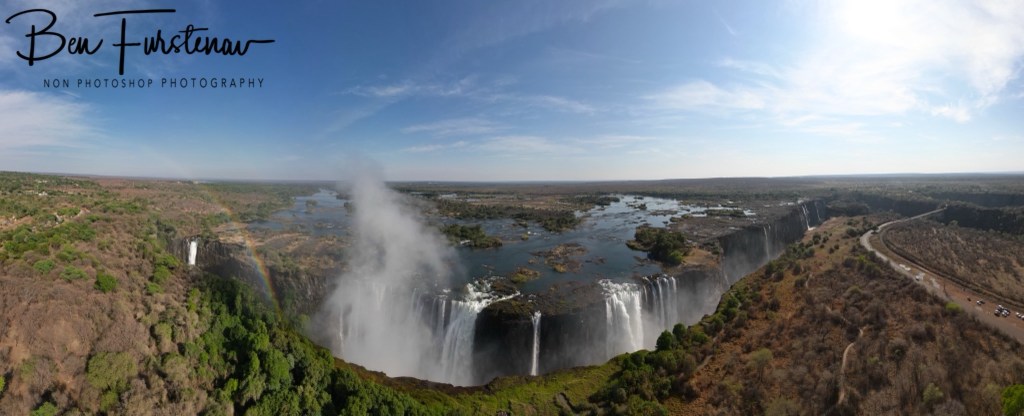
Africa’s largest waterfall is a must-see destination for any visitor, no doubt. Just be aware of the hodgepodge this tourist trap brings.
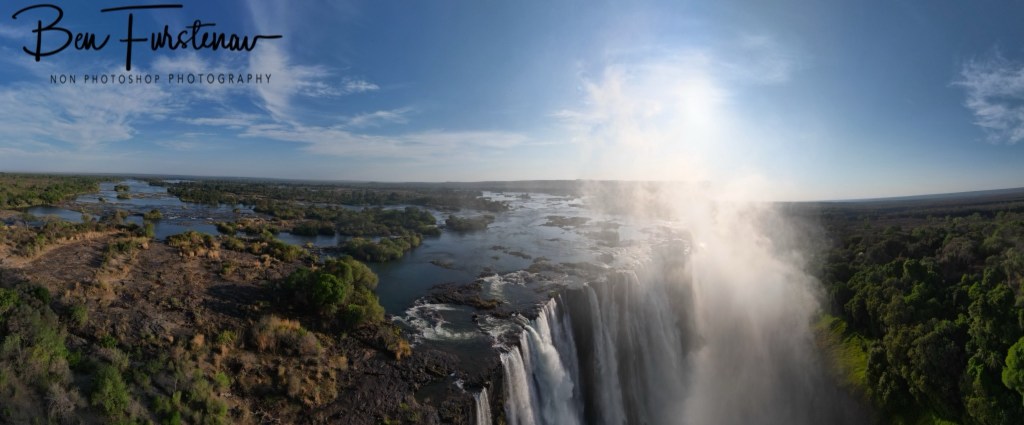
The falls are on the borderline of Zambia and Zimbabwe, formerly Northern and Southern Rhodesia.
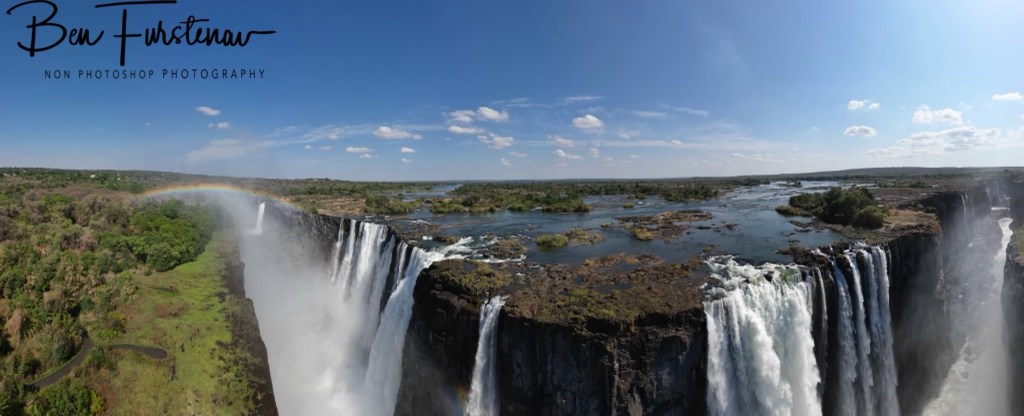
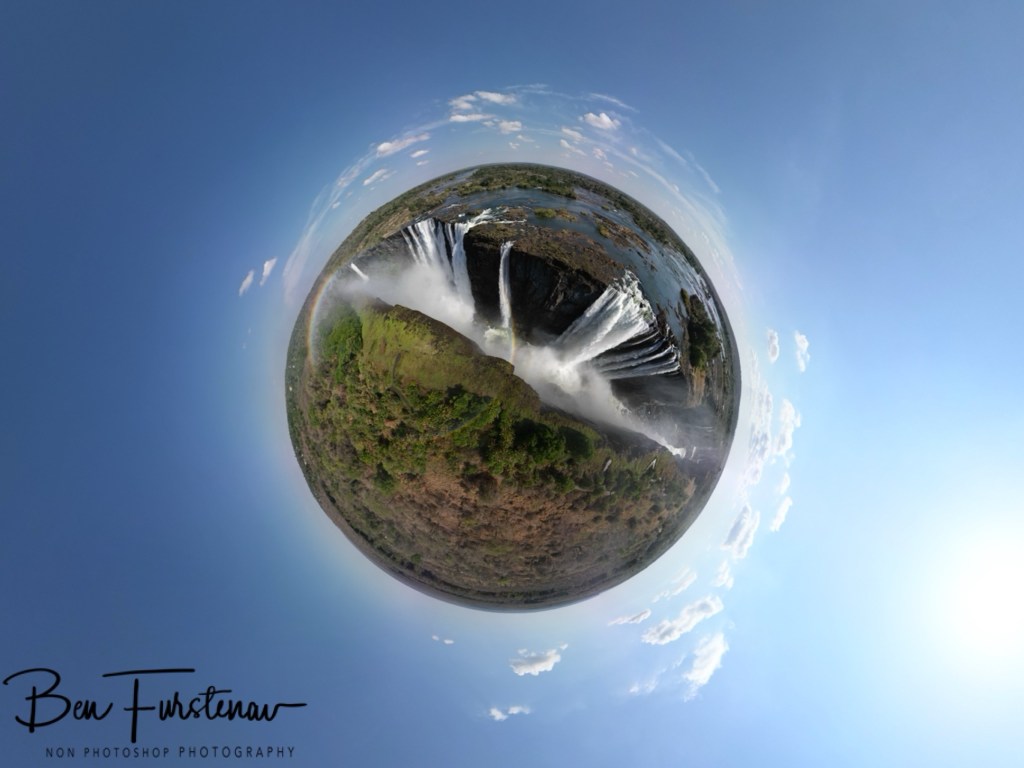
Victoria Falls is one of the three largest waterfalls in the world and spans a width of 1708 meters.
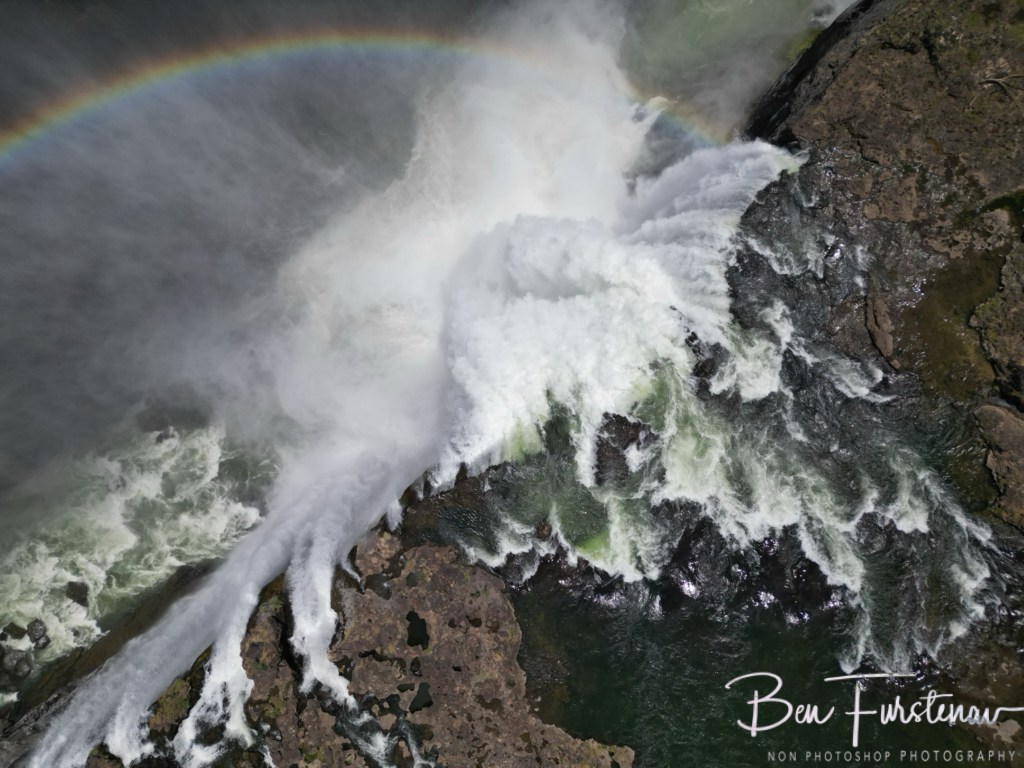
The rumbling waters had been recognized by the SAN people and other local tribes as the end of the world and were illustrated in many movies.

The place of smoke and rolling thunder as local tribes describe in Shona and Lozi language.
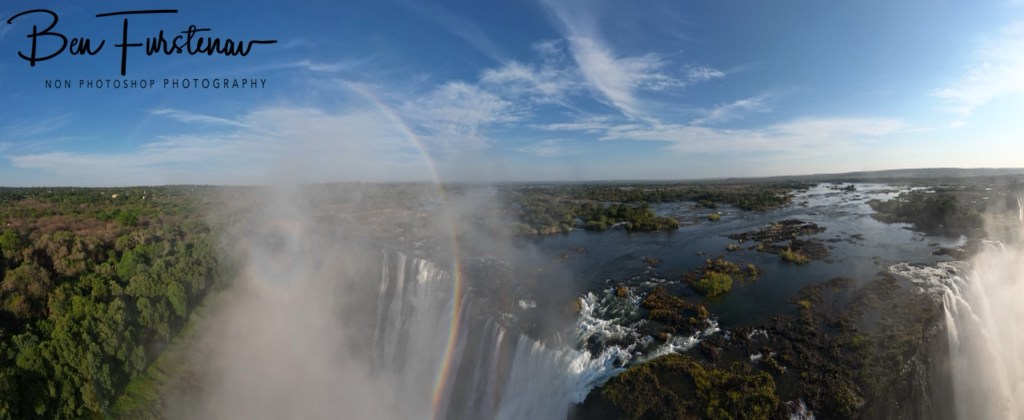
How did this spectacular natural phenomenon occur when there are no mountains or high plateaus for waters to plunge from?
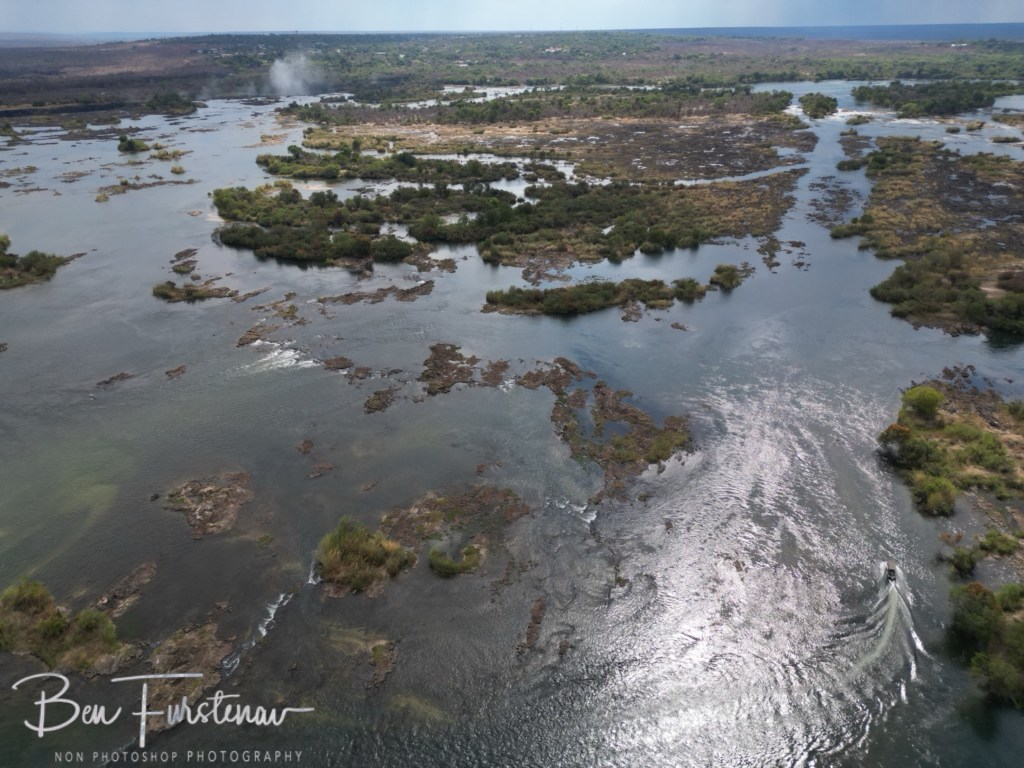
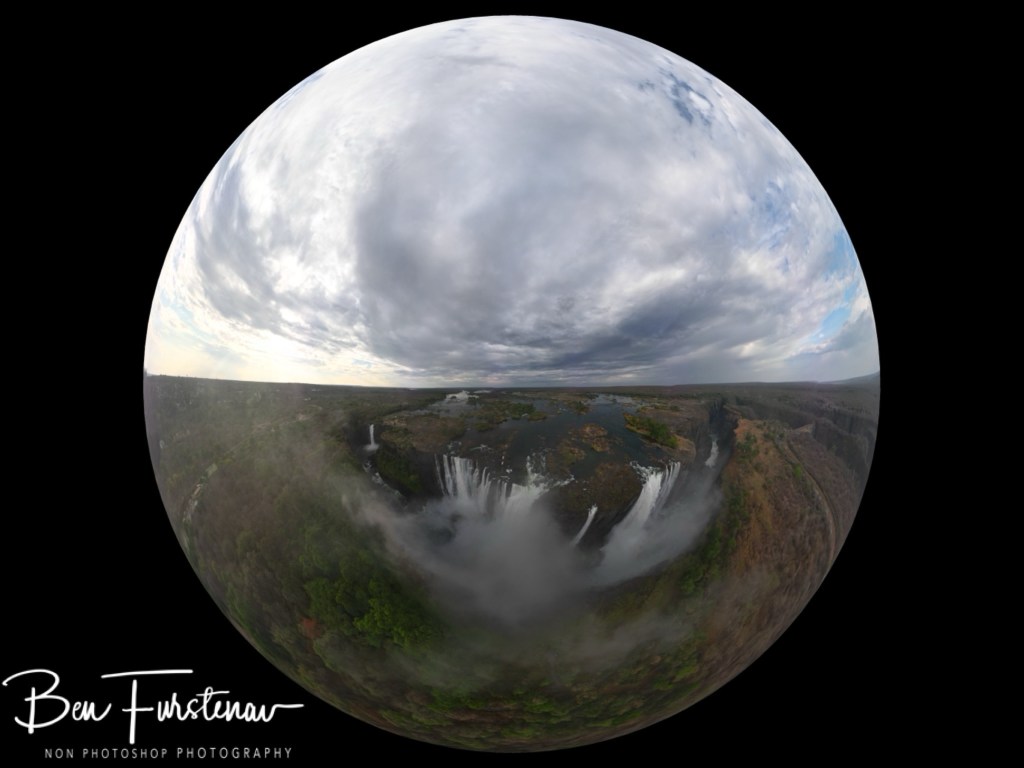
From a distant horizontal perspective, one could easily miss the falls.
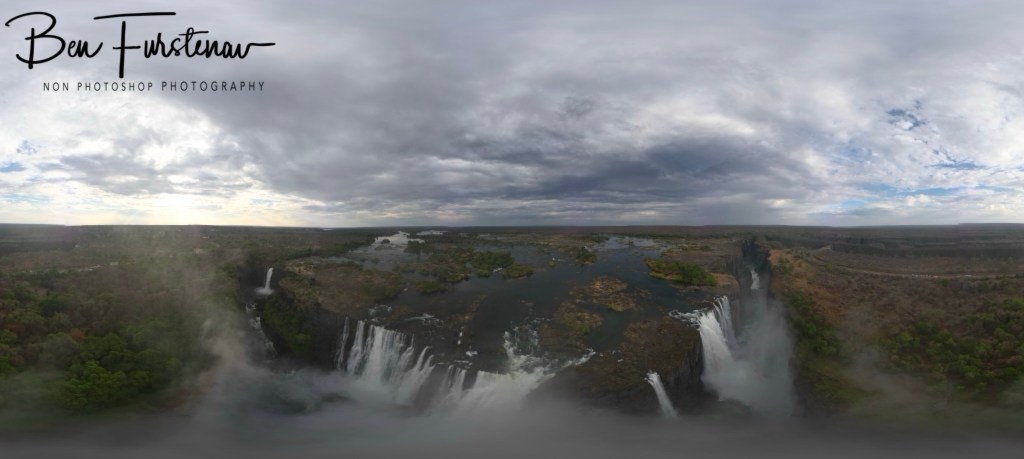
If there weren’t hazy waters rising from a narrow gorge.
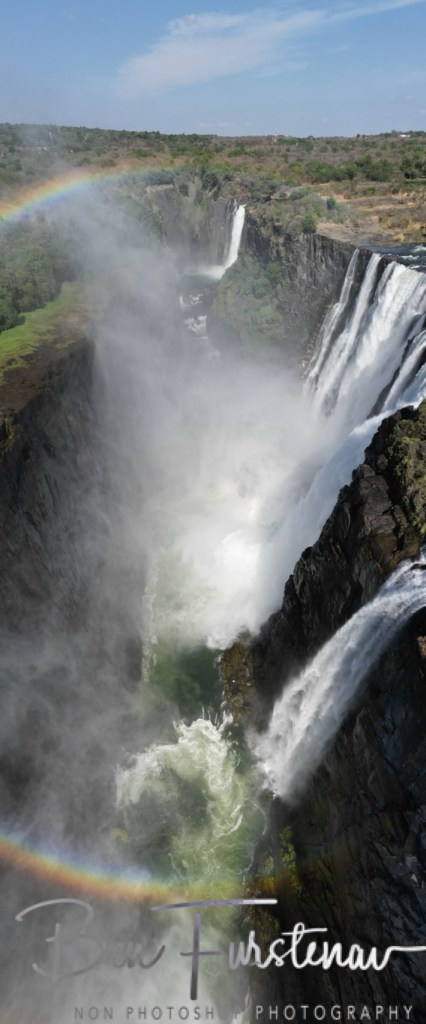
Misty and mysterious but unmistakable marvelous.
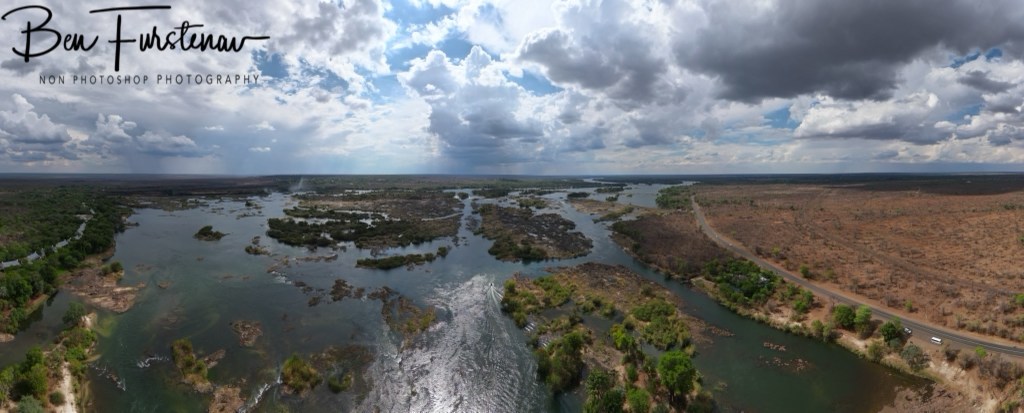
The Zambezi River used to flow through Botswana’s salt plains and drain into the Limpopo River. An earth shift uppered the basalt layers and blocked the free-flowing waters. These were haltered at the Maghadighadi Lake for some time. But water always finds a way. Wetter weather conditions caused drainage of the lake and leaked to the east as waters overflowed, cutting the Batoka Gorge through the basalt.

Basalt Rock doesn’t fall easy. In fact, it is a very sturdy stone that doesn’t break off or crumble. Unlike sandstone for example, which would have been gradually dislocated over time, the batoka basalt gives way in unity and colossal quantity.
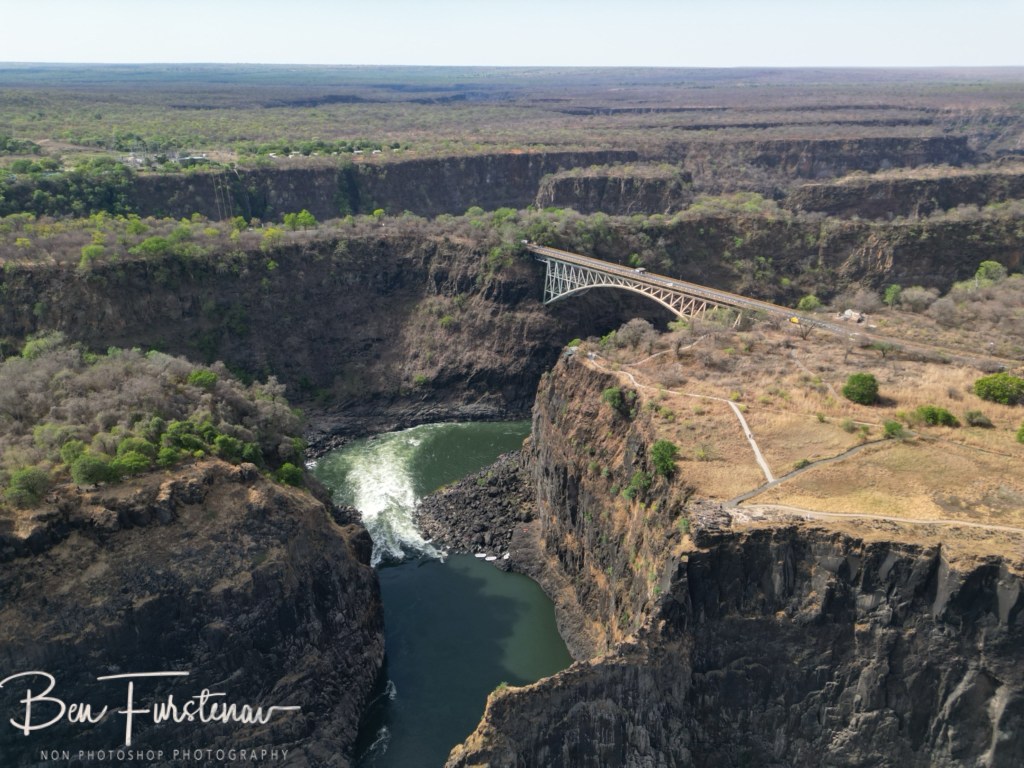
Similar to the carving of icebergs.
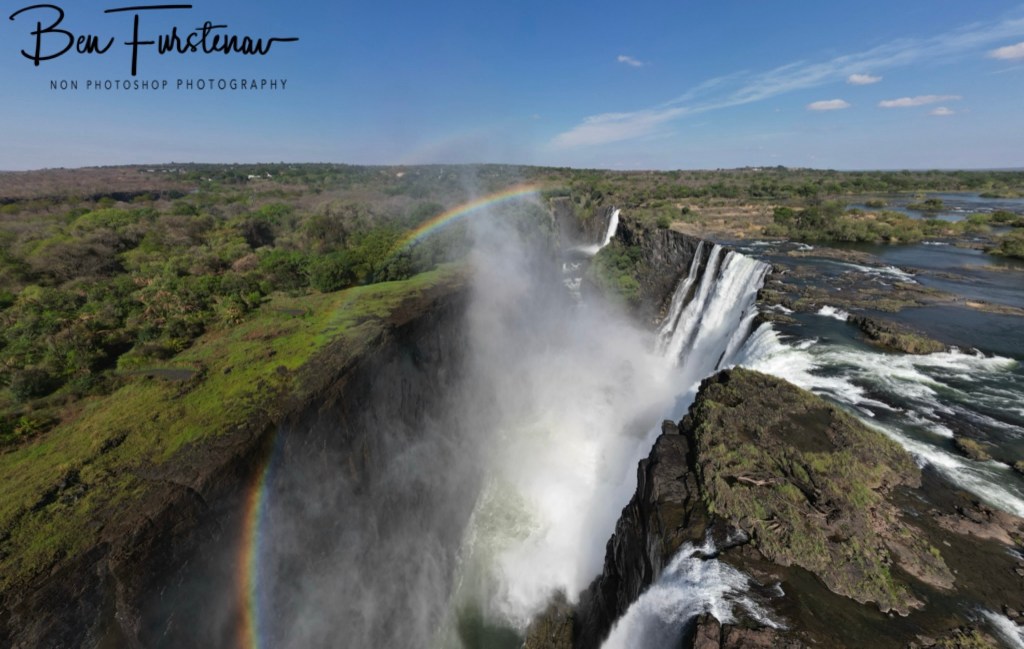
The density of the basalt rock explains the rough edges around the falls, which haven’t been smoothened by constant flowing forces over time.
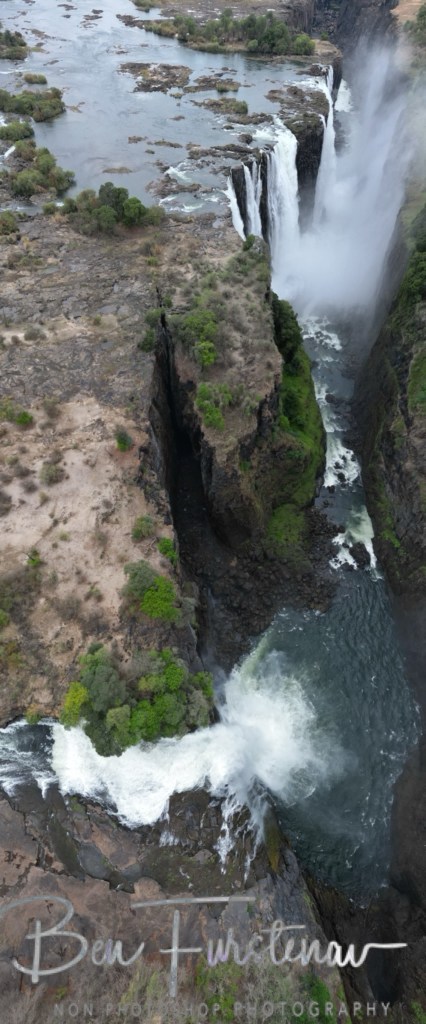
Large boulders would eventually break loose and tumble to the gorge floor, creating a new gorge altogether. The next line of fault is already in the making. That is some mighty force to be reckoned with with.
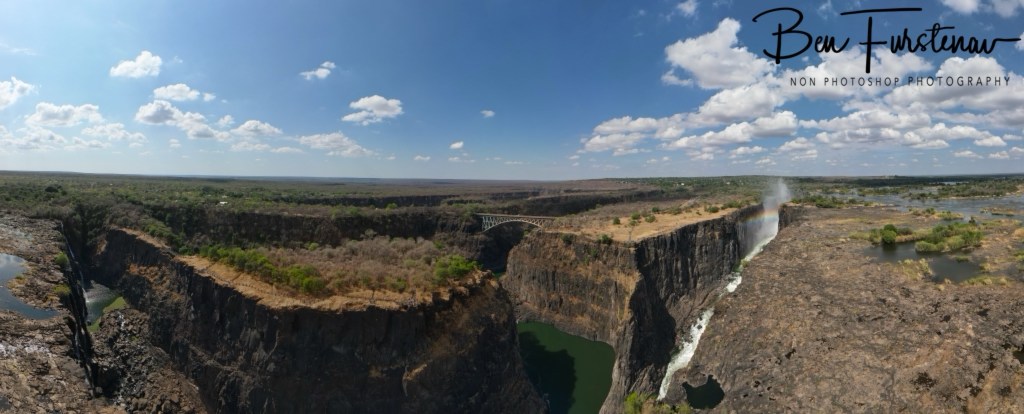
Six individual gorges and 8 previous repositions are lining east to west downstream.
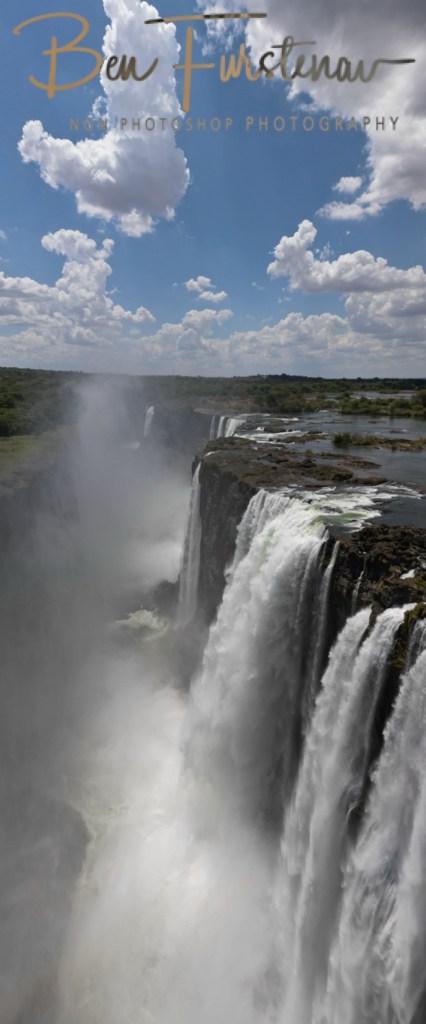
I have only seen the falls in the dry season when water levels are low. Extremely and alarming low this year.
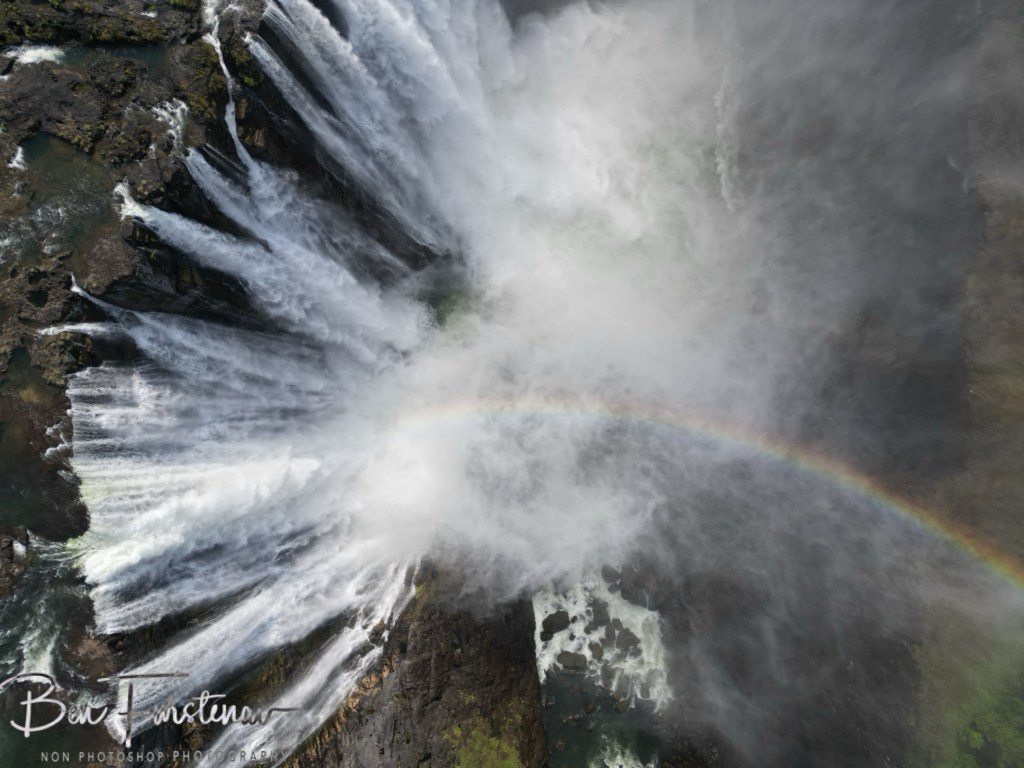
Imagine seeing these falls in full flow. Just wow.
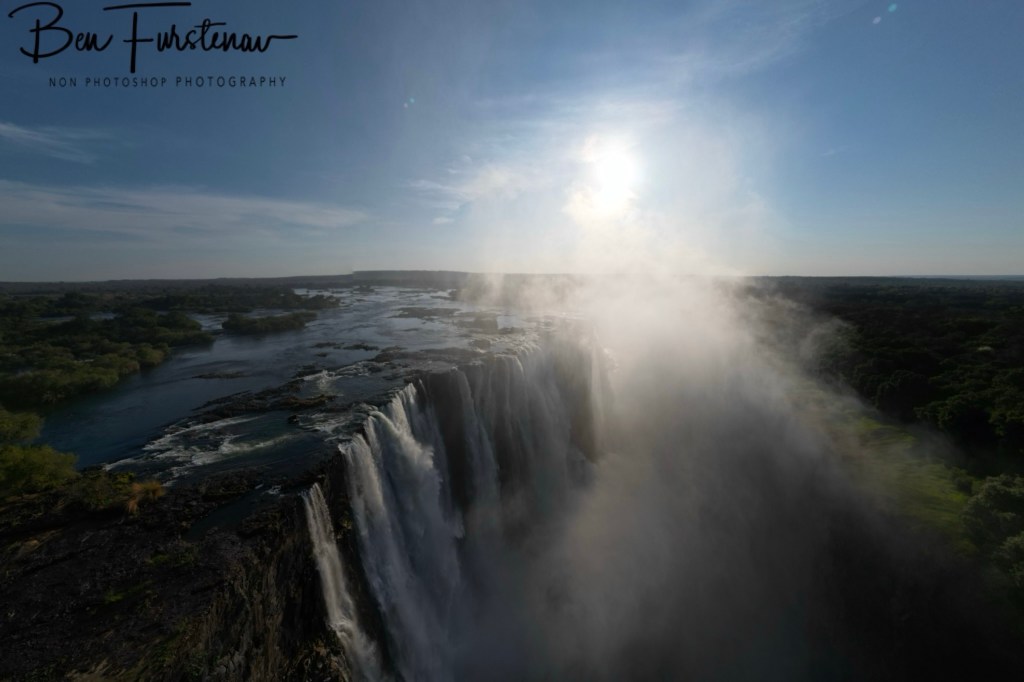
I would presume that the falls themselves would be invisible within all the misty waters rising into the atmosphere.
It is believed that the Scottish explorer David Livingstone was the first Msungu to have laid eyes on these falls, back in 1855.
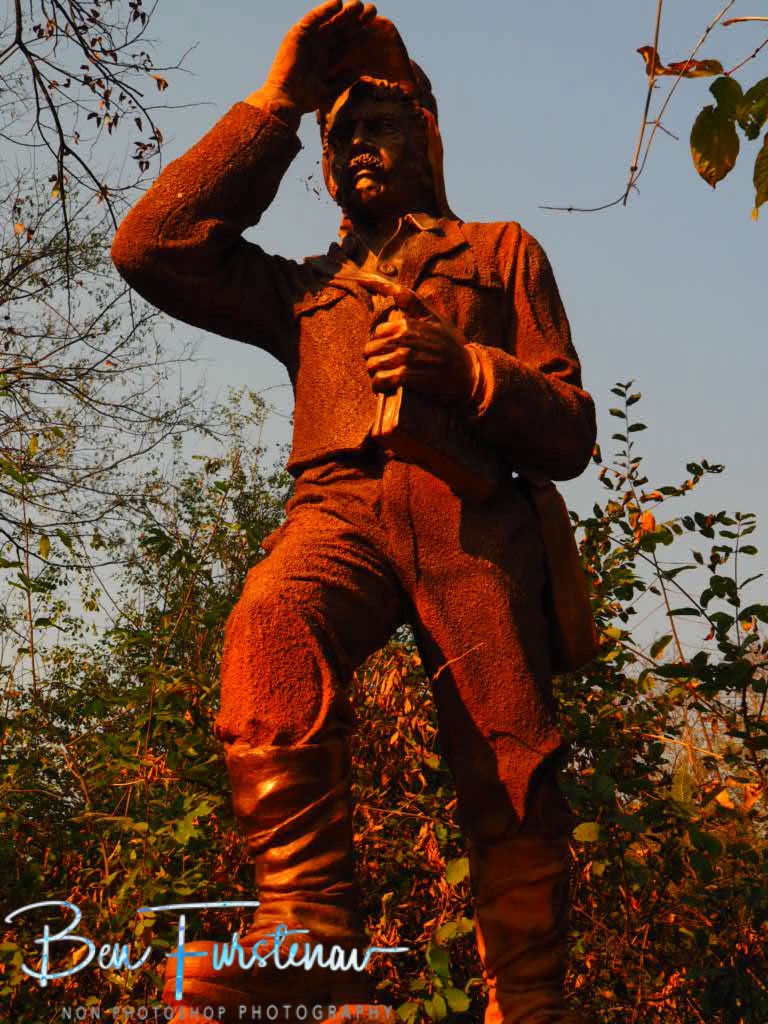
He returned the the falls five years later and made a detailed study of this area.
It was around the turn of the 18th century when European settlement started around Victoria Falls. The exploitation of natural resources like timber, animal skins, and ivory was a huge trading factor.
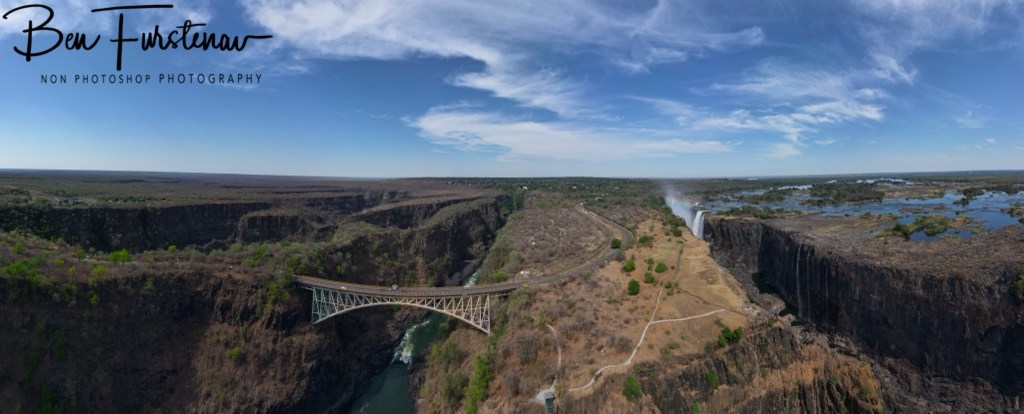
The falls were easier accessible thanks to the railway line built by the Cecil Rhodes British South African Company. The train tracks are still active.
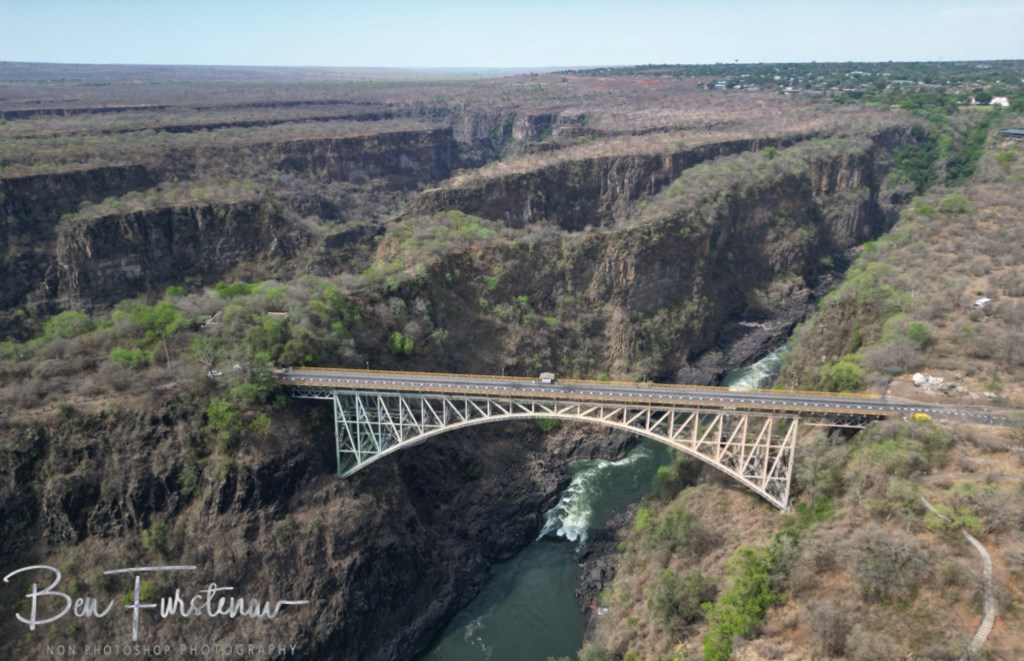
And the railway bridge now is the border crossing between Zambia and Zimbabwe with much too much mambo-jambo for my liking.

Anyone who had crossed the bridge to view the Zimbabwean side of Victoria Falls said that they wouldn’t do it again.
 Travels with Ben