Africa’s oldest and most iconic tree has put on a magic show for the past few weeks.

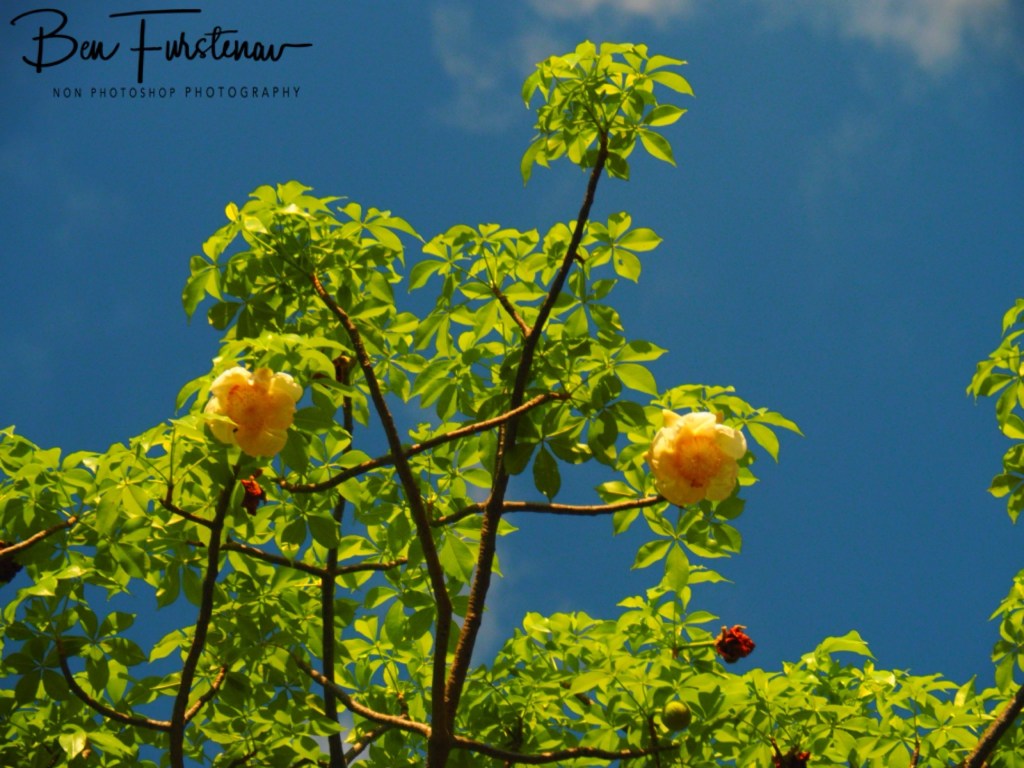
The usually arid-looking branches have transformed into green, leafy pastures. Flowers appeared high above in the canopy.

I had seen a few flowering baobab trees here and there on my travels, but nothing like the bloom bonanza around Livingstone in Zambia.

I stayed 2 nights at ‘Thorntree Camp’ to recharge, refill, and refreeze my usual routine.
The Italians and I camped here 6 years ago as well, as we had elephants and hippos passing by. Not this time.

Another camper stayed on the premises, but I much prefer being undercover of Mother Nature.
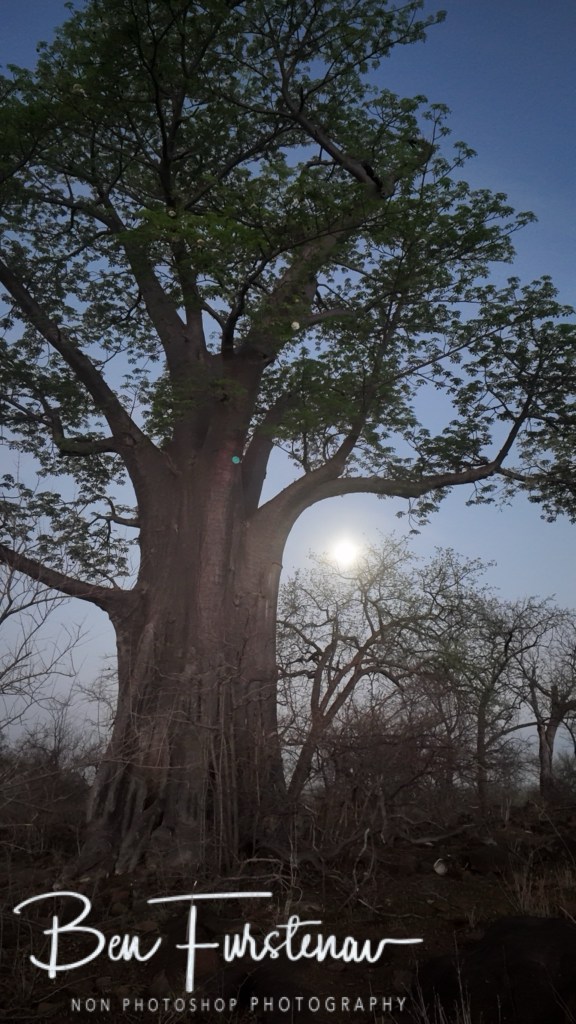
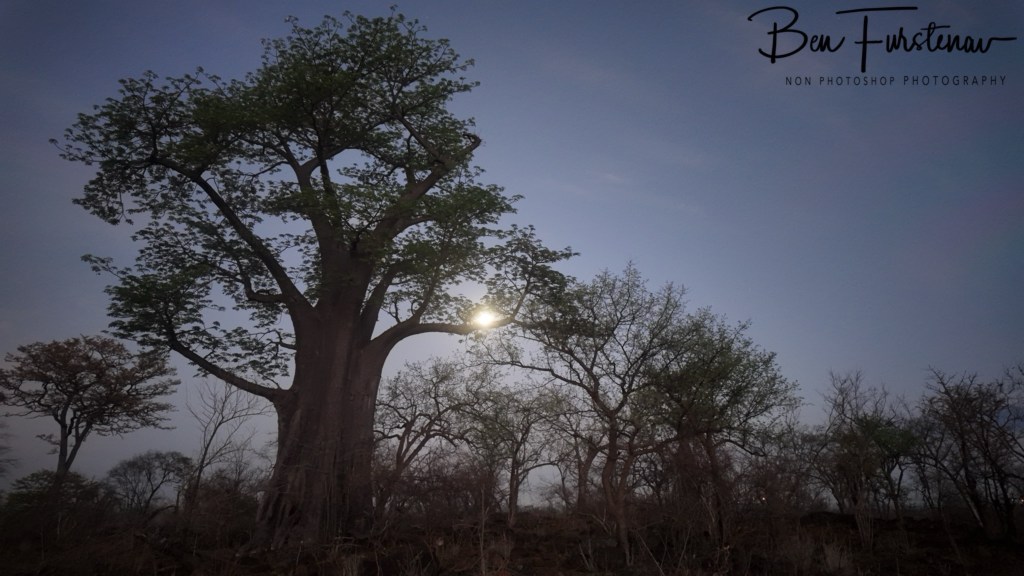
Undercover and sheltered by giants in the waxing gibbons moonshine.
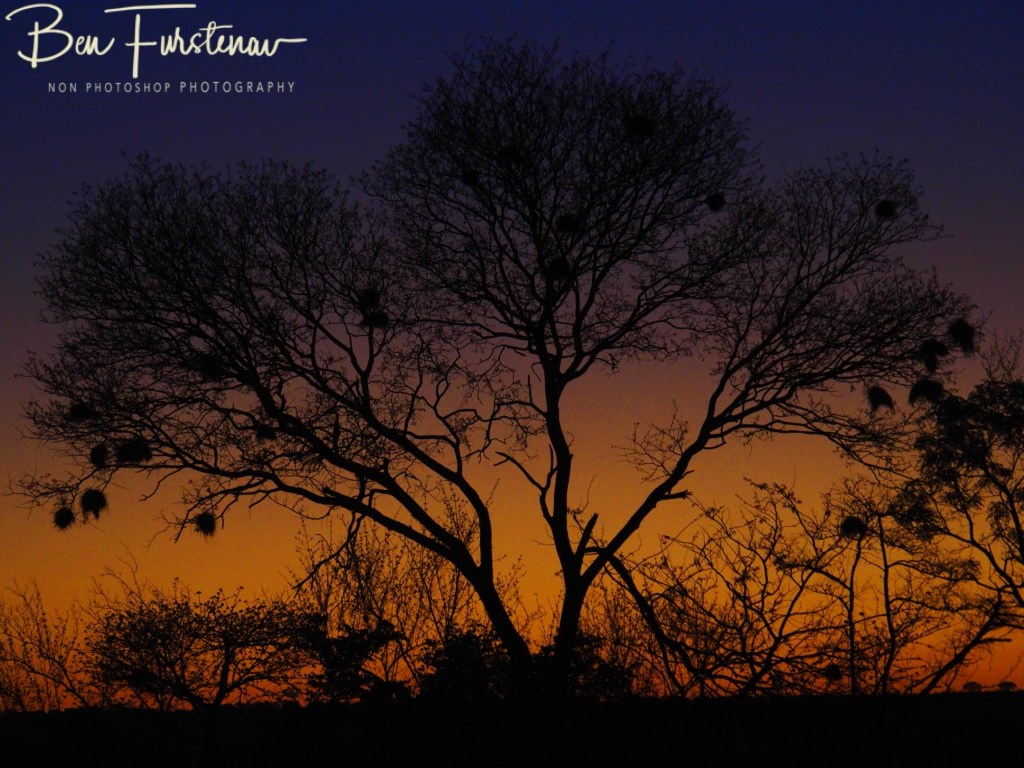
I found this hidden spot exploring the area as this is what Zimba and I do. We followed some elephant dung tracks and ended up within three large baobab trees.

No elephants showed up, just some stingy neighbors.

It was extremely hot during the day and didn’t cool much overnight. Thankfully I knew a place to keep my cool.

The humidity had risen as well rain clouds had followed me to the Zambian Border. The build-up season is in full swing.
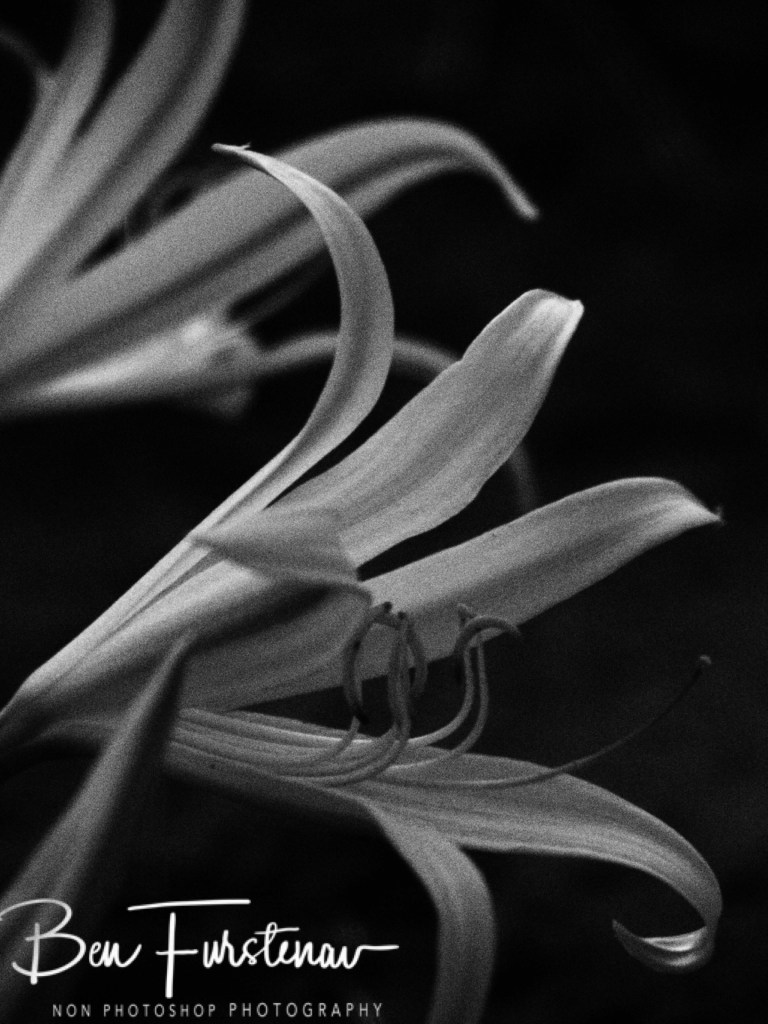
Even desert lilies used a brief downpour for a flowering spectacle.

Adansonia Baohab is the Latin description for these magnificent, ancient and mysterious trees. They are typically found in hot and dry corners of the continent, all the way up to the southern Arabian Peninsula of Oman.

Some individuals are believed to be 2000 years old. If only these trees could talk.
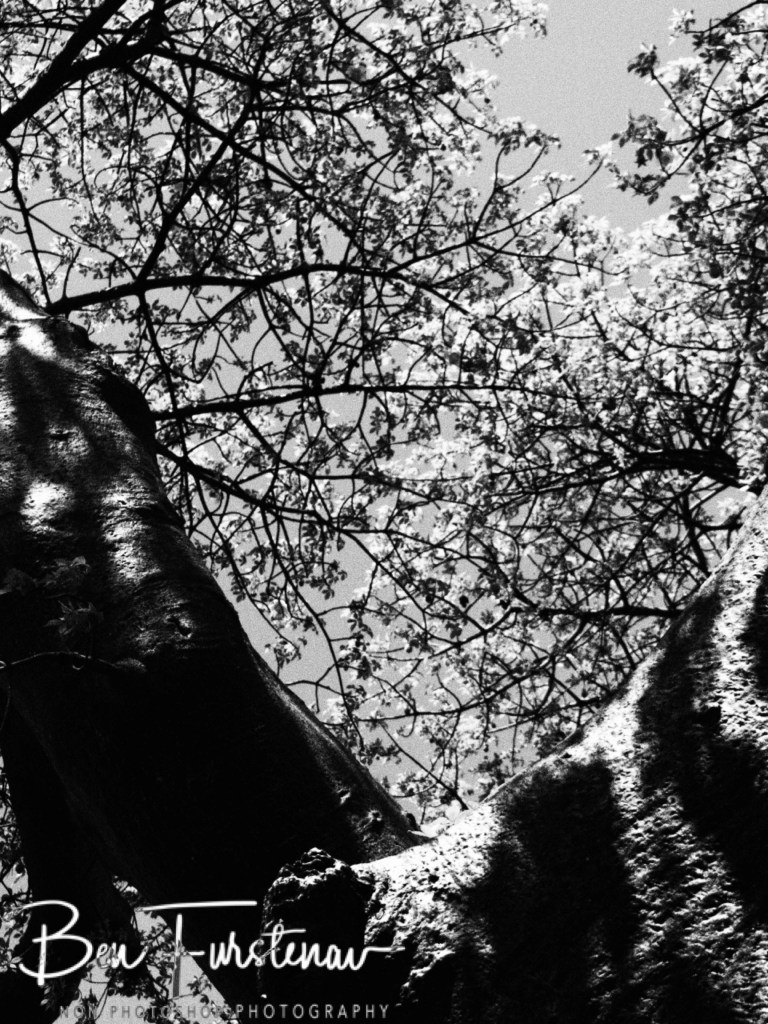
They have traditionally been valued as food, water, health remedies, and a place for shelter from the sun. They are vital for animal life as a key source for food shelter and water. Baobab trees are steeped in legend and superstition.
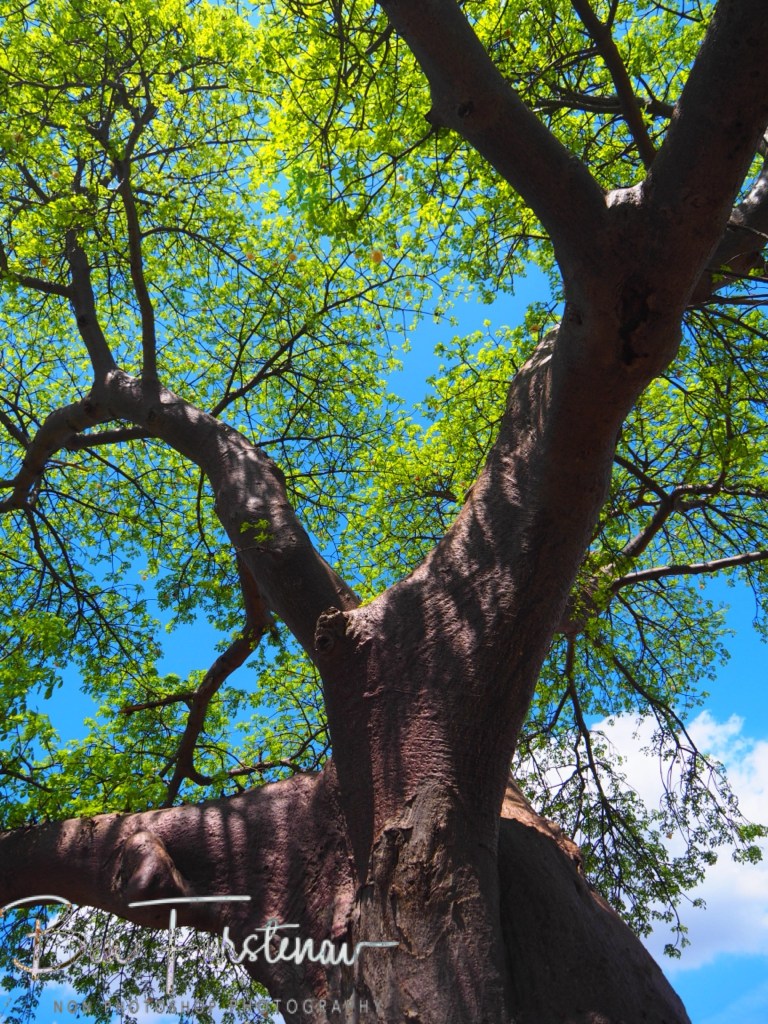
Trunks are usually round and can reach a diameter of 25 meters. All baobab are deciduous, losing all their leaves in the dry season.

An unusual tree produces unusual flowers.

The blooms are white and appear to be in two sections.

The calyx is typically made out of 5 backward bent petals.

While the stem appears like an oversized mop in cream colors. For a tree with so much time on its bark, the blooming period is surprisingly short.
Flowers blossom in the afternoon and throughout the night, staying open and fertile for not even 12 hours.
Fresh flowers have a sweet scent. Pollination of the African Baobab is primarily achieved by fruit bats.

But some insects do their best for a visit as well. After 24 hours, the flowers start to turn brown and emit a carrion smell. By the next morning, they fall to the ground.
One baobab tree in particular astounded my curiosity.

This tree stood right next to the highway en route to Victoria Falls and had dozens of fallen blossoms lying around its trunk. They weren’t here yesterday morning.
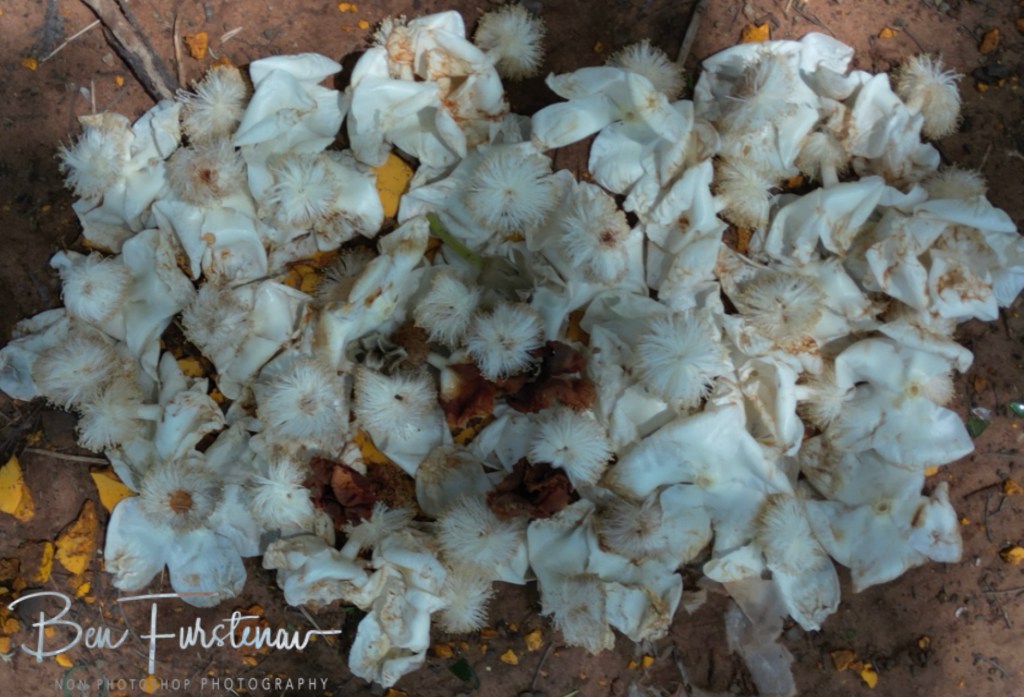
Neither were any other curious people. It is just amazing how nature times itself.
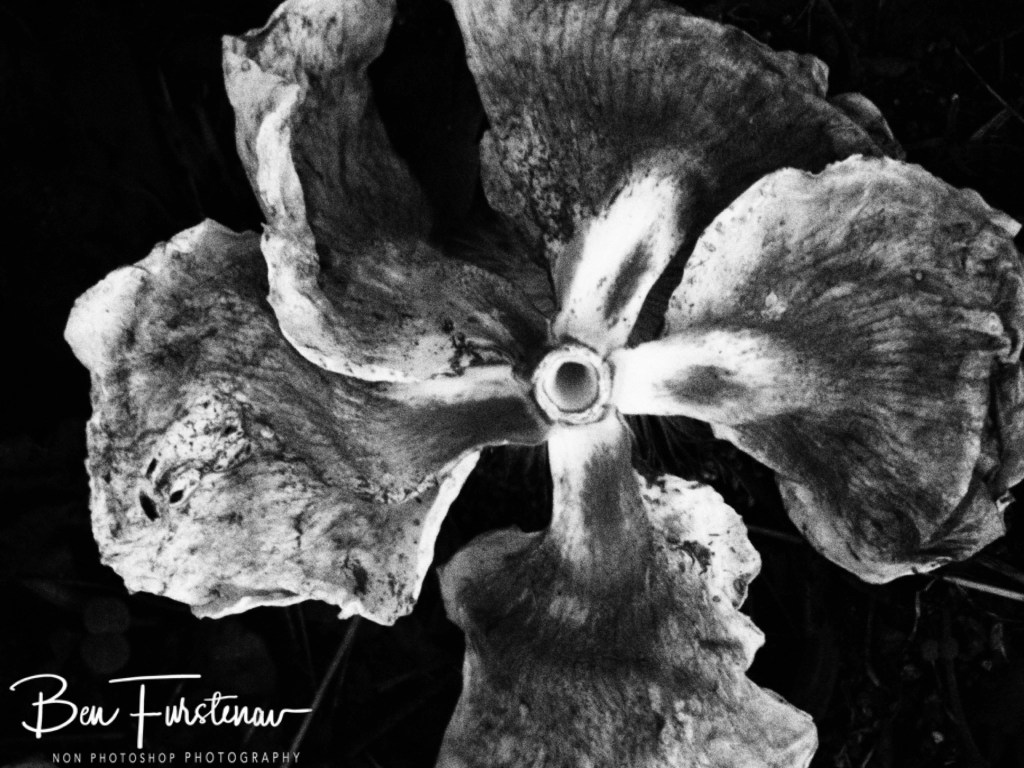
From behind the buds remind me of a boat propeller.
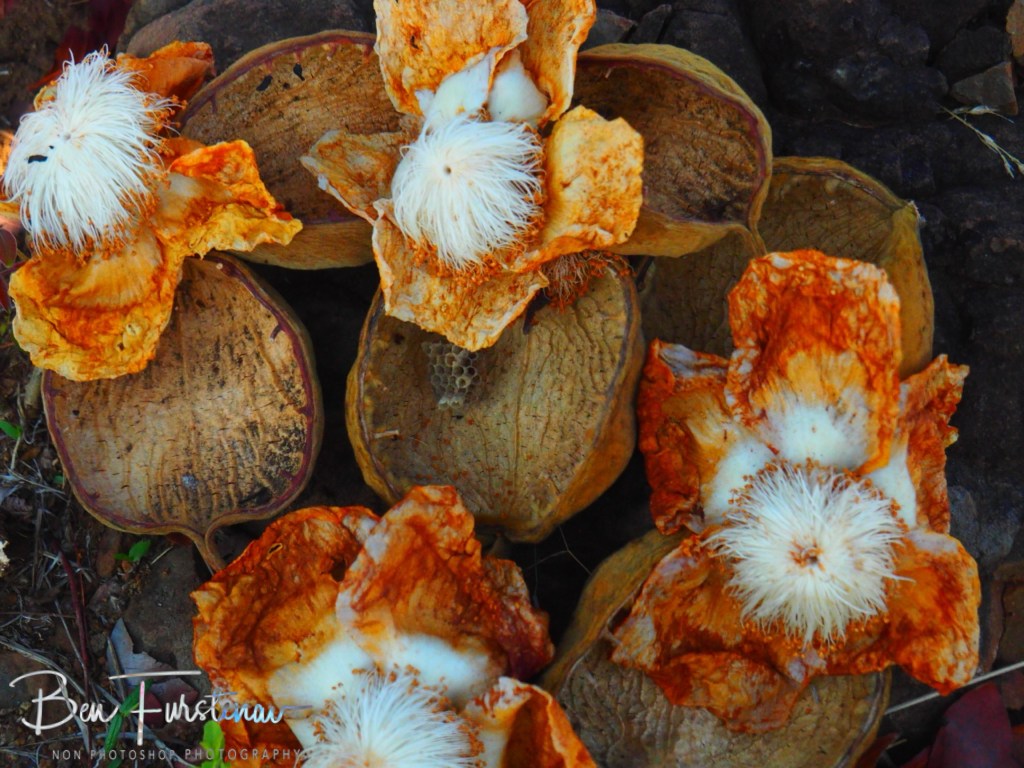
One can be quite creative and artistic with those fallen flowers.
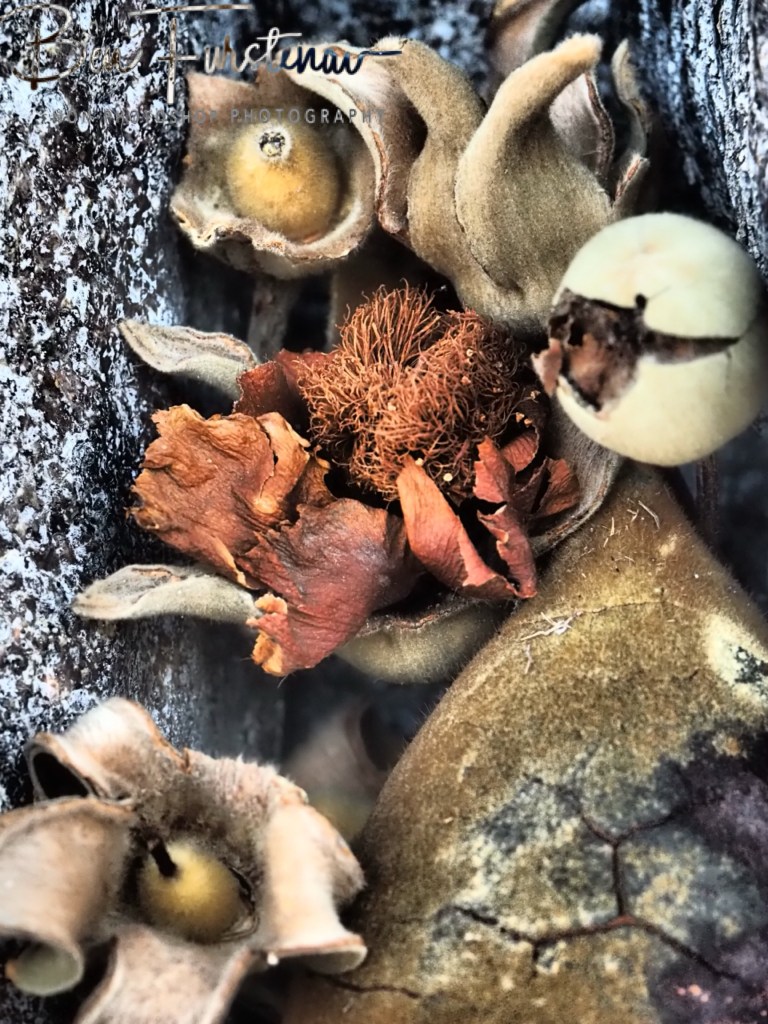
The dried-out stem looks unearthing added to the bark.
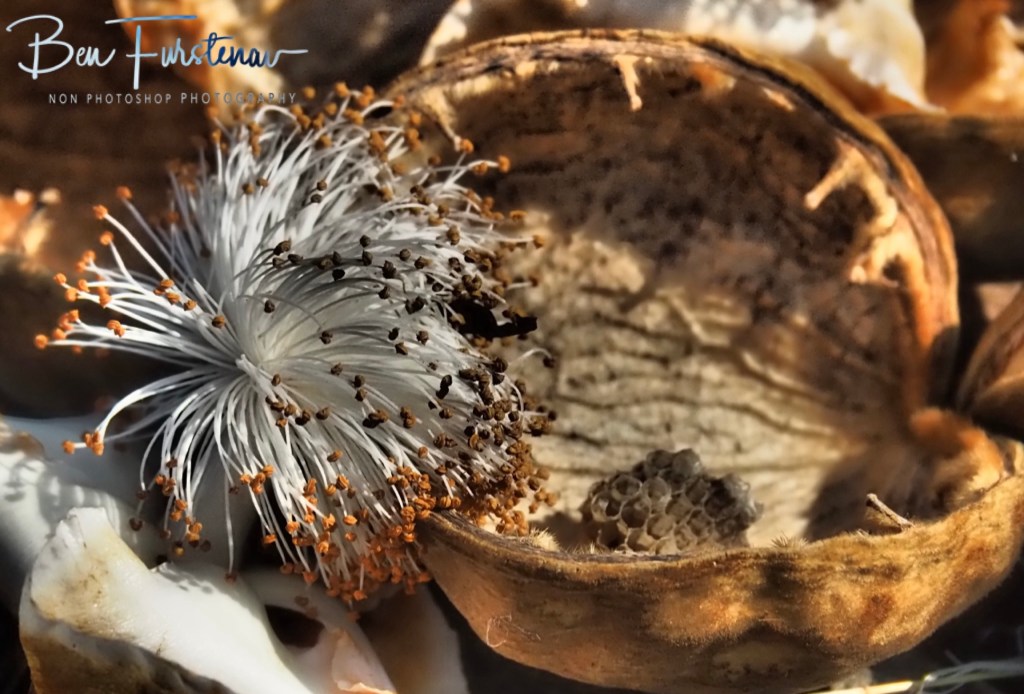
Wasps use these shells as dry housing for their next generation. All colors and shapes are perfectly detailed for the taking.
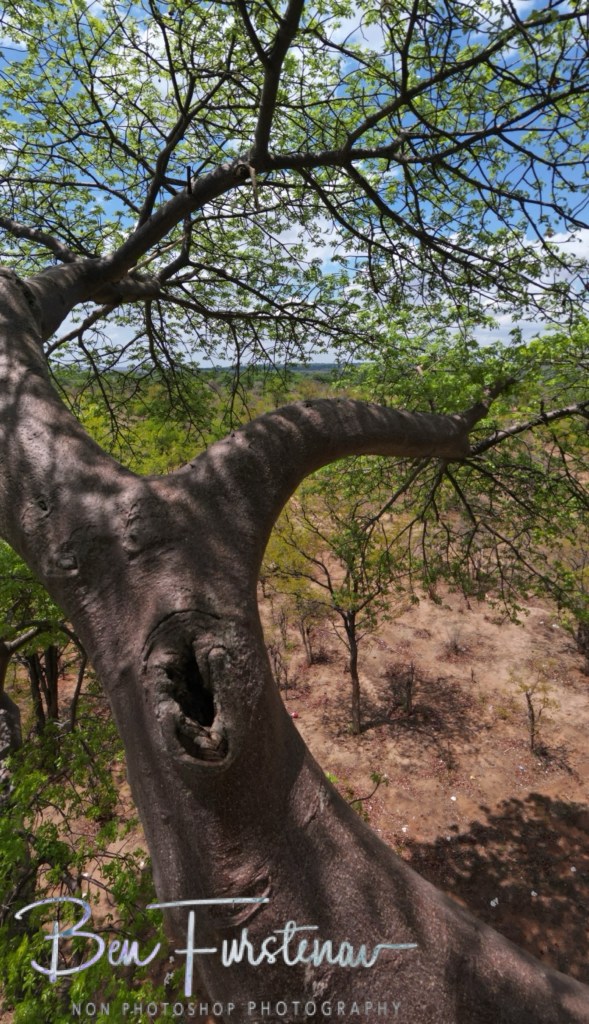
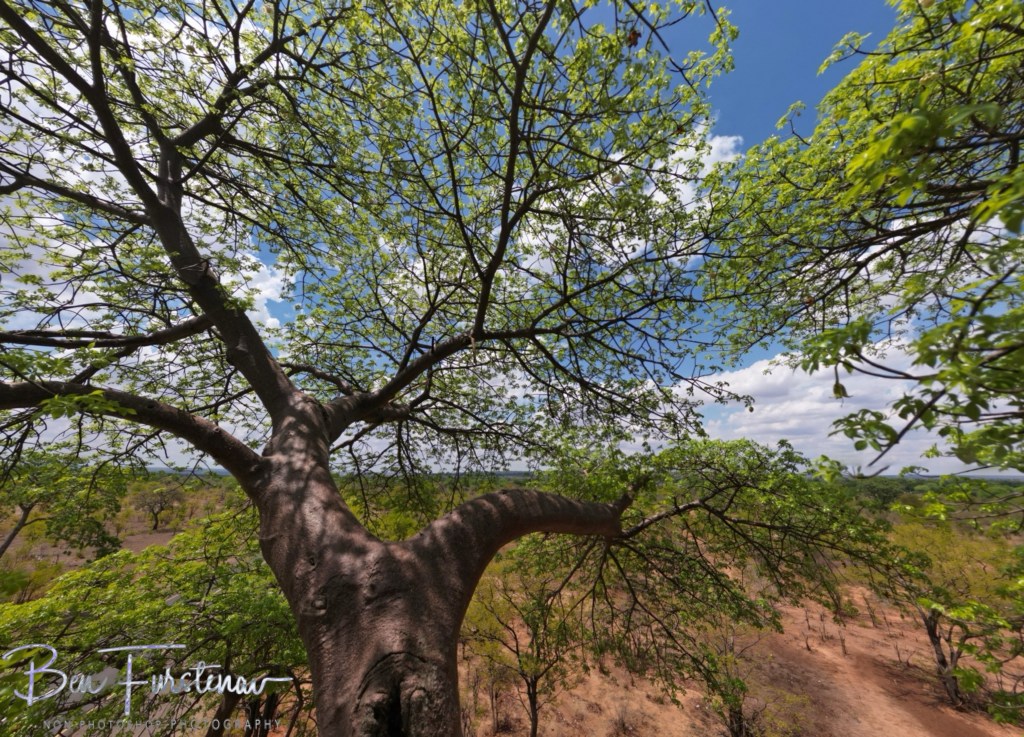
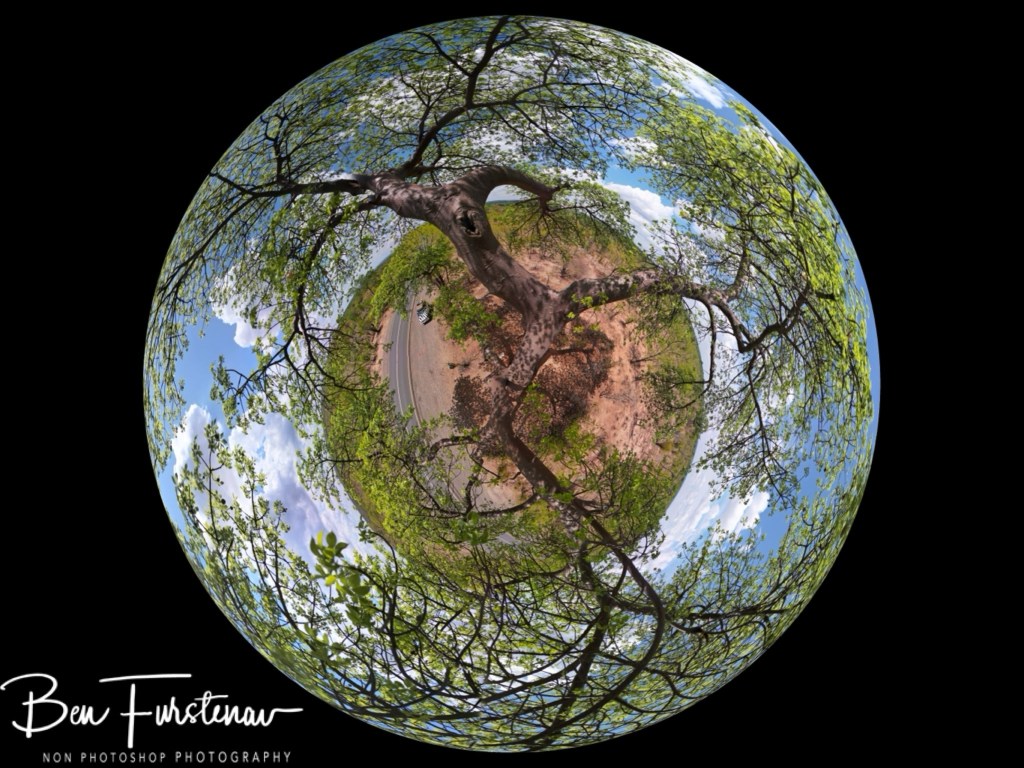
I set Rick up in amongst branches, leaves, and flowers of this particular tree.
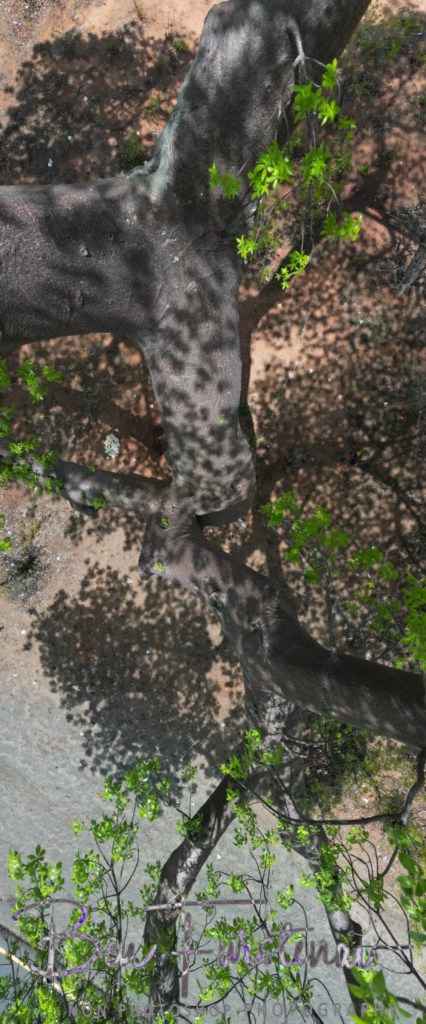
The angle created an array of leafy images, shadowed on ground level.
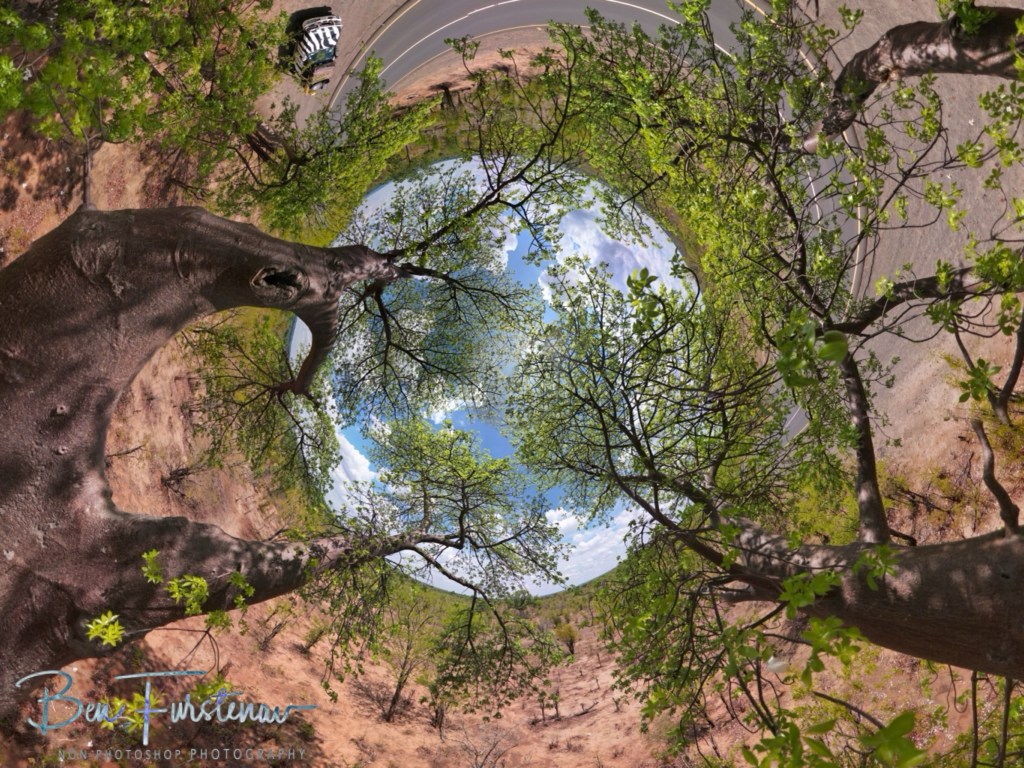
It still amazes me how the drone captures different angles and perspectives on nature’s life.

I am puzzled to see so many flowers on this particular tree, while all other flowering baobab trees only dropped a handful of flowers. Once the buds are pollinated fruits will grow.

These oval-shaped hard-shelled fruits are a third smaller than a rugby ball.

The seeds are covered in dried pulp which is rich in vitamins and has a tangy, fruity taste.

The fruits have been suggested to improve nutrition and even cure diarrhoea. The leaves can be eaten as a salad and even the roots are safe for consumption.
Only one question remains; How do baobab get so old to survive this feast?
Superstition!
 Travels with Ben