The sandy trax to nowhere lead me right to open grasslands with endless views over the sunset.

My first stop on this Okavango adventure are the Linyanti Plains. These are created by the ebb and flow of the Linyanti River which streams into Lake Liambezi. On the eastern side of the lake flows the Chobe River, which eventually drifts into the Zambezi River at Kasane. The waterways in this particular region are not directly fed by the Okavango River.

It emerges to be a spiderweb network of the lowlands created by tectonic shifts some time ago. The Kwando River originates in Angola and crosses into Botswana via Namibia’s Caprivi Strip. Looking at the map, it’s difficult to determine where one or the other starts or ends. So much is clear. The Linyanti River is the natural border to Namibia’s Caprivi Strip. The Linyanti River follows a line representing the extreme southwestern extension of East Africa’s Great Rift Valley.
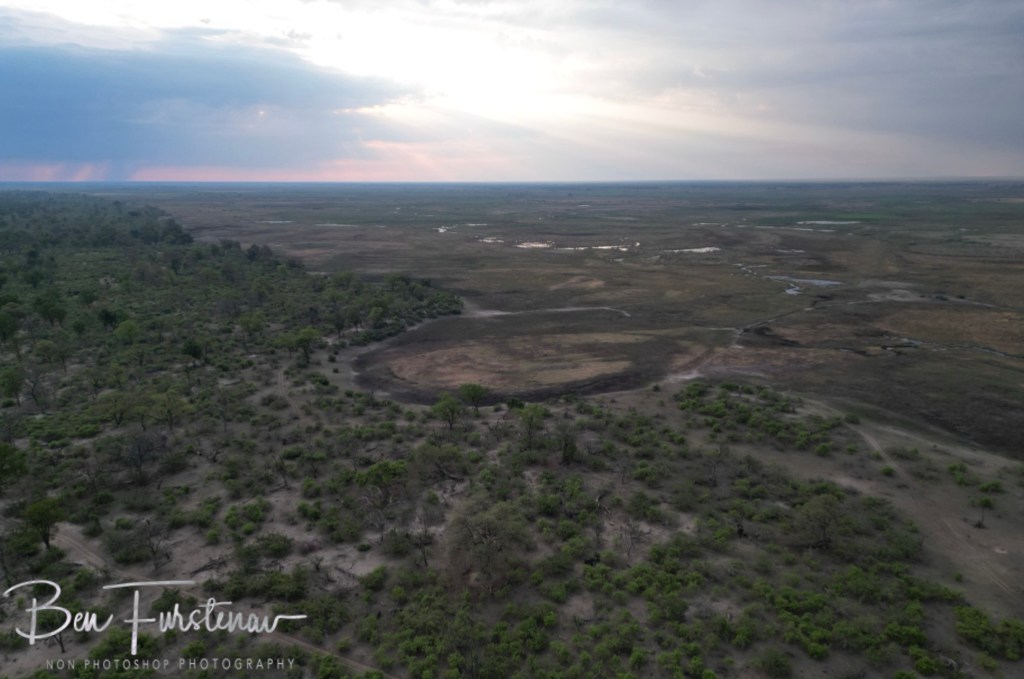
These vast extensions and flood plains of the river accumulate smaller and larger lakes as far as the eye can see.

The Linyanti plains are too wet for trees to get a root in.
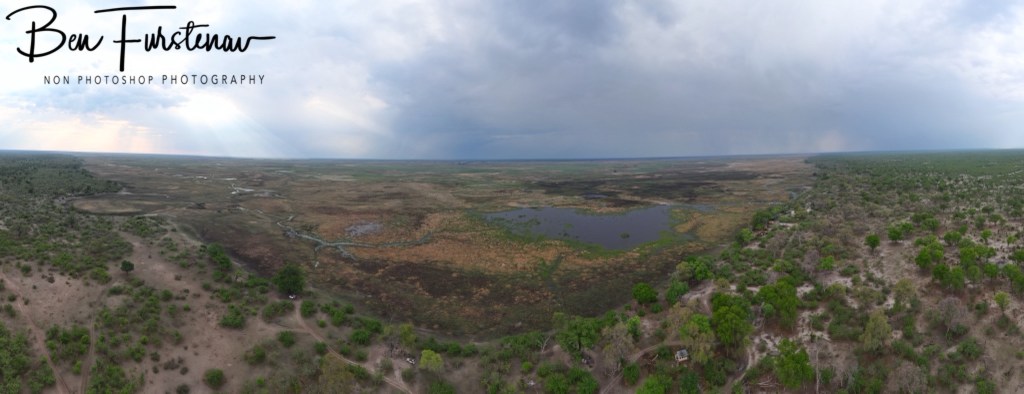
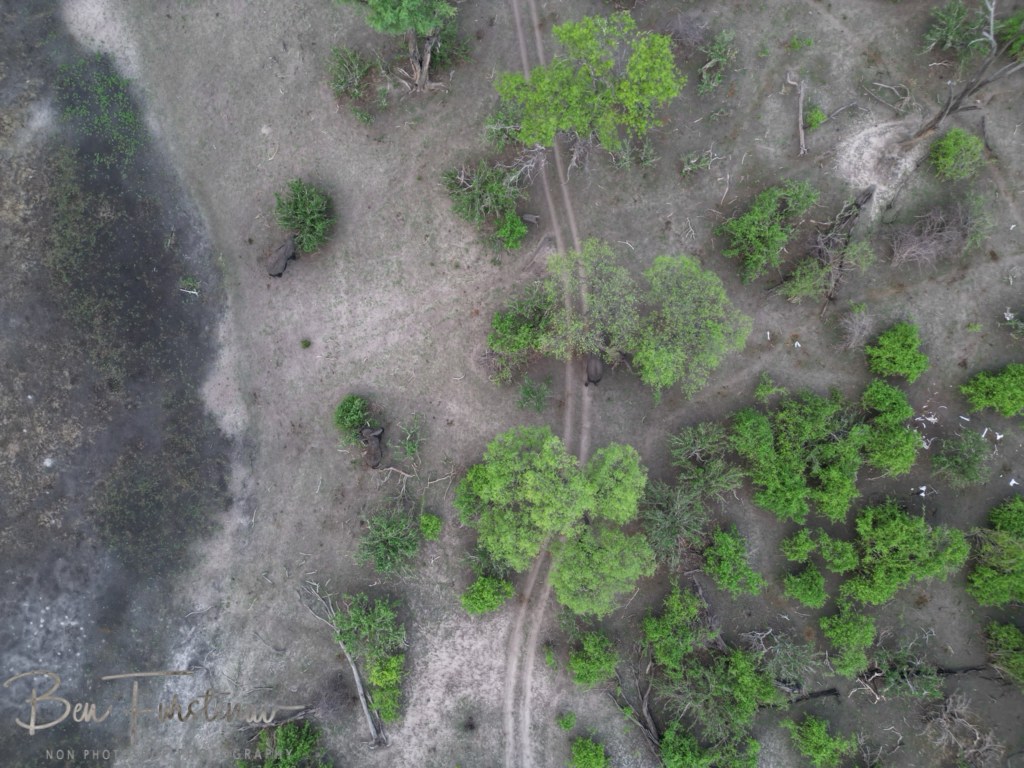
It looks rather surreal how the border between forest and marsh is determined.

A gentle downhill slope runs along these flat greens.

It shows more obvious from high above. Imagine this riverbed being full of water.
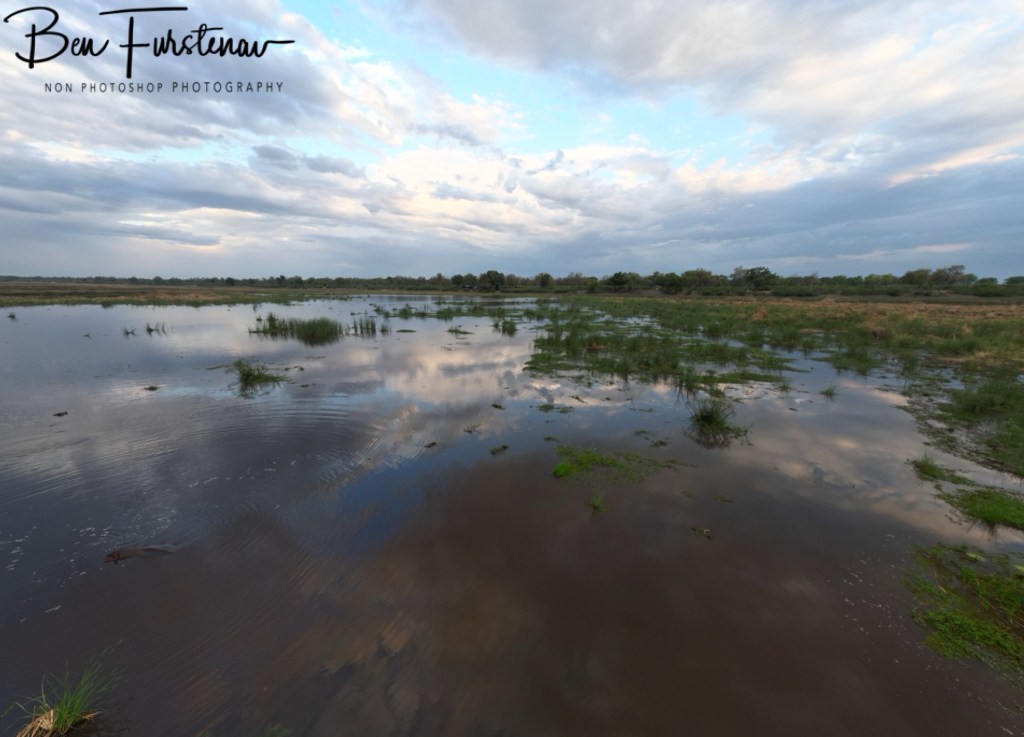
The bottom line is, that this immense and diverse wetland ecosystem is dependent on rainwaters from Angola.

I booked and paid to camp at RSVP 1. I didn’t pre-book a campsite as I never know where I will end up. Or how long I wanted to stay.

My simple life makes things rather complicated for the authorities. But actually, this is a vital tip for the Okavango Region for camping purposes.
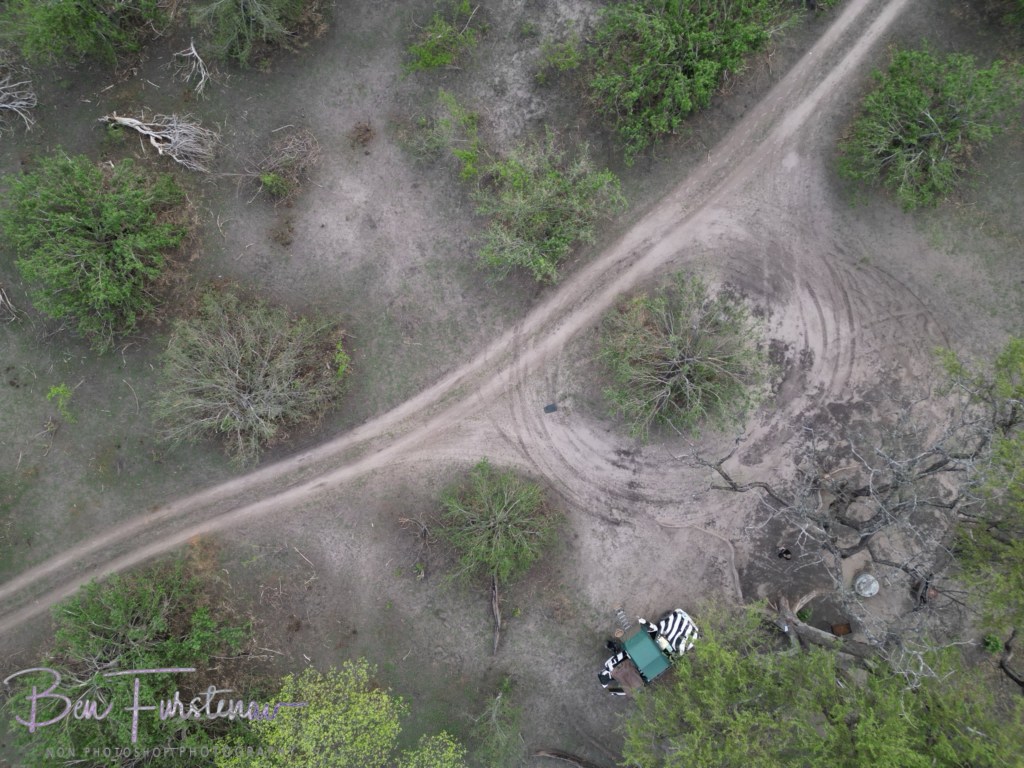
Campsites are often booked out by travel agents, just in case. Just in case to offer camp spots to tourist bookings and charge higher prices.
Secondly, some travelers may overestimate traveling times, as well as track and weather conditions. It’s not unusual that overlanders don’t get to their destination in time.

And thirdly, even if the camps are taken and booked while arriving late afternoon, the sites are big enough for one to huddle in the corner. National Park authorities won’t kick you out into the wilderness.

My advice is to just ‘give it a go.’ It’s part of the adventure just as well. This is Africa after all.

‘We are getting a storm soon’ I told the charming young local girl after I paid. As soon as I got back to Zimba, it started pouring down. The rainy season is still building as the clouds accumulate.
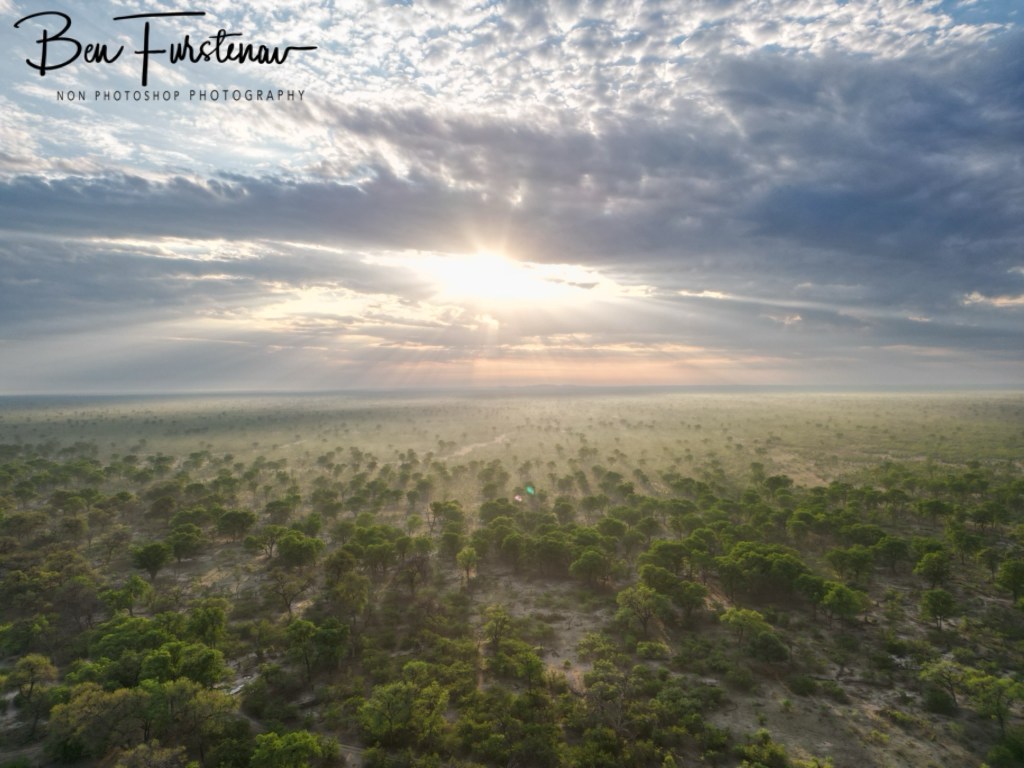
The moisture evaporates over lowland forests amazingly the next morning.

Only to reflect over calm waters.
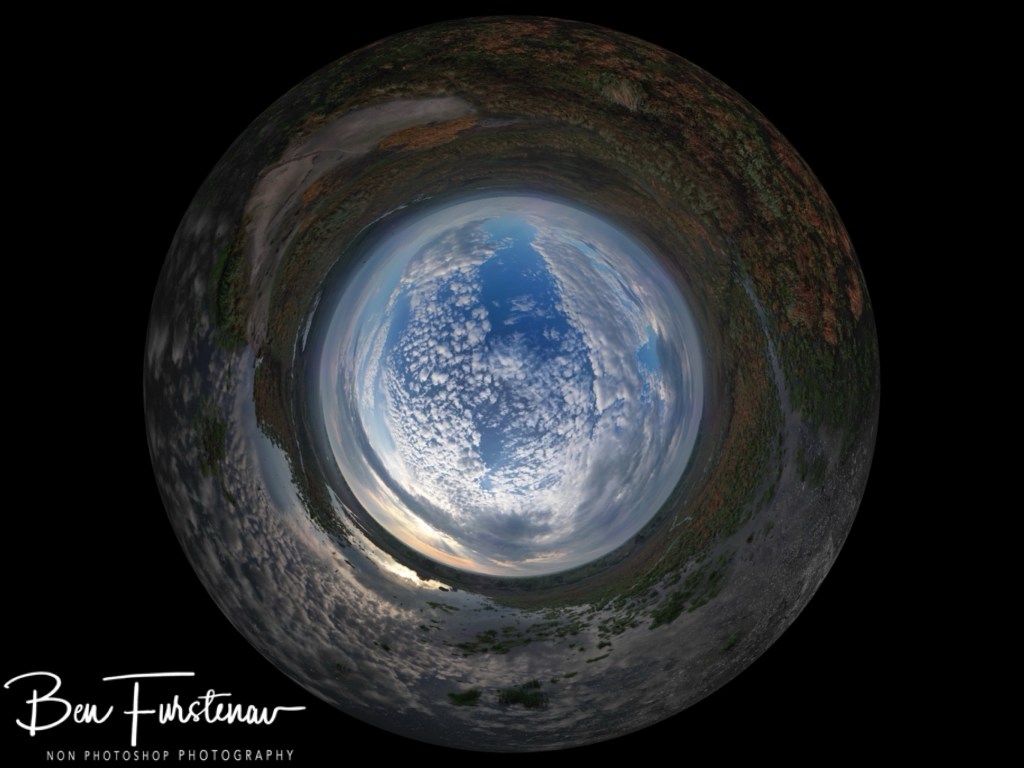
How mesmerizing is our planet?
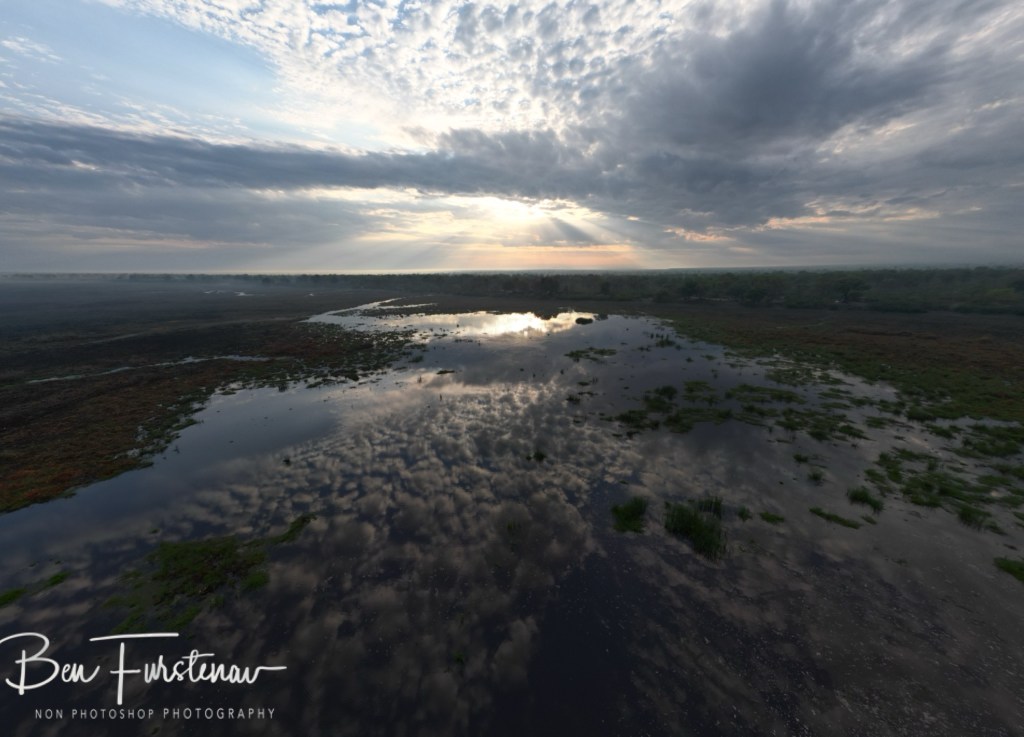
I recommend visiting the Linyanti Plains.

Not many tourists go there and more often than not, elephants will drop by on their way to or from the swamp. The Hippos are usually happy and create natural channels between ponds on the riverbed.
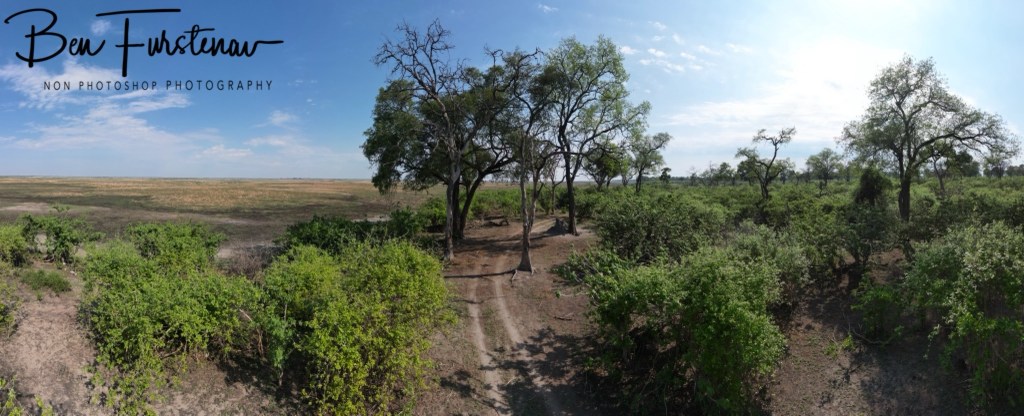
The dry-wood forest would be ideal for predators of all kinds. The lack of antelopes at the present time will deny any lion’s den. The word on the grasslands is that long-time poaching on the Namibian side has demolished and scared off smaller herbivores. I remember from my visit to the Caprivi 6 years ago, how little wildlife I saw in this comparison region. I was shocked.
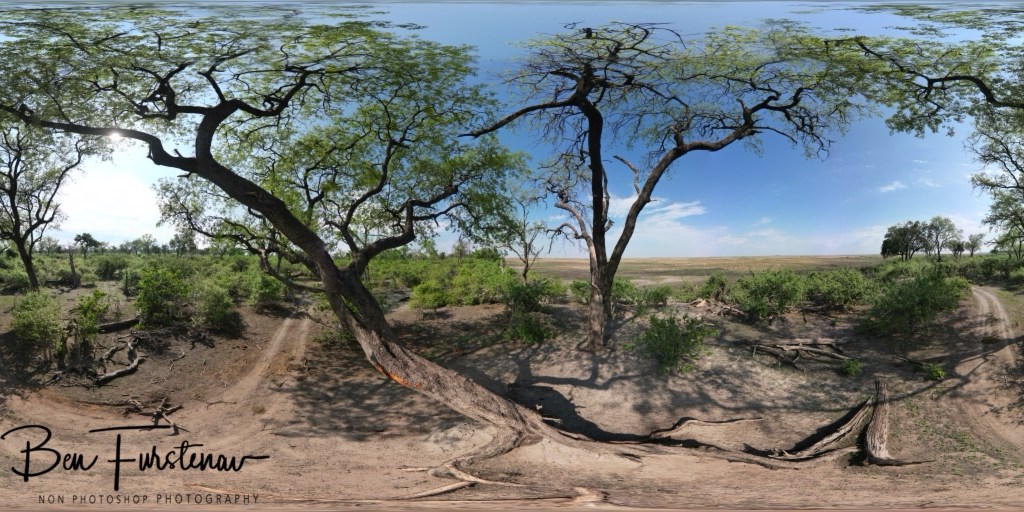
It’s not all about the fauna. It is scurrilous about the flora as well.
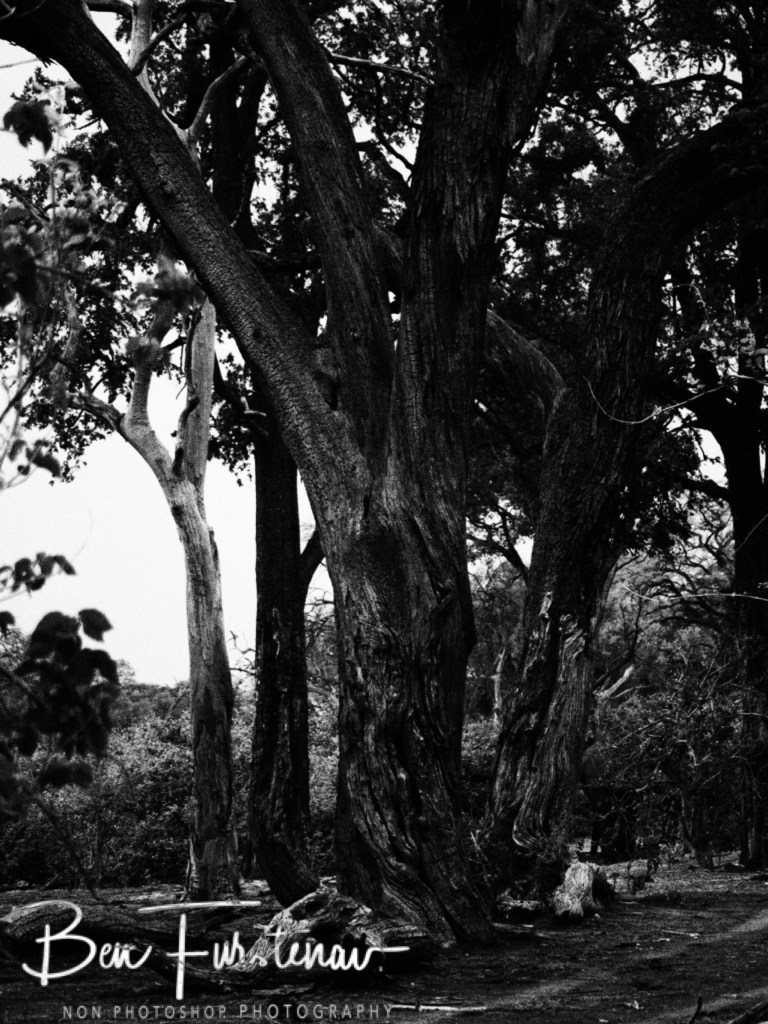
Mopane Trees, Sausage Trees, Jackelberry, and Knobwood Trees line the riverbanks of the riverine forests.

The large variety of flora produces a fascinating drive along the river.
 Travels with Ben