I stayed in Maun for my usual recharge, refill, and reload routine. In all honesty, I felt like an alien Msungu.
Most other Msungu were from countries afar, arriving on planes or tar. Overland buses cramp the high street next to 4-wheel drives offering sightseeing tours from different lodges. Everything was based on money and $$’$ were talking. Furthermore, the national park head office could not give me any information about road conditions to Kubu Island. ‘This is the Okavango Park’. Use less and un-user friendly.
The heavy rains within this region may or may have not affected the off-road tracks to Likubu Island and turned them into salty slush. Something I didn’t want to find out along the way.
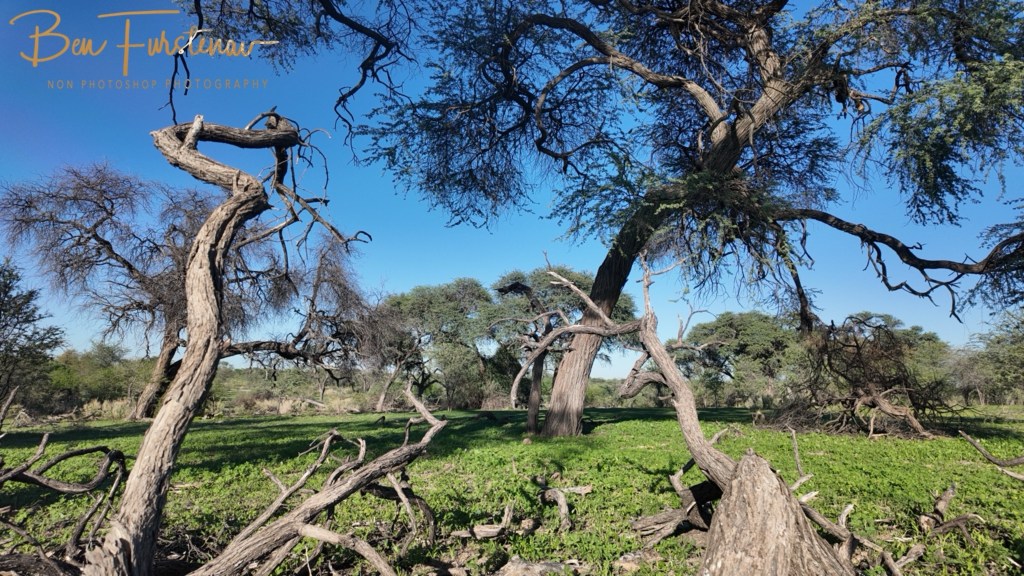
I decided to follow the Boteti River towards Makgadikgadi and either turn left or right. I was running late again as the setting sun was lowering behind acacia trees.
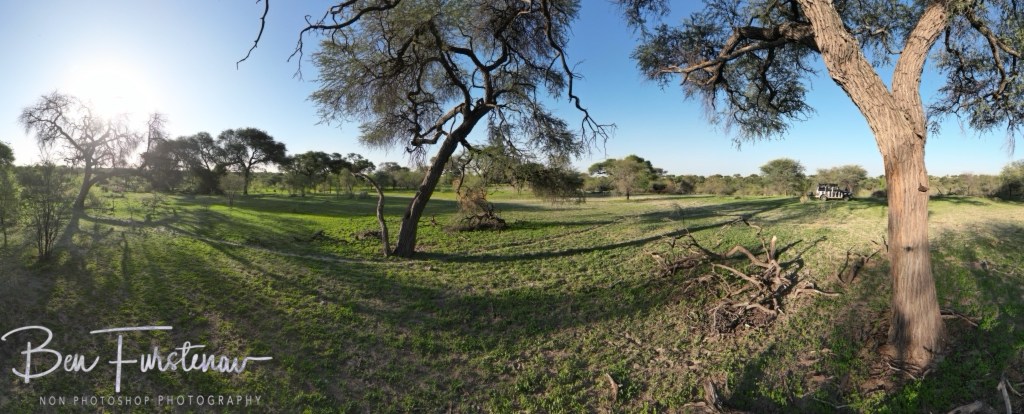
We were driving a sand track along the Boteti River with little or no settlements but plenty of serenity. This is my kinda camp spot, right in the thick of it.
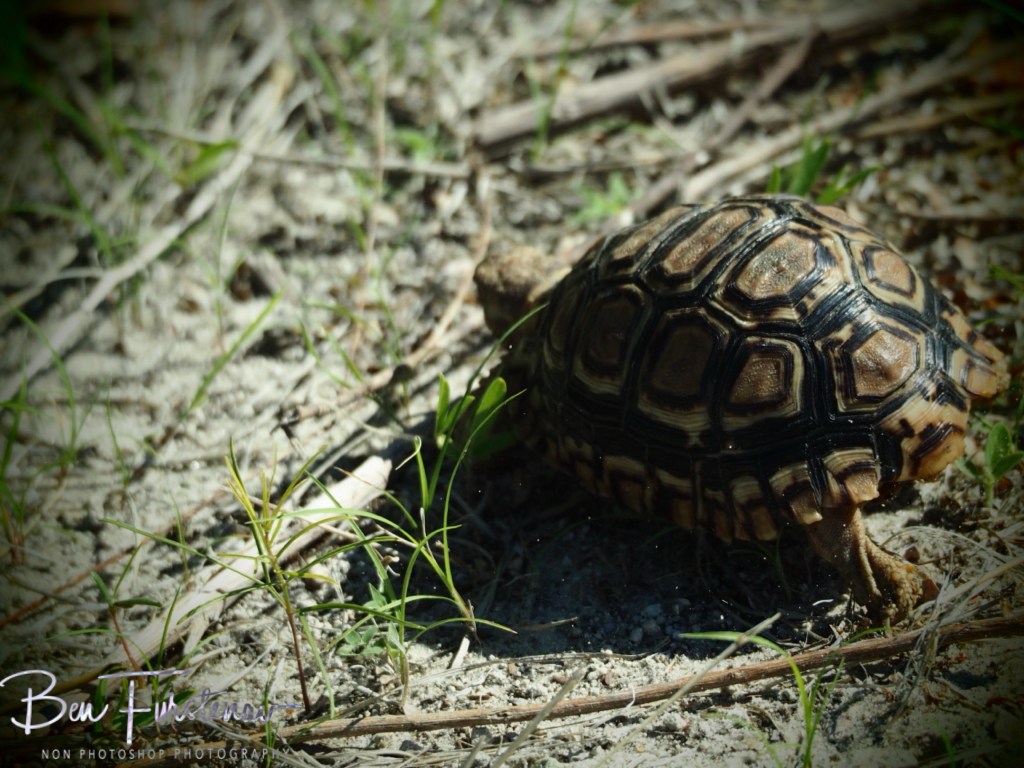
The upper riverbanks yielded some fresh green as a young turtle disappeared in the thicket.
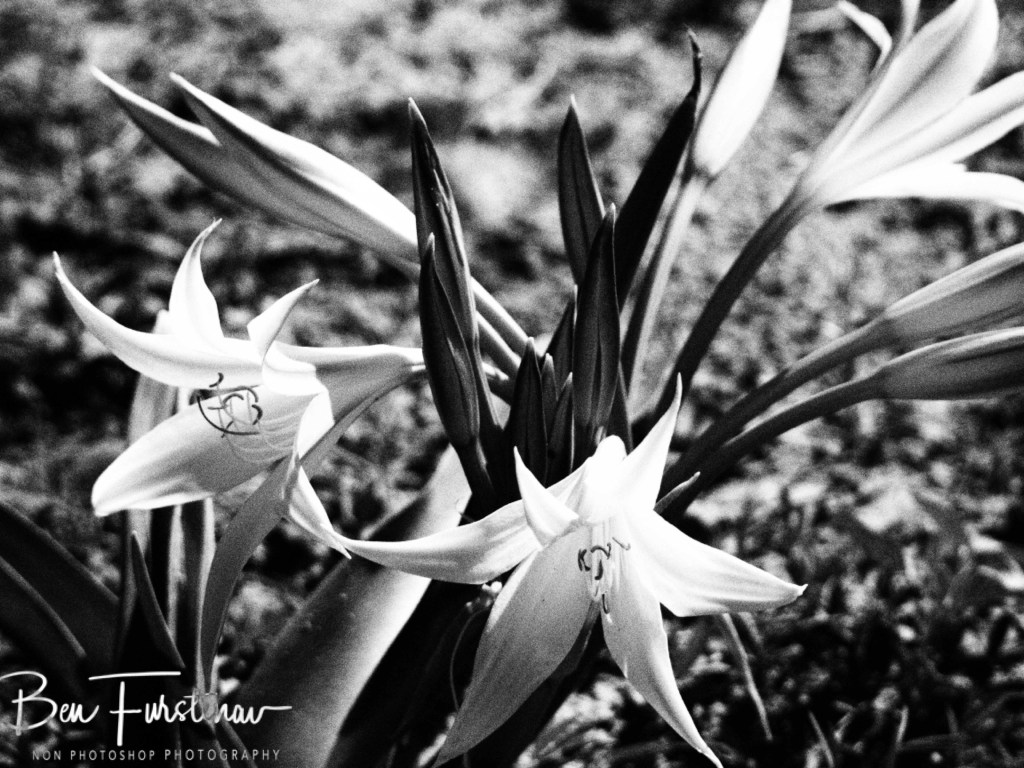
Lillies started blossoming like they did in Zambia weeks ago.
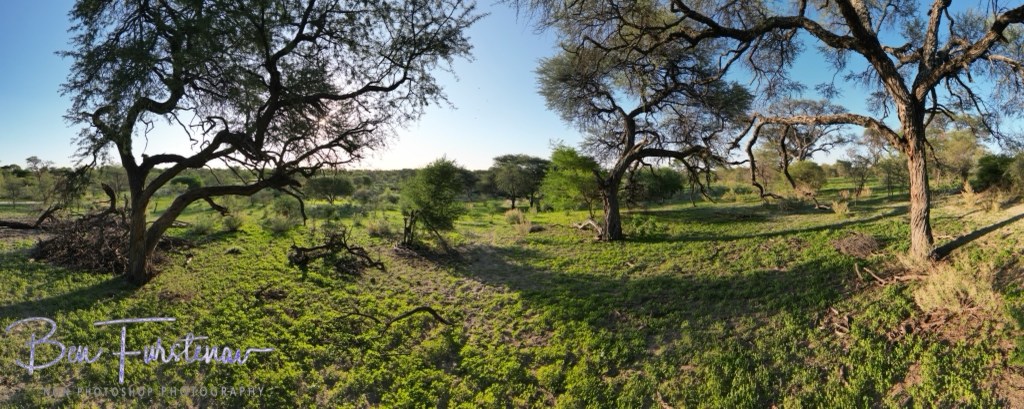
The area was surprisingly green but not on the other side.
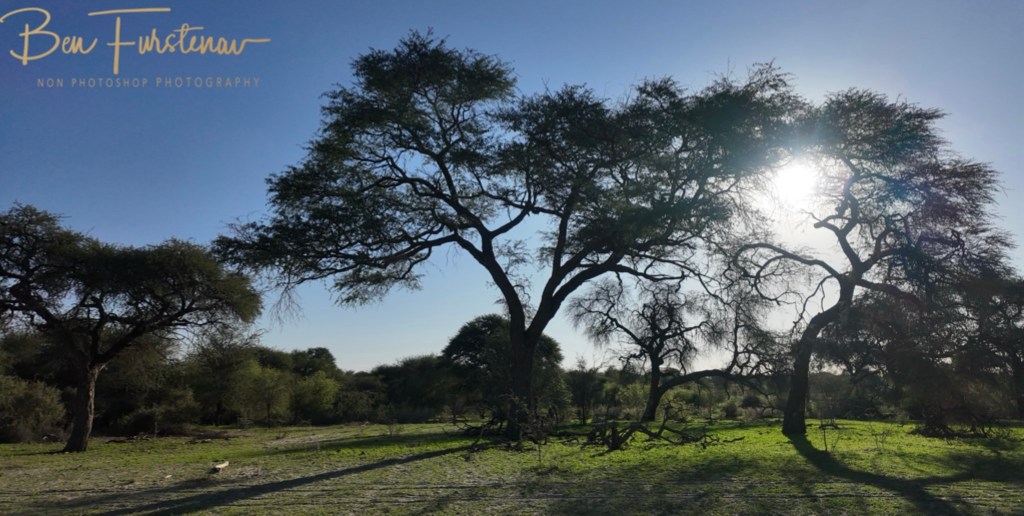
Some rain had fallen but none reached the riverbed.
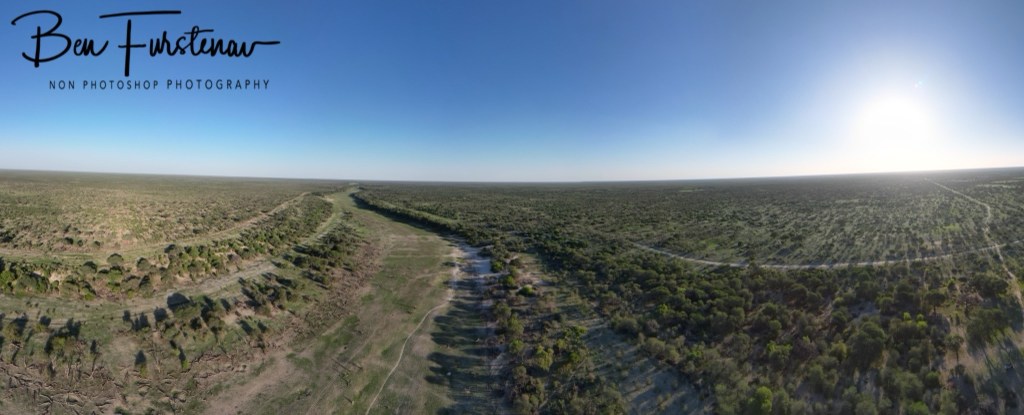
As I took Rick for a flight in the evening sun, the extension of this dustpan was revealed. There is not a drop of water anywhere near.

Some farmers had dug some waterholes but there is no moisture left. This river was as dry as a crumbled cookie.

I didn’t expect it to be this bad. Not surprisingly, I didn’t hear any animal noises or movement overnight.

A few cowbells called in the dawn service for another steaming day. Long shadows cast over the barren ground as Rick seized another loop around the riverbed.

The Boteti River is an overflow extension coming from the Okavango Delta. The Thamalakane River splits south of Maun, leaving the Boteti River flowing south-east. This precious liquid is harvested by human colonies as soon as it arrives. But even for humanity, no water had flown for over 1000 days.

‘Not a drop had reached this far south for the past three years’ the friendly ranger girl said as I passed the gates. ‘It has been very hot and very dry and it is very difficult to live with’.
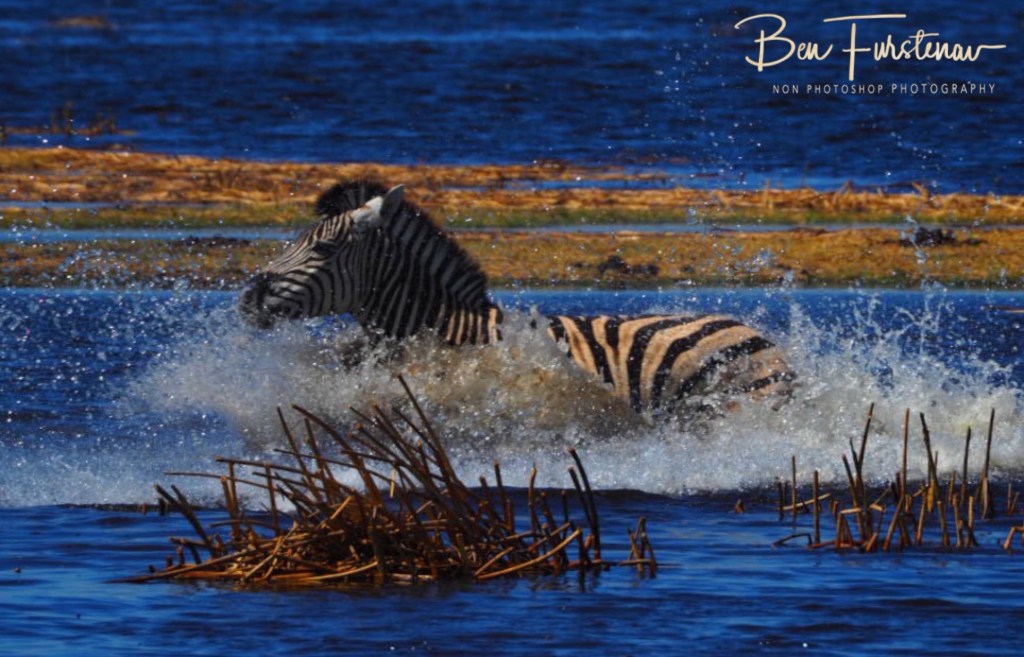
I remember the Boteti River with its amazing deep blue waters just like the Cotè d’Azur.
As the rain waters wash through sand-crystal riverbeds, the water gets filtered naturally.

Herds of zebras called this riverbed their lifeline.

Elephants came running from afar. Now they are running on empty.
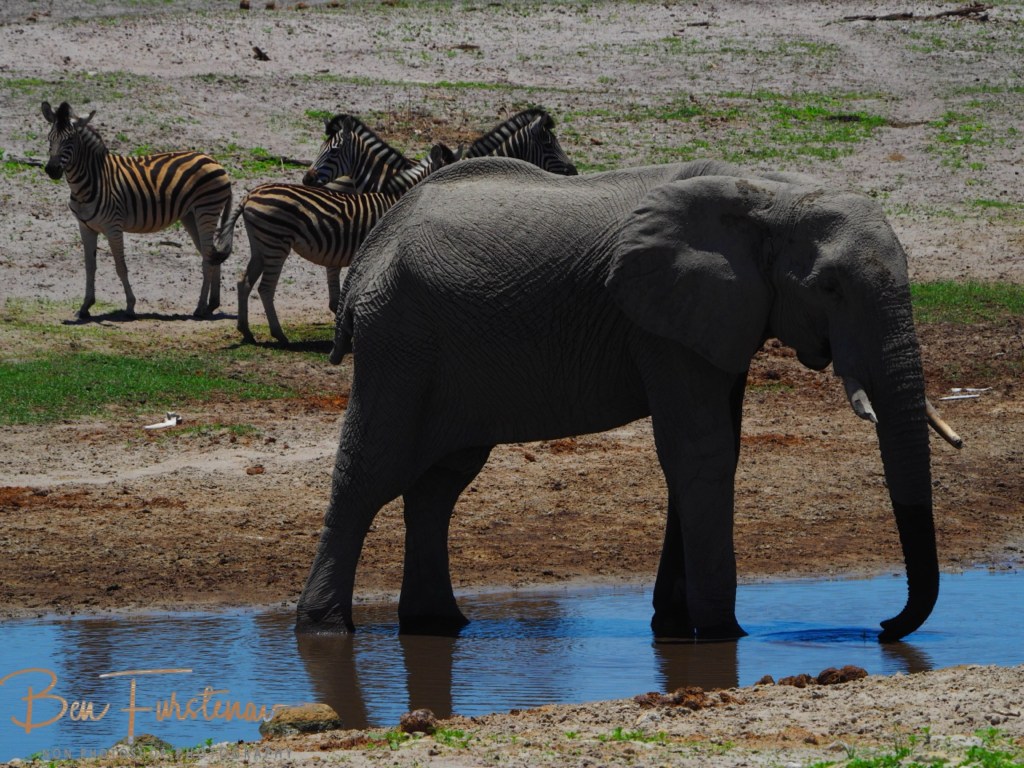
The only lifeline these animals had was the few diesel-pumped waterholes.

These were frequently visited by various groups of elephants.
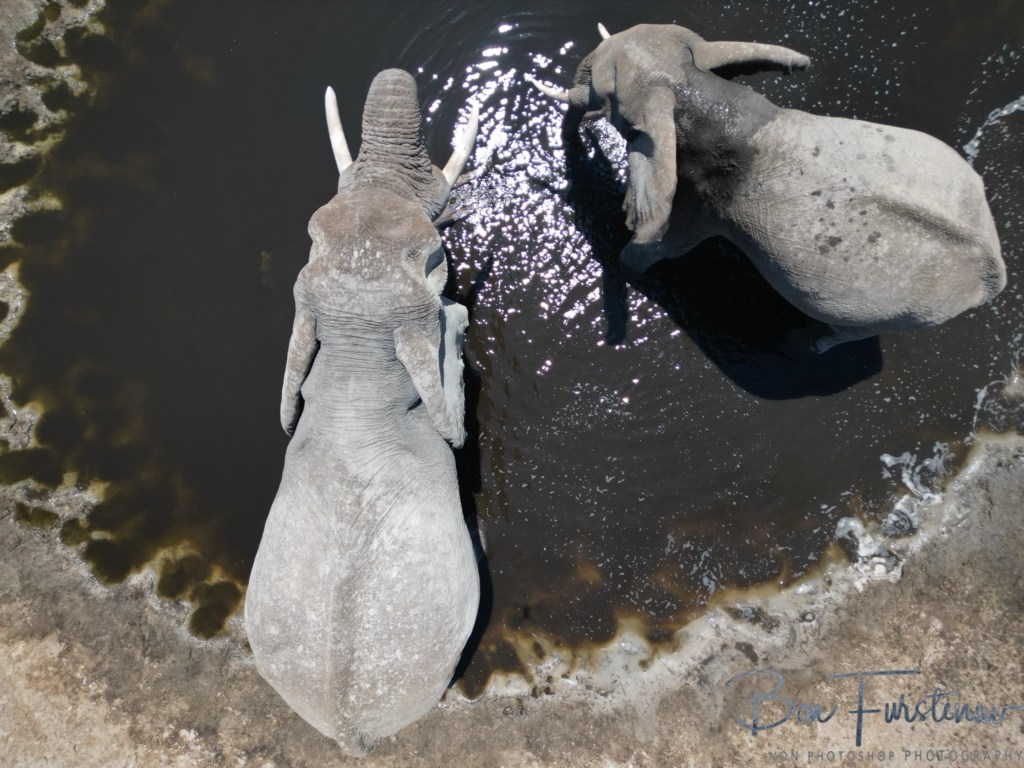
Rick had the best view from above.

The birds-eye-view changes the complexity all together.
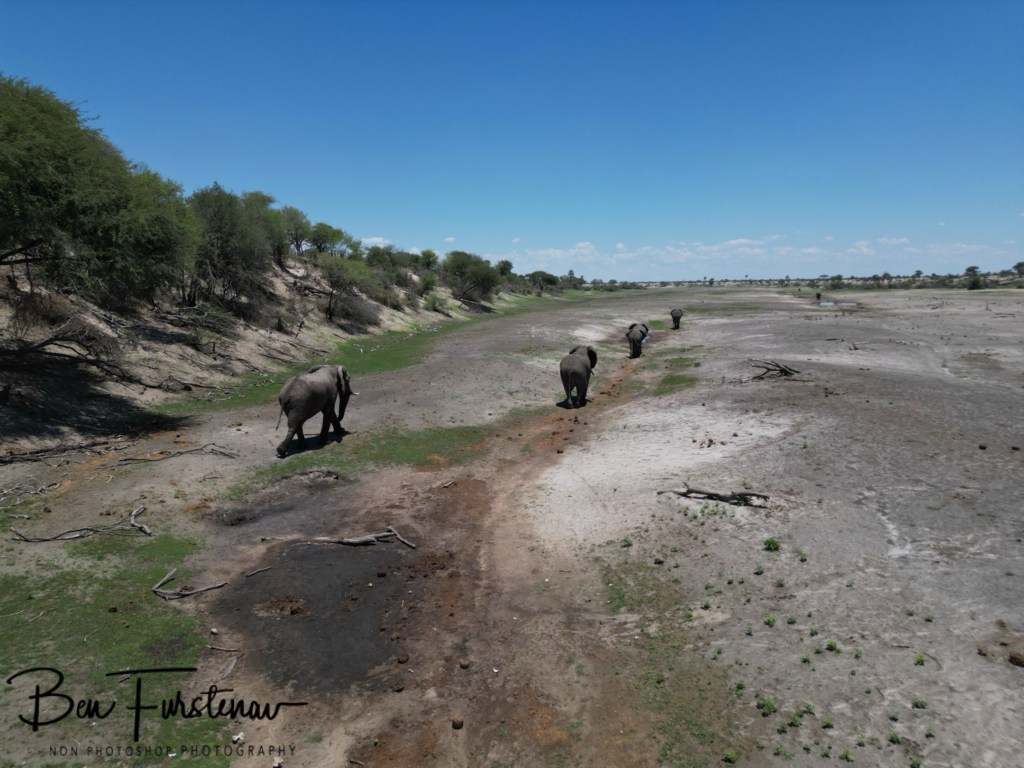
The water appeared to be greener on the other side as the elephants moved from one waterhole to the next.
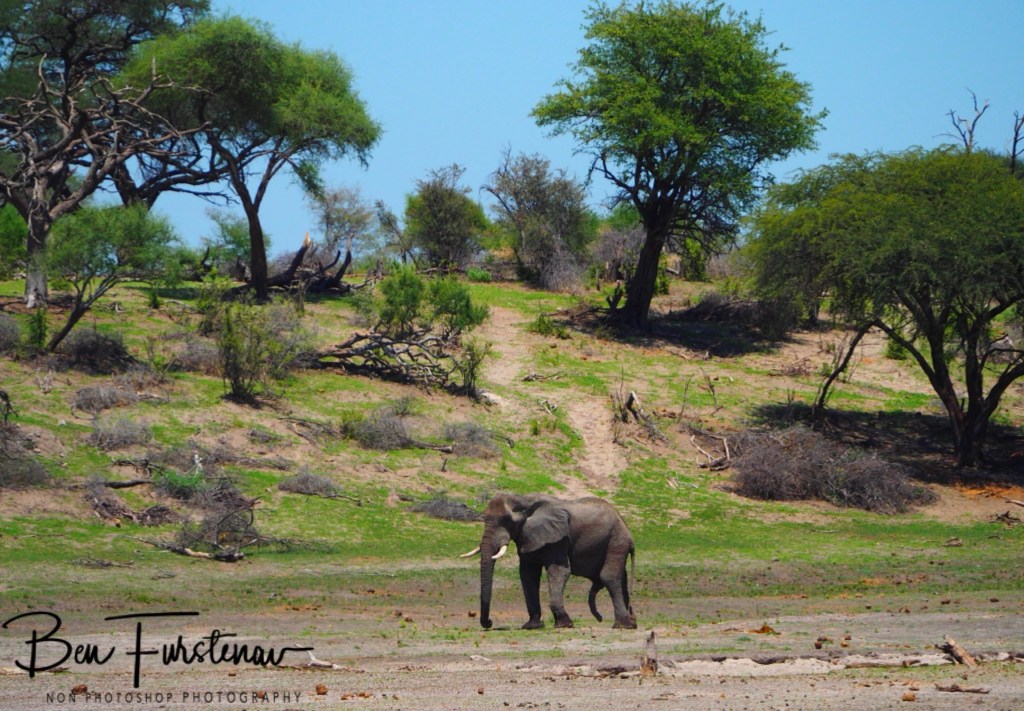
The scenario reminiscent like an oversized pub crawl. ‘Who’s shout is it?’
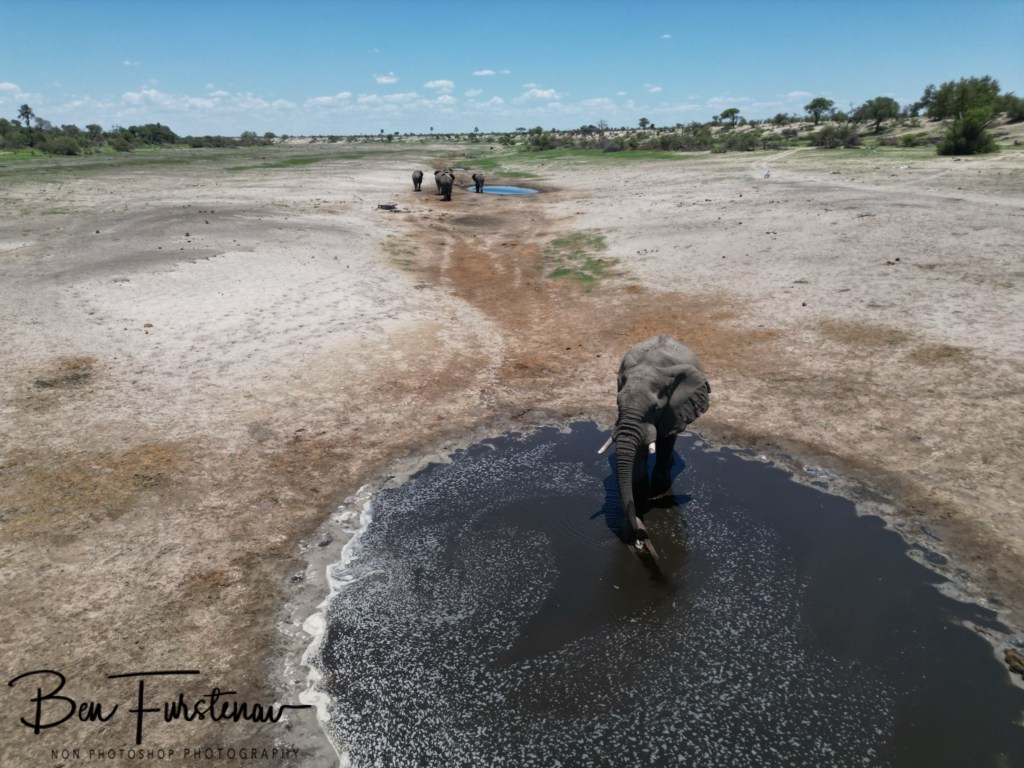
Of course, there is always one to stay on.
‘C’mon Bruce!’

Cheers to that and cheers to human kindness.
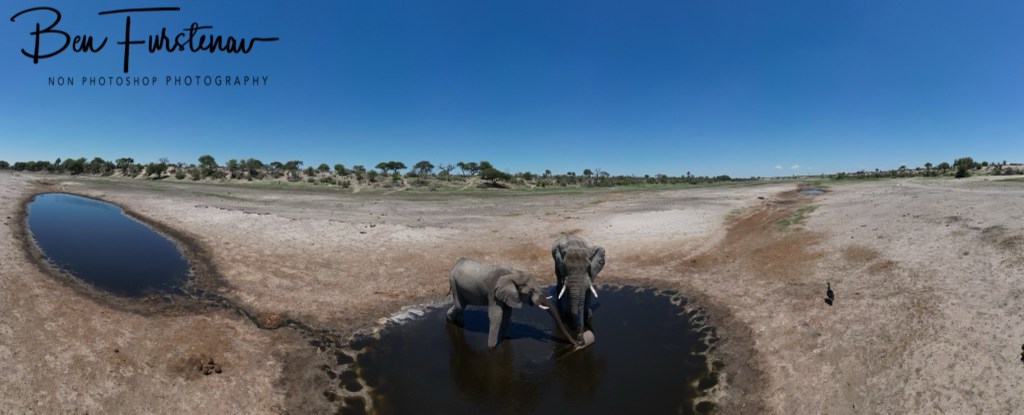
I had to reduce flight times as Rick was in danger to overheat as well.

It was late morning and temperatures had risen already past beyonda.

The soft sand was too hot to walk on barefoot, one could fry an egg.

There was no need for Zimba to plough through loose tracks.
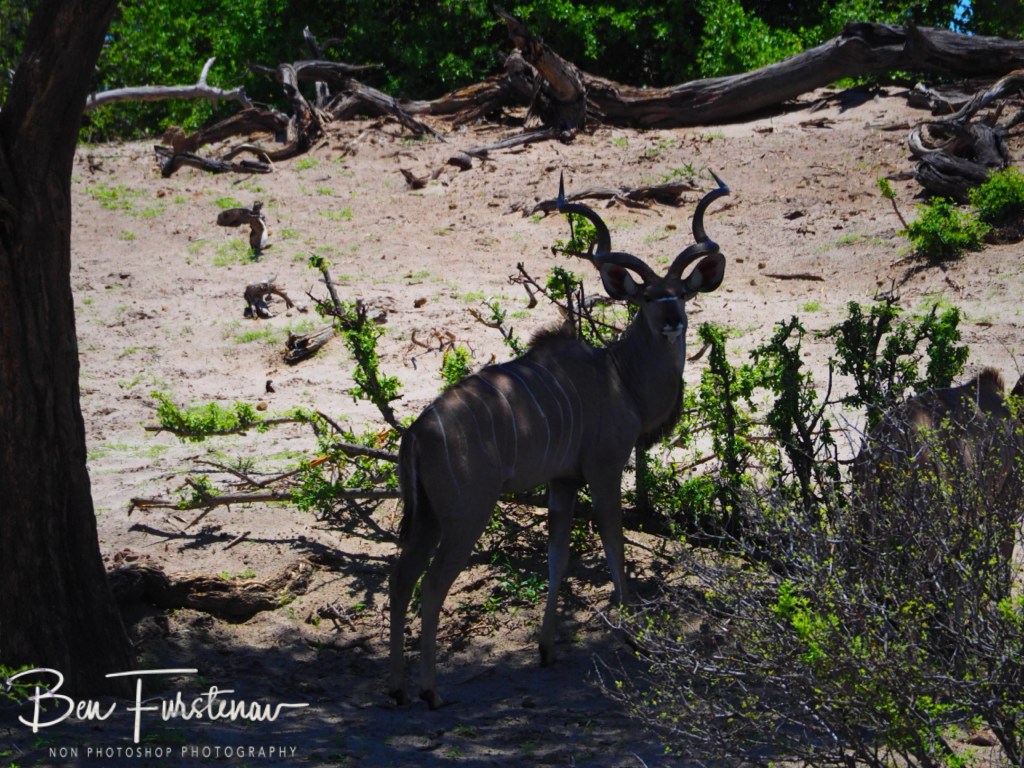
Shade was hard to find and non-negotiable to share.
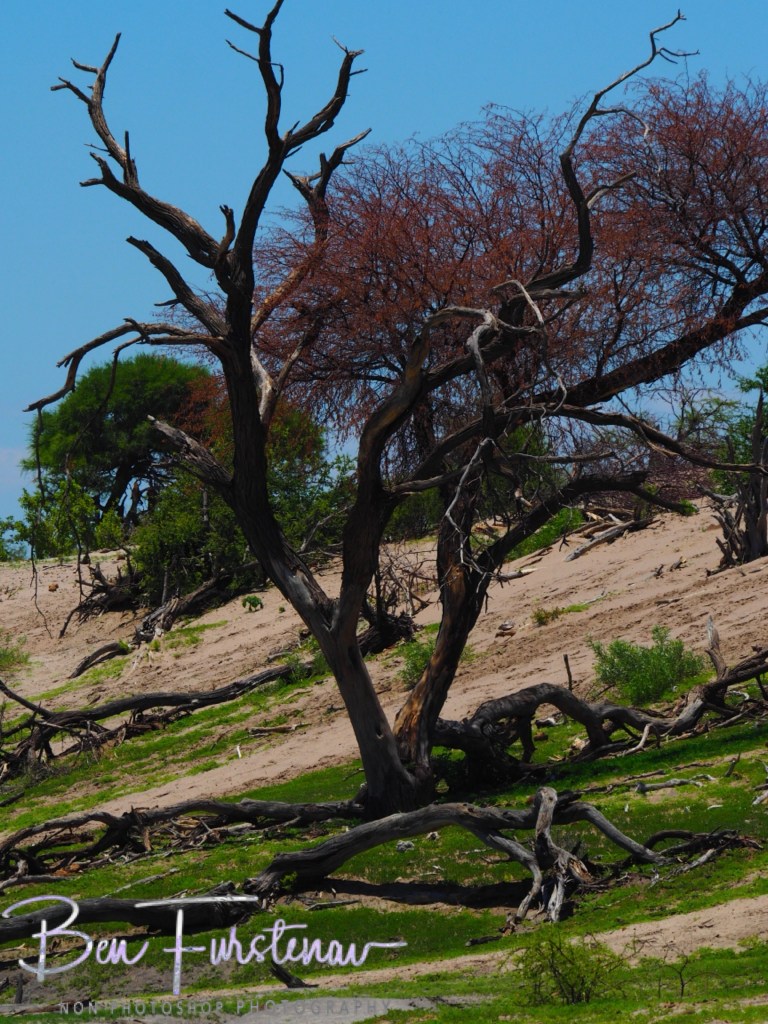
A few hardy trees started blooming as recent moisture started the much needed greenhouse effect.

Let’s hope that there is much more to come this wet season. The signs are ominous.
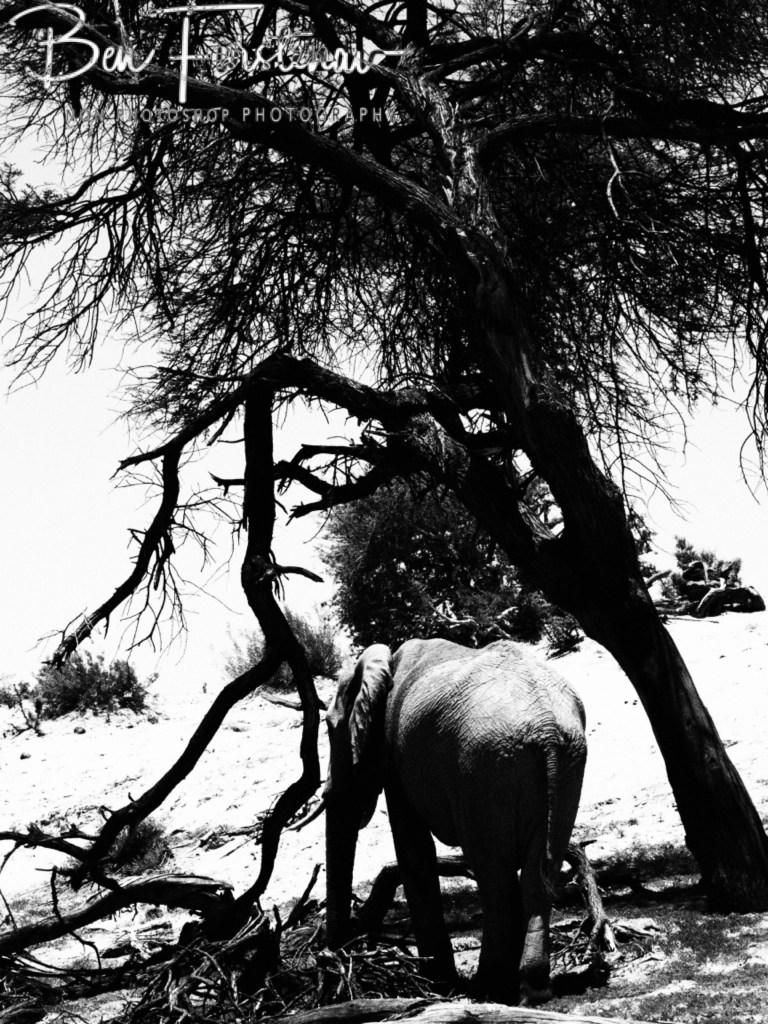
The elevated rim of the riverbed gave a remarkable angle to the clear sky.
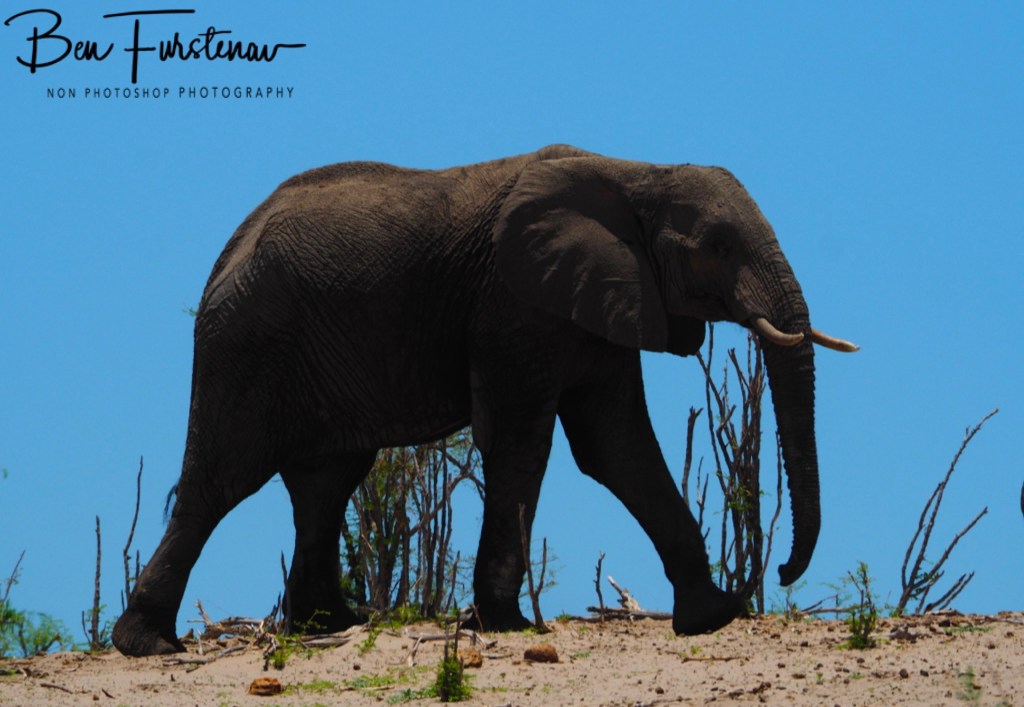
The animals walked on the blue skyline.
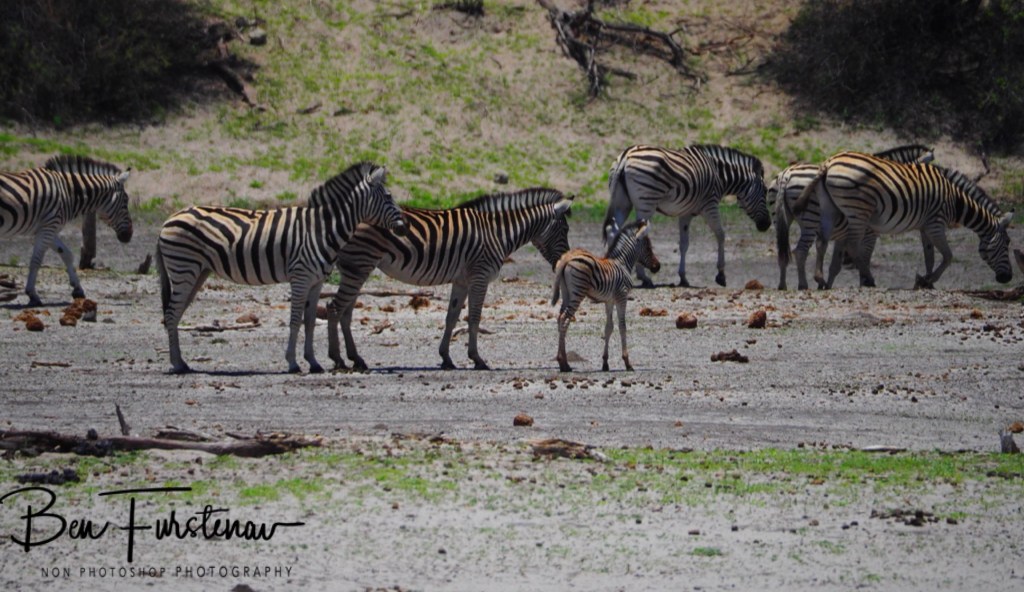
Smaller herds of zebras accumulated to a stronghold in the riverbed.
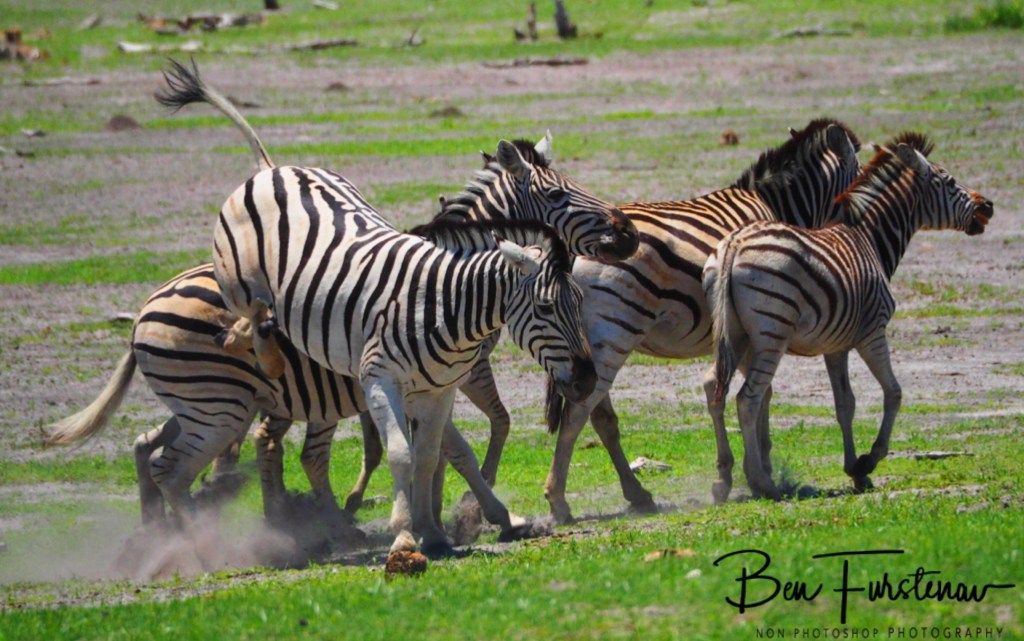
The other zebras felt the warmness just as much as heated arguments had risen. Some young punk had asked for trouble.
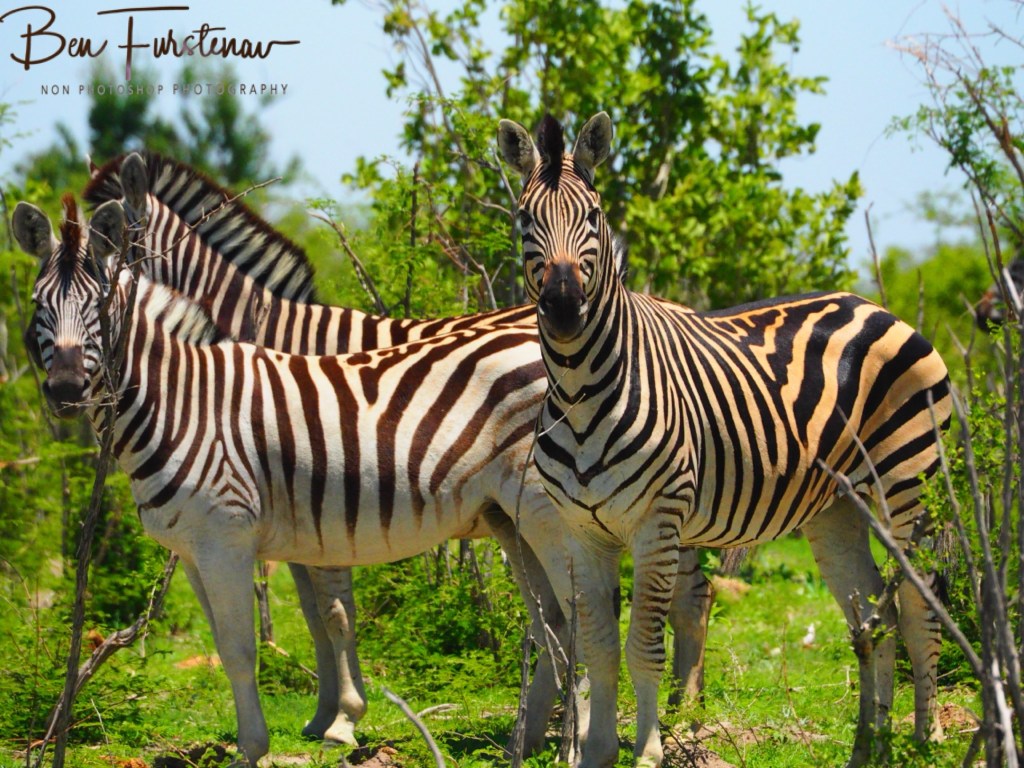
Zimba blended in perfectly as the fury kind wasn’t skittish at all.

Curiosity didn’t kill the zebra. I don’t mind, OM-D doesn’t mind at all.
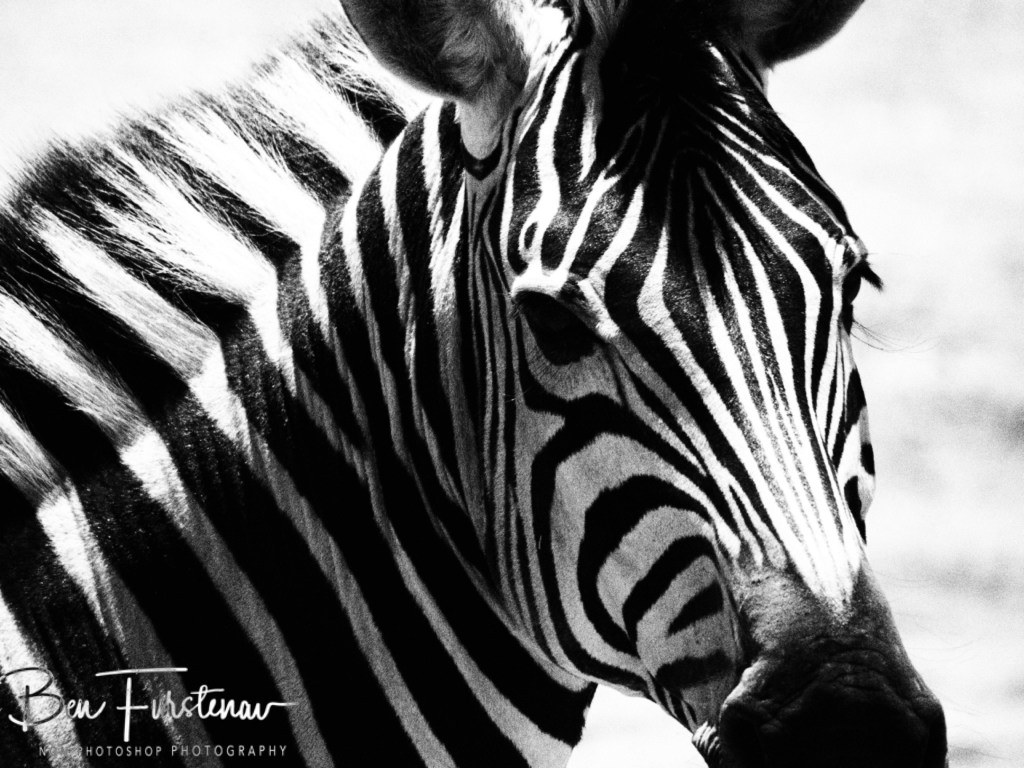
It gave us another opportunity to look a bit closer.

The stripes and streaks are extraordinarily detailed. Just like fingerprints, none are the same.

Even the mane extends in black and white. Artistic natural expression.
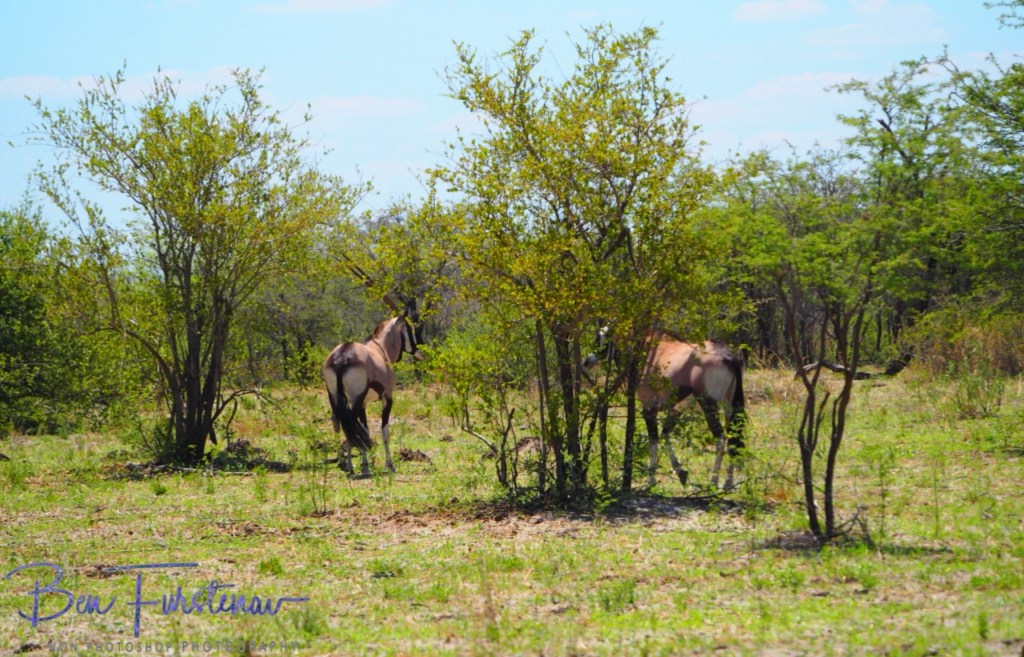
You know that you are in a semi-desert environment when you come across these graceful antelopes. The gemsbok, or oryx antelope, prefers the dry habitat and has established in this dustbowl. I was lucky to spot and shoot these two with my lens before them running off. Better safe than sorrow.

Just as quick as this ostrich dad who surprised me in a dried-out mud hole.

It was late afternoon already as I reached the northern pearly gates.
 Travels with Ben