After today’s obscure experience with Adam and Steve, I wasn’t intrigued, what other surprises may come my way?
Life is a box of chocolates after all.
I had no time to waste, I will be busy over the next few days.

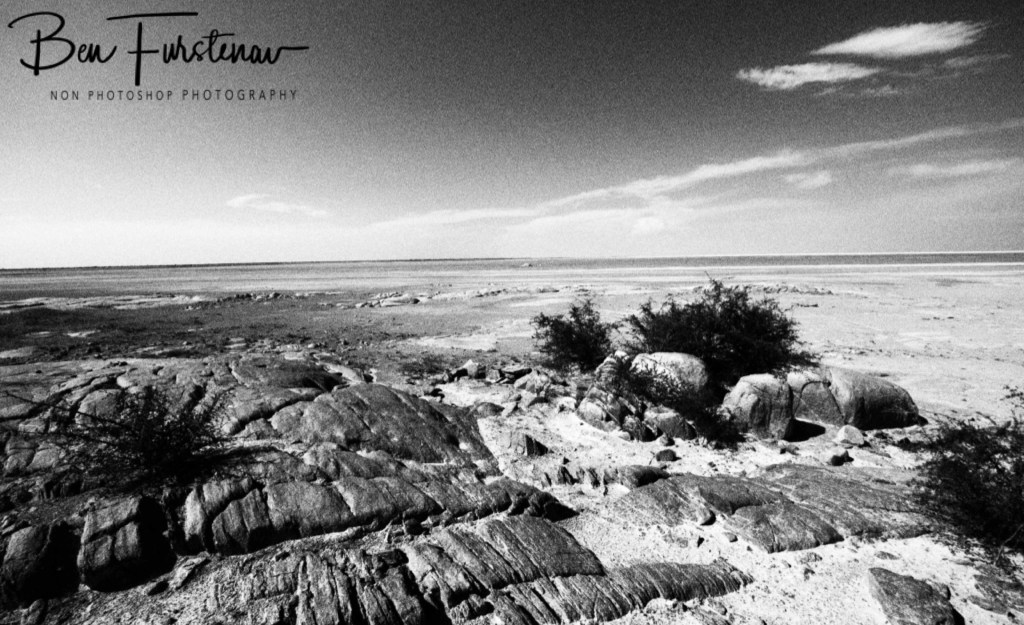
The lunchtime storm left its mark on the salt pan and increased the humidity to a maximum.

Breathe in, breathe out.
Sweat already drips onto dusty grounds just by looking out.

Two (full) days and one night affair means I get to experience the golden hours of two sunsets and one sunrise over a never-ending horizon.

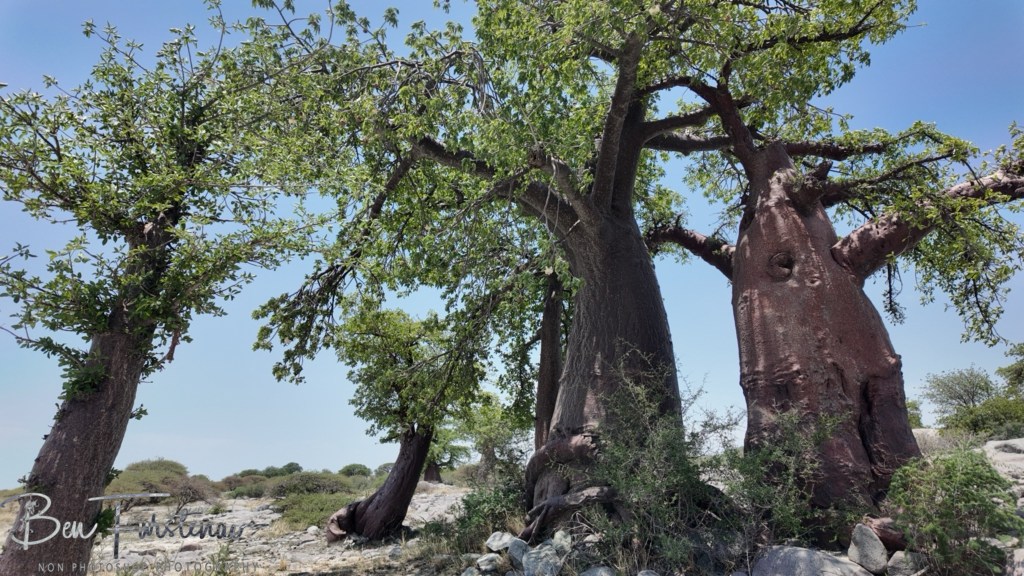
This is the biggest, tallest, most numerous and pristine baobab congregation outside Madagascar I have come across.

The shuffled mix of wood and rocks is extraordinary within its own right.

An island built of huge granite boulders and scurrilous tall timber.
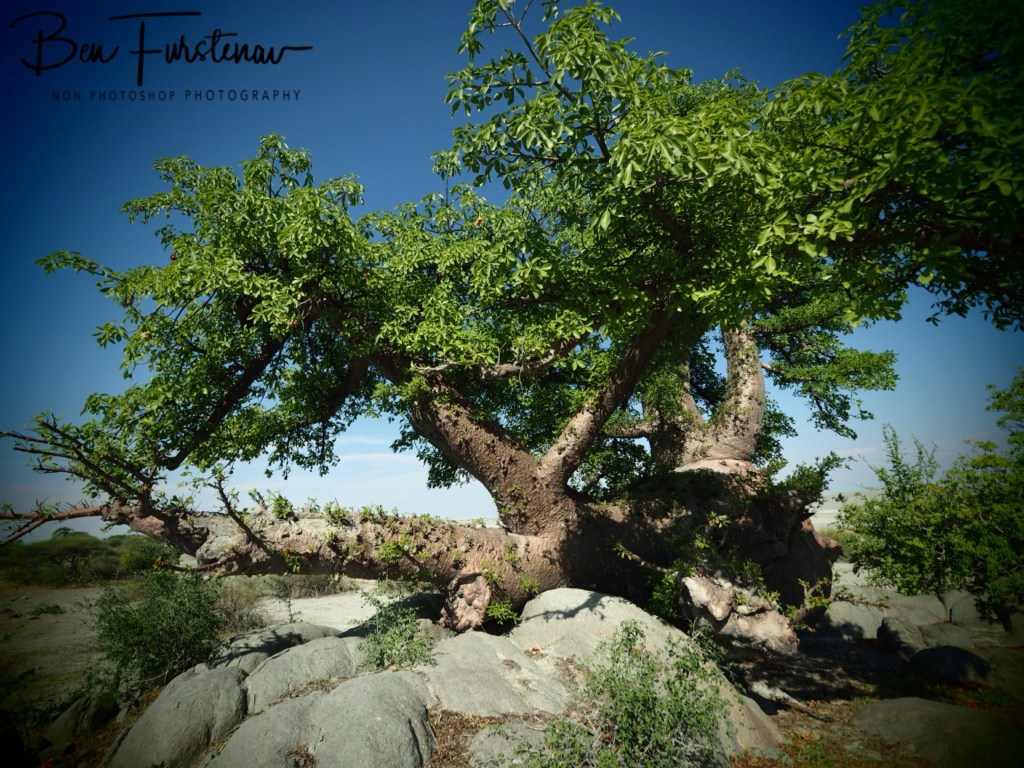
Baobab trees need a solid foundation to grow into these humongous sleepy giants as soft ground won’t be able to hold their weight.
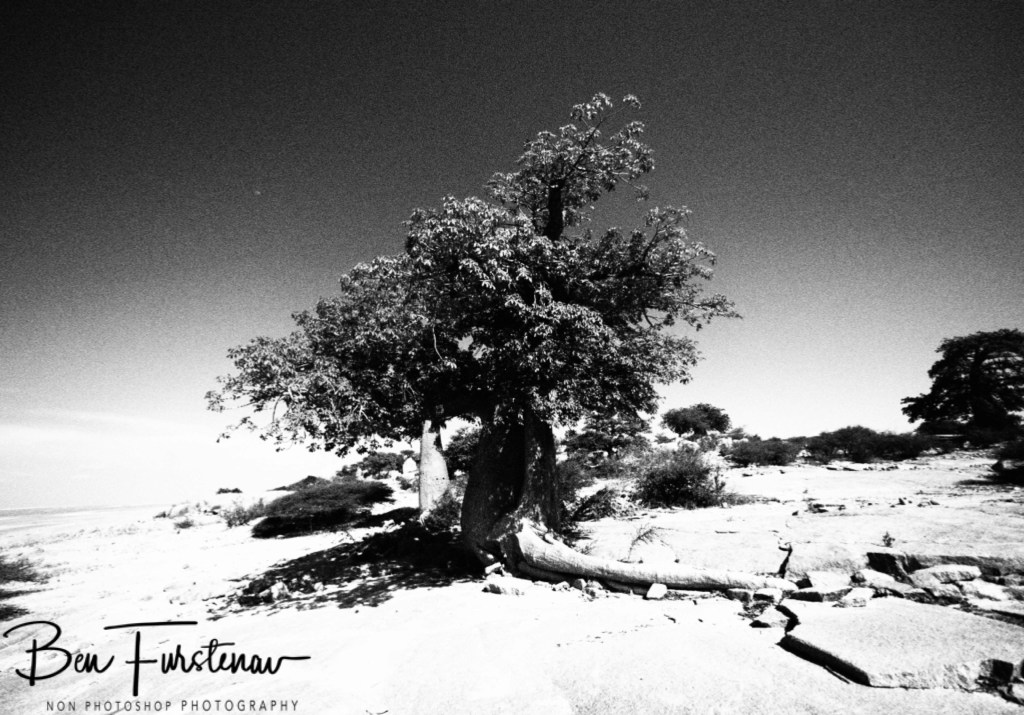
The root system carves through and among one of the hardest rocks on the planet.
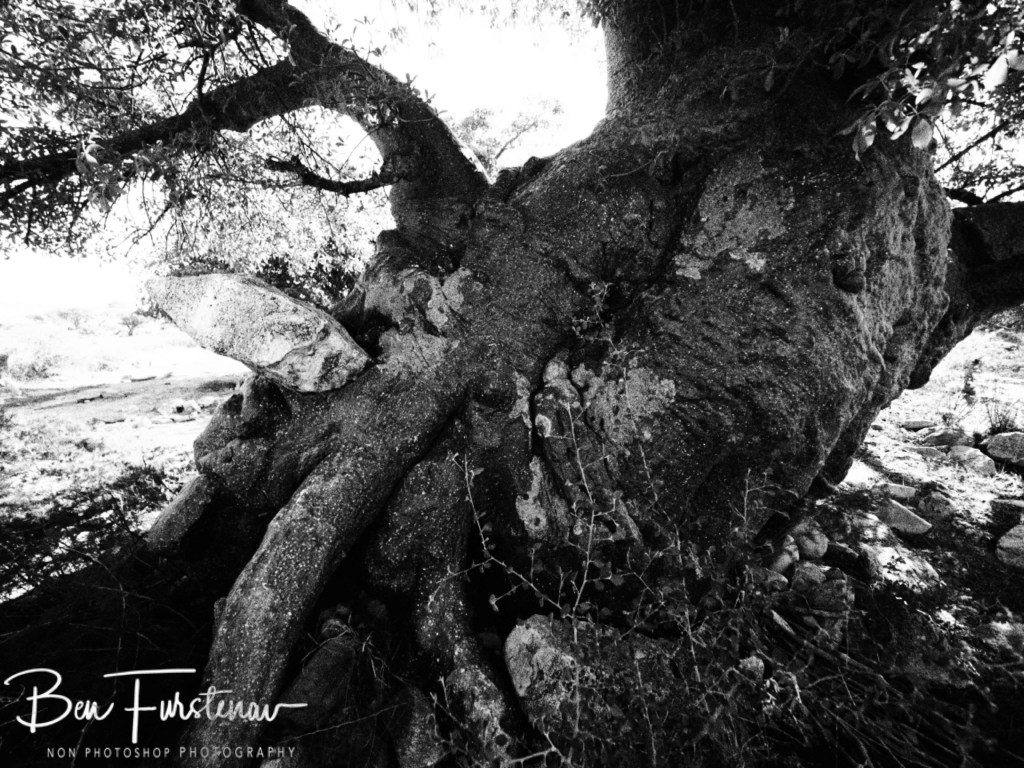
One tree even picked up a granite block a century ago.

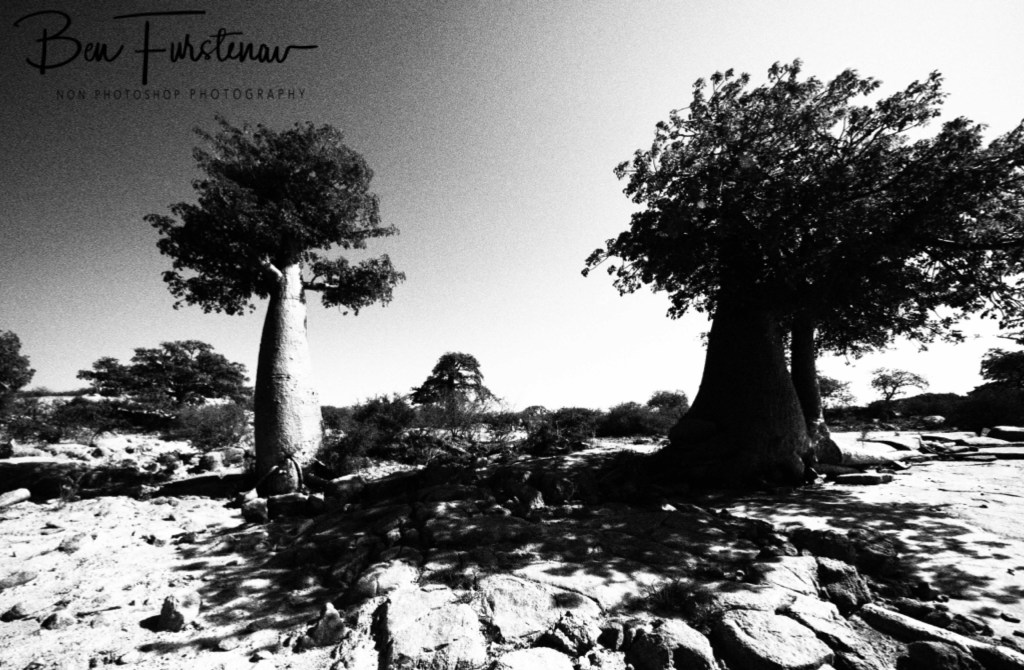
Each tree has a completely different appearance from one another.

Each tree has its own character.
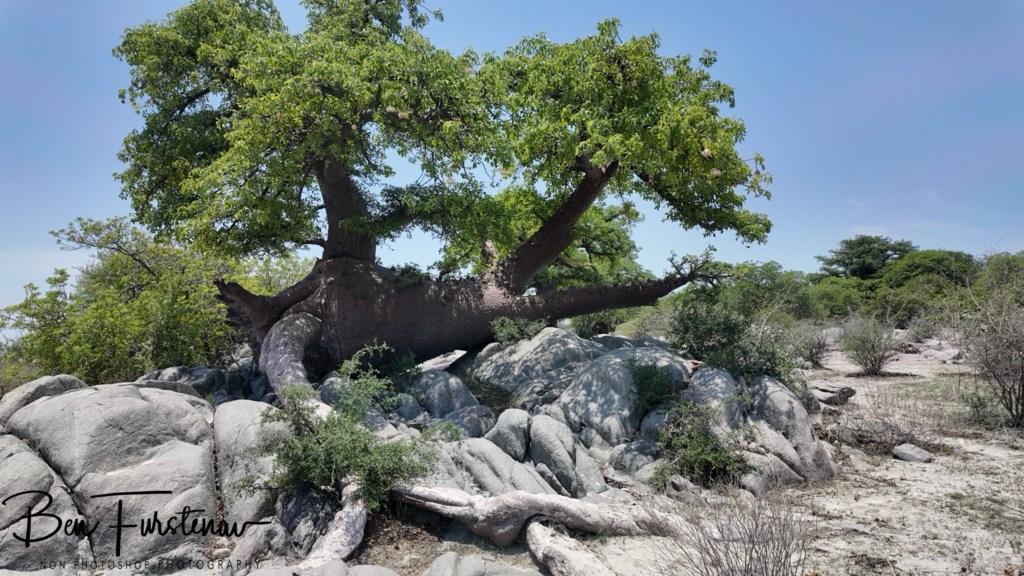
Their structure, shape, and size are so extreme that they haunted my vivid memory.
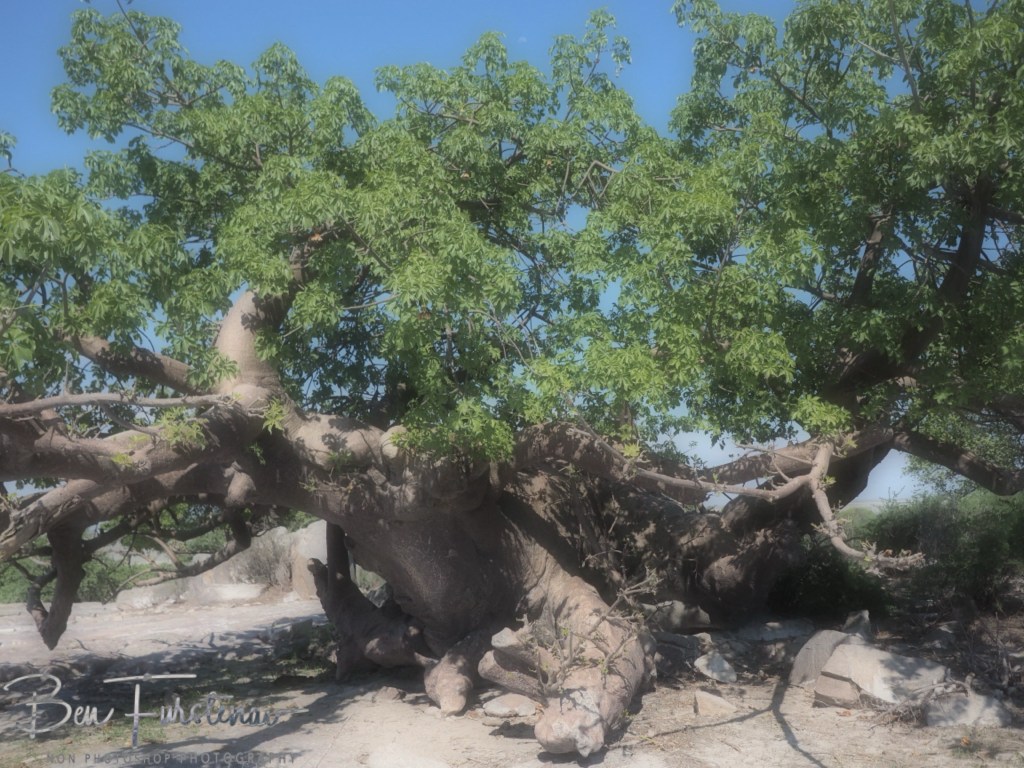
One thing they all have in common.
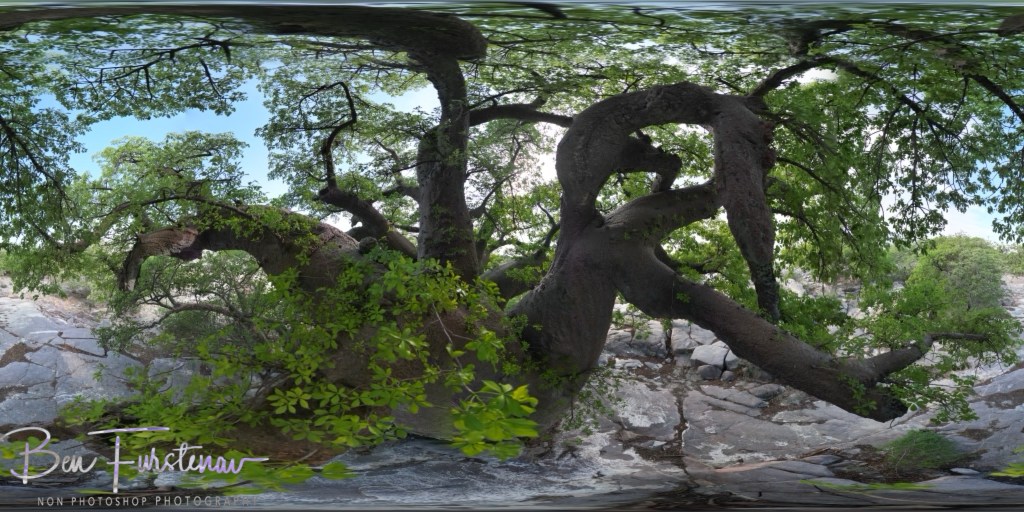
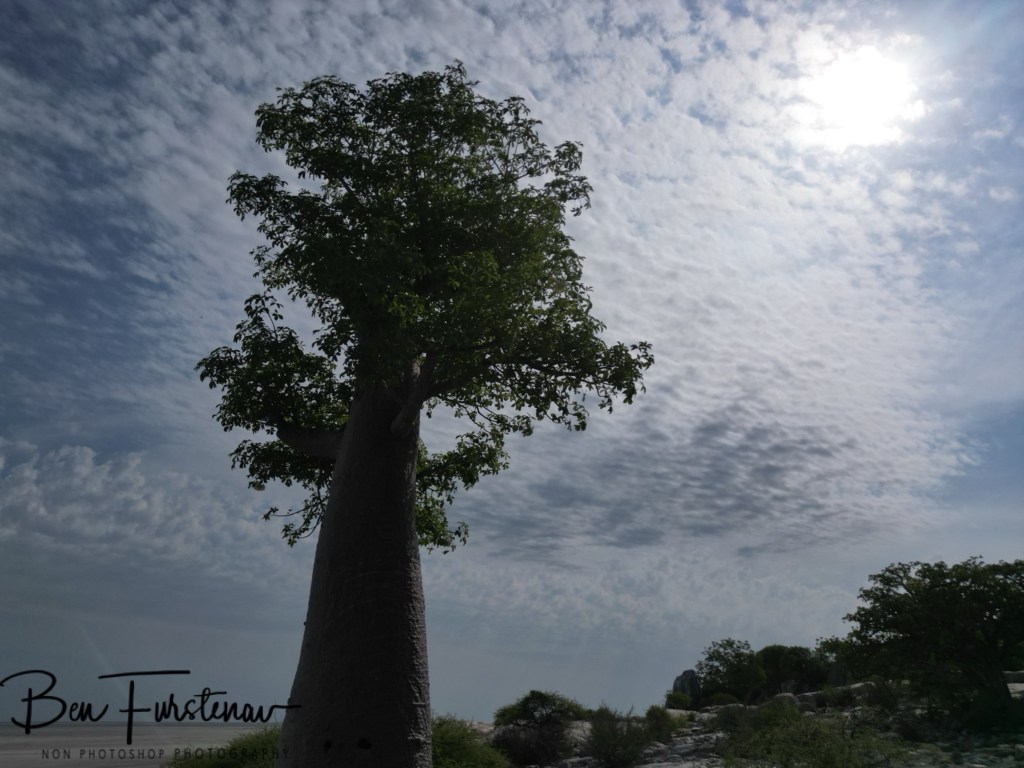
They are all enveloped by a green skirt of leaves as the wet season continues to build.

All this artistic variety and excitement is contained by nothing more than empty spaces.

The contrast couldn’t be any more panoramic.

So, here I am right amongst the baobab forest with three cameras and one drone in hand.

I am exhausted just thinking about the assignment ahead.
And excited, just as well.
First things first.

Lekhubu, or short Khubu Island has not changed at all since my last visit.

It feels like a giant leap backwards into 2018.

This is positively the best news in this fast and ever-changing world around us.
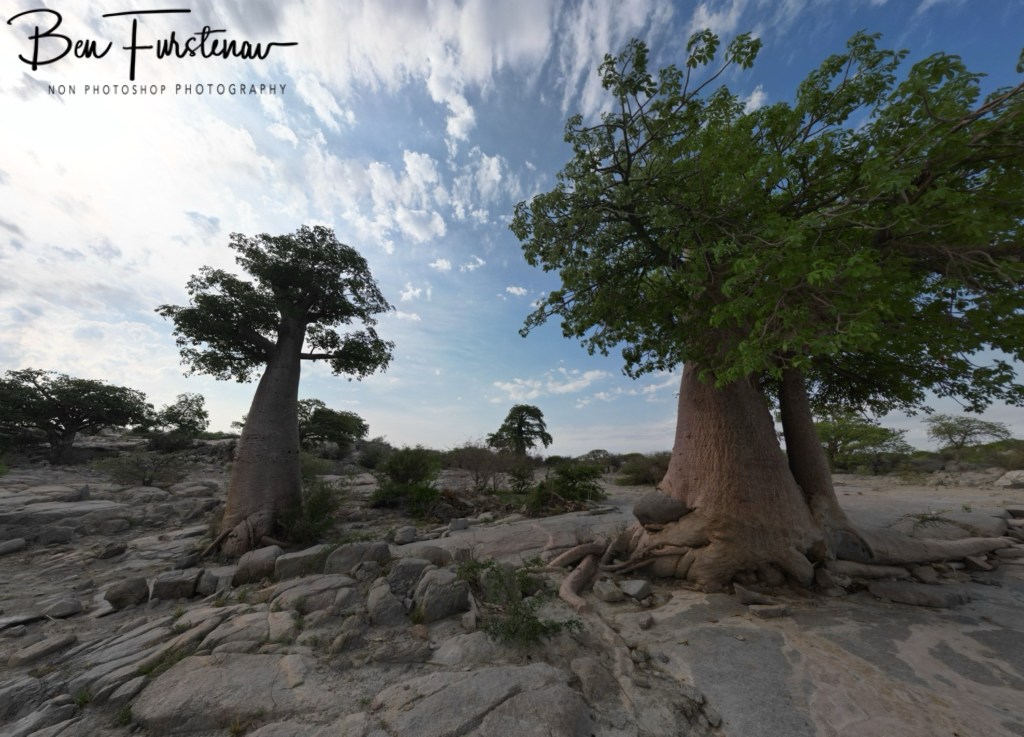
I do remember many of these colossi.

Whether it is their location, their foundation, concentration or aggregation.

It is here where the saying ‘Where’s a will, there’s a way’ makes perfect sense.
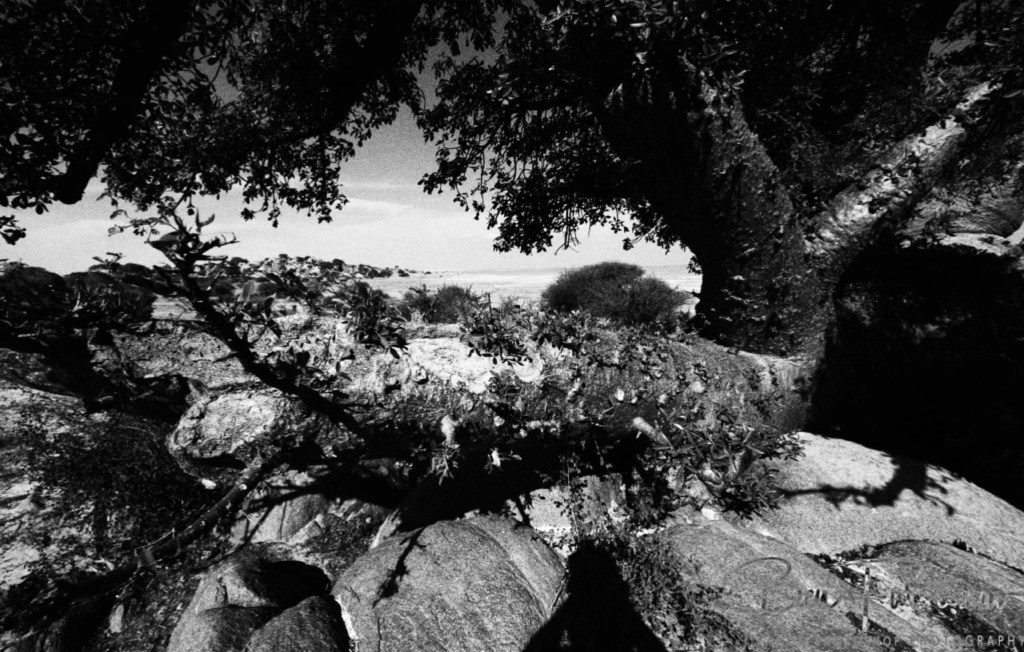
Tiny sprouts made their journey through granite ravines and shaped themselves into the surroundings.

Some trees are bundled up into little groups like these three sisters and their wee brother.
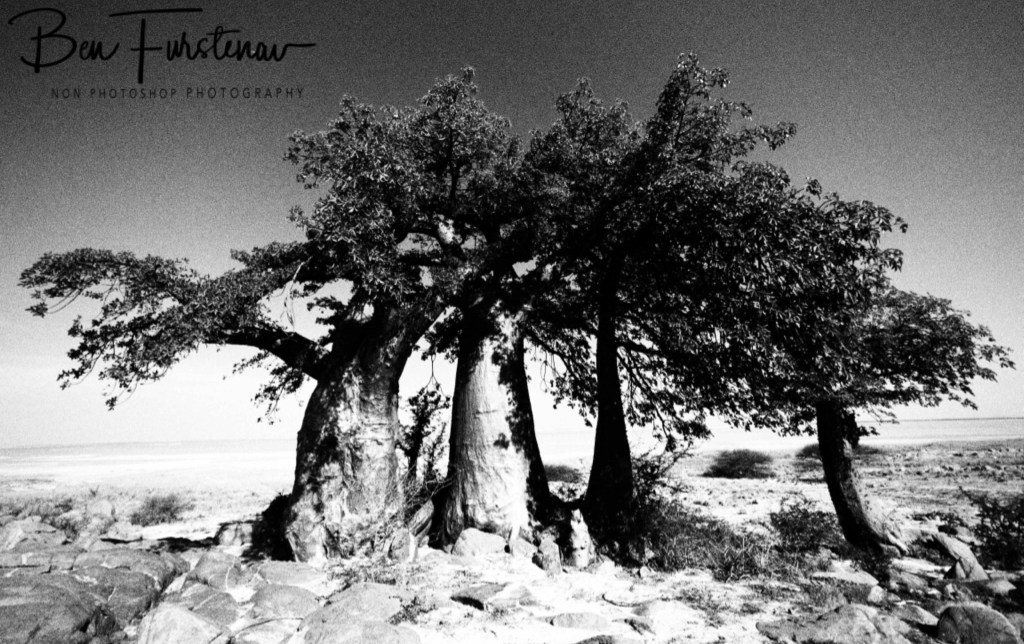
This teeny family on the edge of the island appears like the early explorers.

Having the salt pans right behind them, my creative mind visualizes as if they have just crossed the pans.

Furthermore and interesting about this minute ‘Allee de Baobab’ is their location out on the eastern shore.
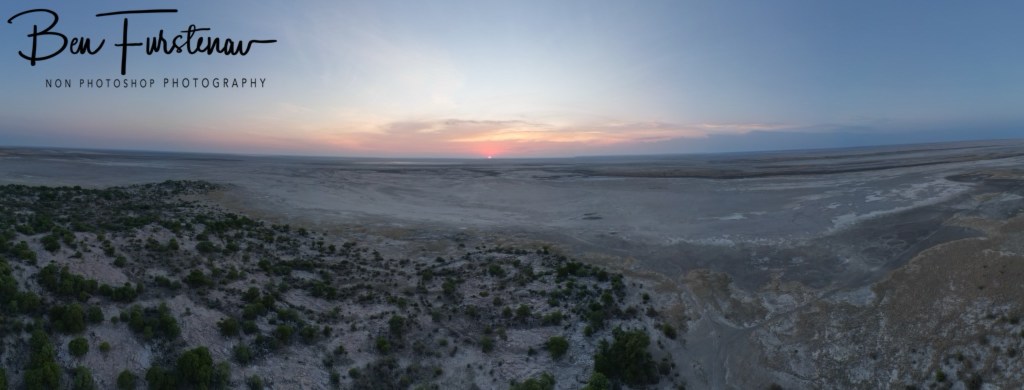
Yep, that’s right. Right into first light.
Naturally, this is my starting point the very next morning.
And so it began.

Wake-up call at 4:30 am.

Tracking across the island before sunlight turned out rather challenging, hopping over ‘Stock und Stein’.
I was heavily loaded with my cameras, Rick and a takeaway coffee, of course.

The sound of silence is a vision that is planted in my brain, still remains.
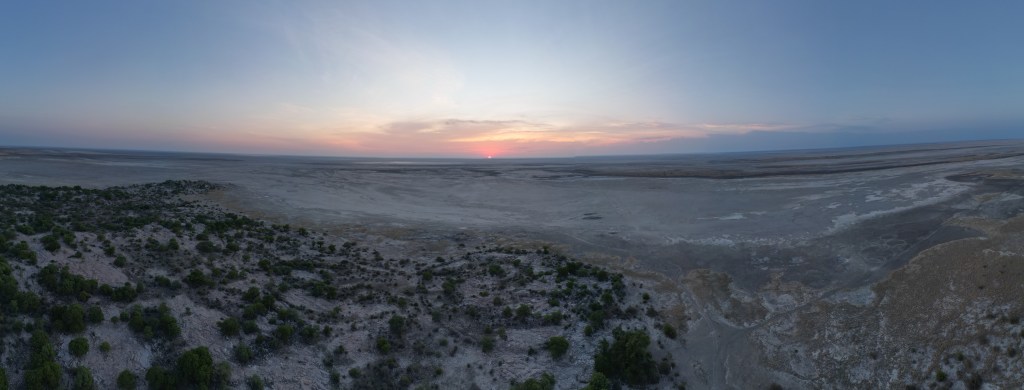
Osmo was quickly set up for its smooth timelapsing whilst Rick’s engine was kicking in.

The results speak for themselves. Slowly but surely, our life-giving fireball emerged over the salt pans.
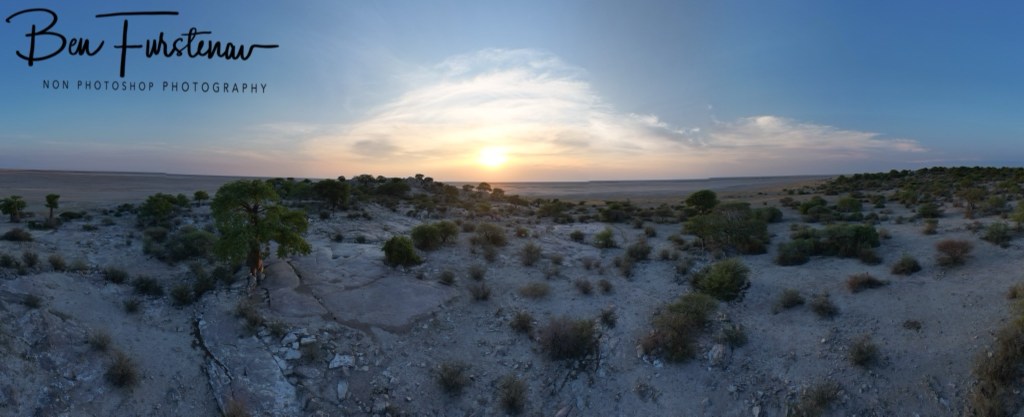
Simply fascinating. When was the last time you saw a sunrise?
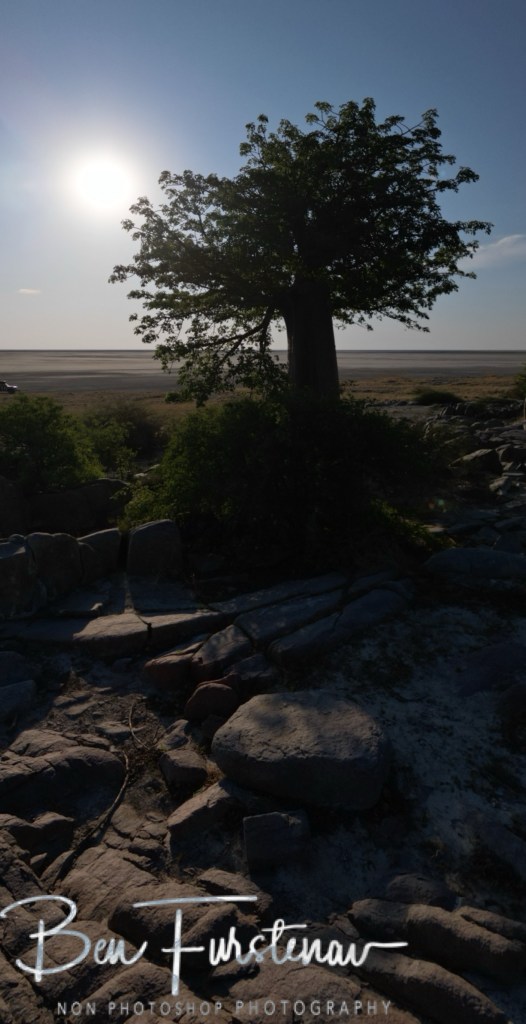
Early morning light creates long casting shadows.

Camera in and out, location here and there and before you know it, it was steaming hot and almost lunchtime.

Just like that, time flies by.
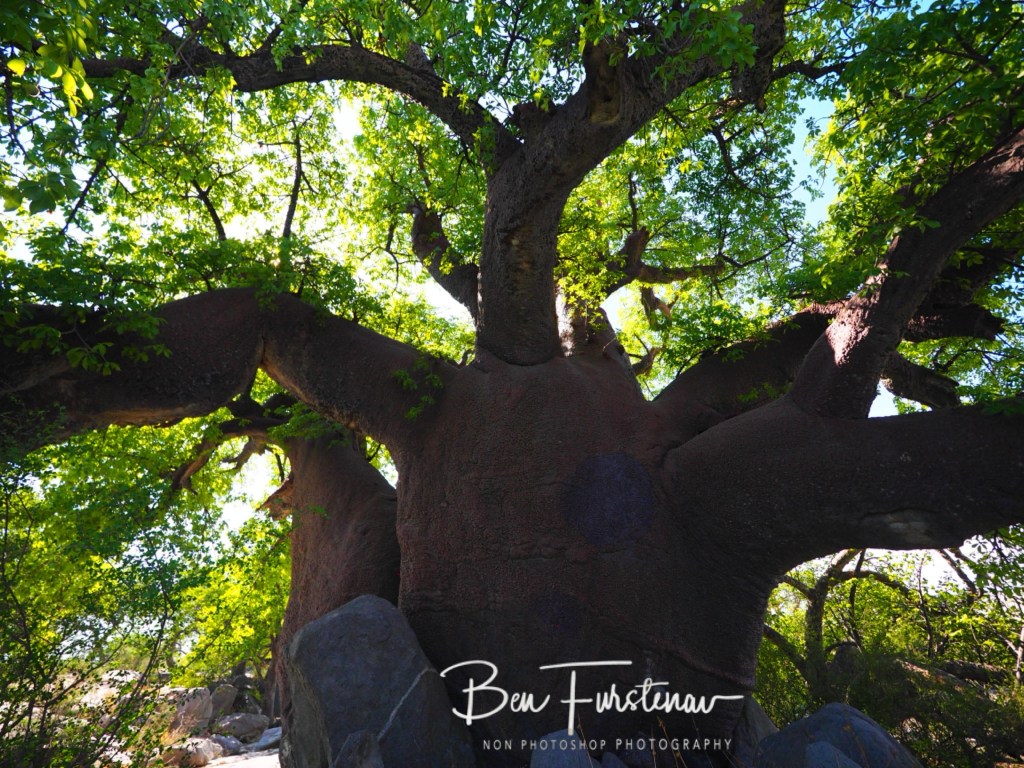
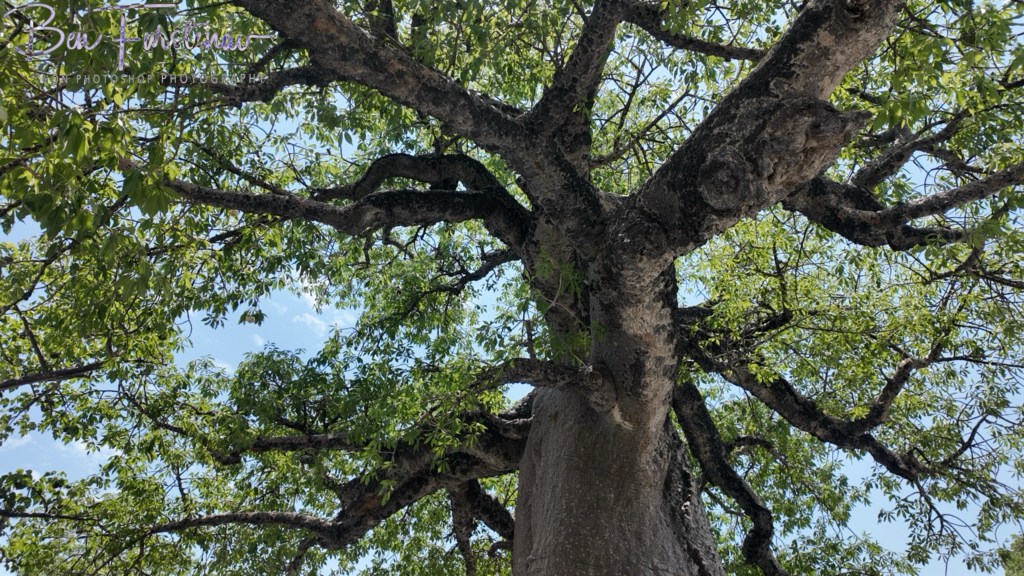
I was particularly interested in the green foliage on each baobab tree.

I have not seen so much green in connection with these giants. I couldn’t be-leaf it.
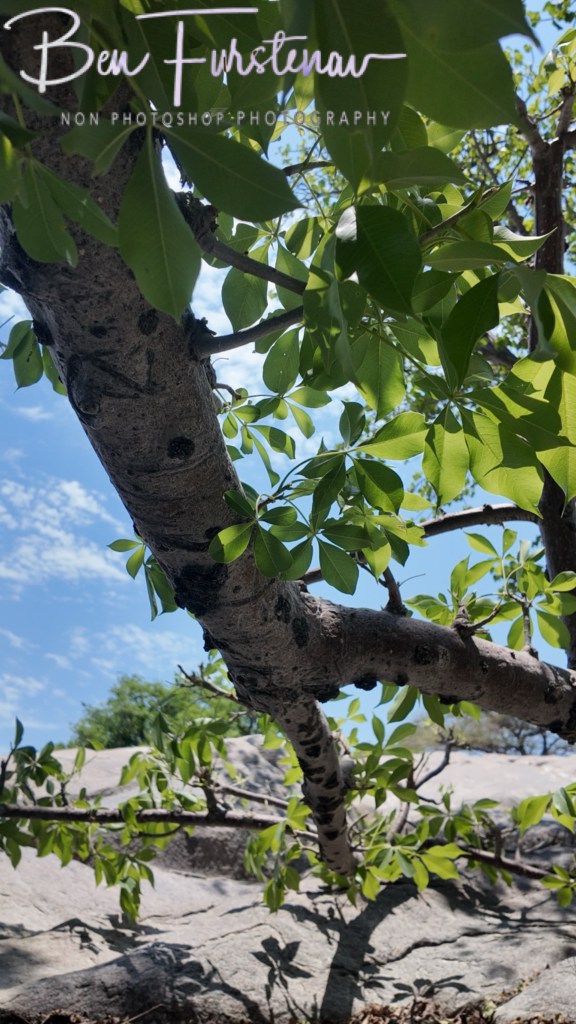
All baobabs are deciduous, losing their leaves in the dry season, and remaining leafless for about eight months of the year.

Baobab trees store water in their trunks and branches on a seasonal basis as they live in areas of sustained drought and water inaccessibility.
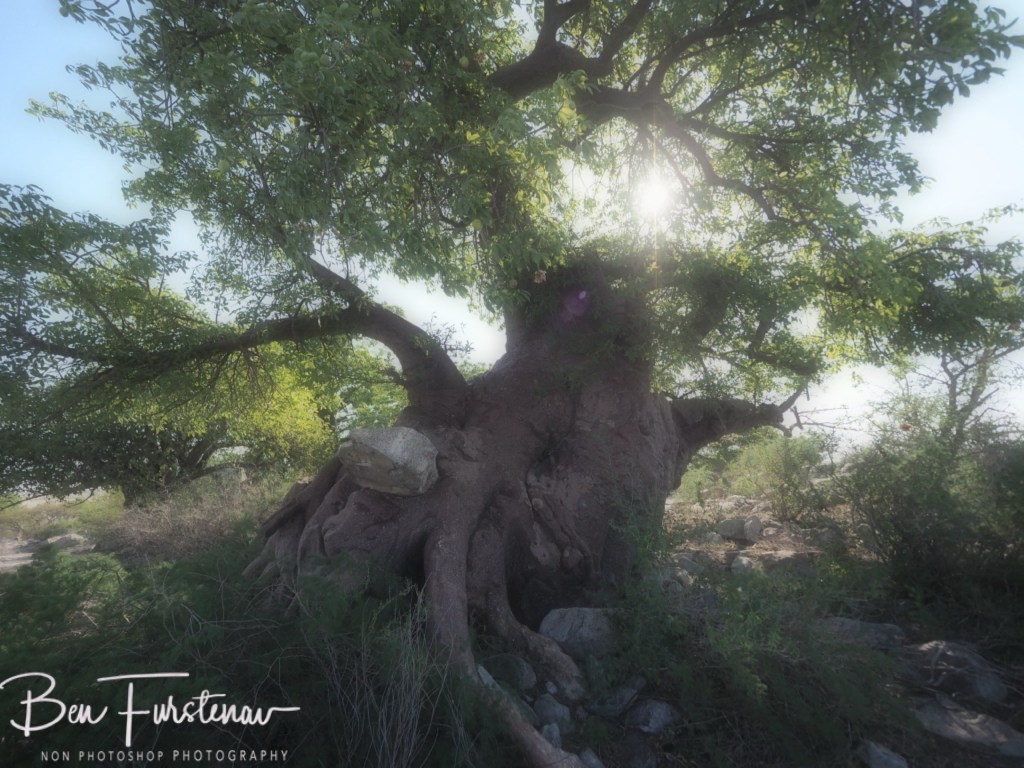
The spongy material of the bark allows water to be absorbed deeper into the tissue, as there is rarely enough rain during the wet season to penetrate the litter layer of soil.

The U-shaped branches allow for water to trickle down, allowing for maximum absorption over an extended period of time even after the rain stops.

The water is absorbed into the vascular tissue of the tree, where it can be moved into the tree’s parenchyma cells for long-term storage, or used.
Thanks Wikipedia. In a trunkshell, it means;

A large Baobab can store as much as 136,400 liters of water.

This island has millions of liters of liquid stored in humungous natural tanks, but no water around it.

Extraordinary.
 Travels with Ben